Netanyahu office denies reports adviser Yossi Basad was dismissed
Israel’s Prime Minister’s Office rejected reports that adviser Yossi Basad was fired, saying his departure was for personal reasons and not tied to any…
Omar Farouk ·
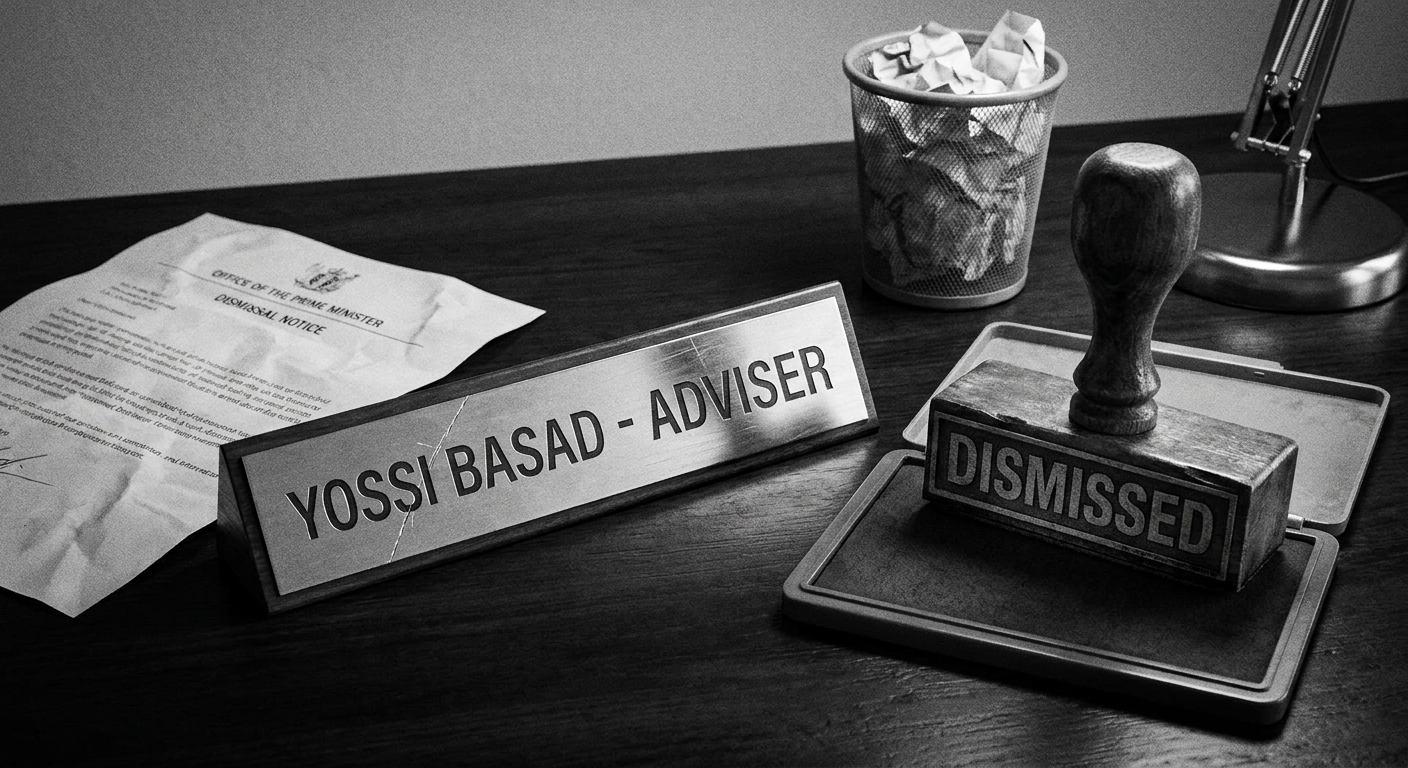
# Netanyahu office denies reports adviser Yossi Basad was dismissed
Israel’s Prime Minister’s Office pushed back on reports describing the exit of adviser Yossi Basad as a dismissal, calling the coverage “fake news.” In a statement, the office said Basad left for personal reasons and that his departure was not linked to any particular incident.
Israel’s Prime Minister’s Office
Israel’s Prime Minister’s Office (PMO) functions as the nerve center for executive decision-making, coordinating policy across ministries while serving the prime minister’s political and communications needs. Advisers inside the office can range from formal, salaried staff to external figures brought in for counsel, messaging, or liaison work, depending on the prime minister’s management style and the coalition’s internal dynamics.
Benjamin Netanyahu’s governments have frequently faced scrutiny over staffing and internal discipline during periods of political stress, including coalition bargaining, wartime decision-making, and legal and public-pressure environments. Even when a personnel change is not framed as political, it can quickly become part of a wider narrative about decision-making, influence inside the PMO, and the stability of the governing coalition.
In the Middle East, leadership offices often signal continuity or friction through staffing moves, especially when they touch a leader’s immediate advisory circle. For Israel, any perception of churn inside the PMO can feed speculation about whether Netanyahu is consolidating authority, responding to public pressure, or recalibrating internal management while Israel navigates security decisions with direct regional implications.
Yossi Basad
The global spillover is usually indirect but real: markets and diplomats track Israeli political stability because it can affect the tempo and risk profile of regional flashpoints that intersect with energy and shipping routes. Episodes that raise questions about cohesion in Jerusalem can influence how other actors, including Iran-aligned groups and regional governments, assess Israeli decision-making and deterrence, with downstream sensitivity around the Strait of Hormuz and the Bab al-Mandab even when the trigger is domestic.
By 2024-08-20, the clearest test will be whether Basad’s departure is followed
by any verifiable change in PMO operations: a reshuffled advisory lineup, a formal appointment filling his role, or a documented shift in messaging or policy process tied to Israel’s regional posture.
If the exit coincides with measurable coalition stress or a policy pivot
that affects regional dynamics, the story will have moved beyond internal staffing. If there are no subsequent appointments, policy shifts, or coalition repercussions tied to the change, it will likely remain an isolated personnel move.