

Netanyahu faces coalition collapse over Haredi conscription law
Military service exemptions for ultra-Orthodox students threaten the stability of the Israeli government as coalition members demand legislative guarantees.
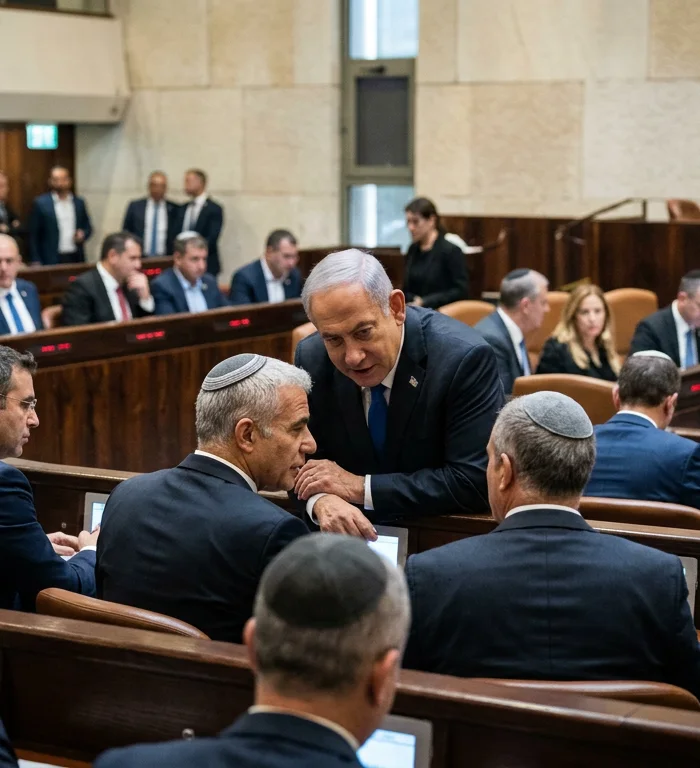
Stalled military conscription legislation
Prime Minister Benjamin Netanyahu faces a critical impasse as negotiations over military conscription for Haredi students threaten to dismantle his coalition government. The legislative deadlock intensified after a recent High Court of Justice ruling mandated that ultra-Orthodox men must enlist, directly challenging the political status quo.
Internal friction has reached a threshold where coalition stability depends on whether Netanyahu can secure a legal framework that satisfies both his Haredi political partners and moderate factions. Gadi Eisenkot and the National Unity bloc have asserted that any further delays in addressing the draft issue undermine the conduct of the war effort.
Political leverage and budget tensions Prime Minister Benjamin Netanyahu Historically, the Likud party has relied on the support of Haredi parties through structured agreements centered on state budget allocations and religious mandates. These parties are now demanding ironclad guarantees that these commitments remain enforceable once a new government configuration is sworn in, fearing that compromise on conscription will diminish their influence. Eisenkot and other centrist figures within the government have linked their continued participation to a overhaul of the exemption policy. This positioning has narrowed the prime minister’s operational space, as he must now reconcile the demands of his traditional base with the necessity of maintaining a broader war-time cabinet. Regional normalization at risk The domestic instability carries significant risks for Israel’s regional diplomatic initiatives, particularly regarding normalization efforts with neighboring states. A government collapse and the resulting transition period would likely paralyze the Knesset, preventing the administration from advancing long-term security and diplomatic protocols.
Markets and regional allies are watching for any sign of a legislative compromise that might prevent early elections. Any failure to reach an agreement would trigger a dissolution of the current parliament, stalling both domestic reform efforts and cross-border security coordination.
Legislative vote defines stability
The primary open question is whether Netanyahu can shepherd a conscription bill through the Knesset before the June 30, 2024, deadline. If a legislative compromise is reached, the coalition remains intact, potentially ensuring government continuity through the current conflict. Conversely, if no agreement emerges, the resulting political vacuum will almost certainly force early elections, redirecting the state's focus inward and away from pressing geopolitical priorities.
More stories
- Germans oppose Ukraine aid as poll shows support slipping
- Kim Jong-un receives 10 envoys after constitutional shift
- Ukraine claims Libya strike sinks Russian naval corvette
- COP31 climate talks collapse over fossil fuels and funds
- Russian military faces 1,087 recorded suicides in Ukraine war
- US faces China, Russia in Africa minerals contest
- French school protests cost exam pupils up to 150 class hours
- UN agencies seek aid for 30.3m facing DR Congo hunger
- Liberia House summons 3 agencies over El Niño heat risk
- Spanish workers stage first general strike in 14 years
Latest news
- Trump prepares tariffs on China and other major exporters
- New-car buyers pay record average $50,087 in October
- Banks face ECB reserve debate over liquidity and profits
- Investors see Anthropic debut gains fade below $83 a share
- Iraq orders federal control over Kurdish-area oilfields
- Nvidia shares retreat as AI rally cools before PCE data
- Macy’s parade faces balloon limits as storm winds approach