

Liberia House summons 3 agencies over El Niño heat risk
Lawmakers want preparedness plans before hotter dry-season conditions threaten farming, food prices and public health.
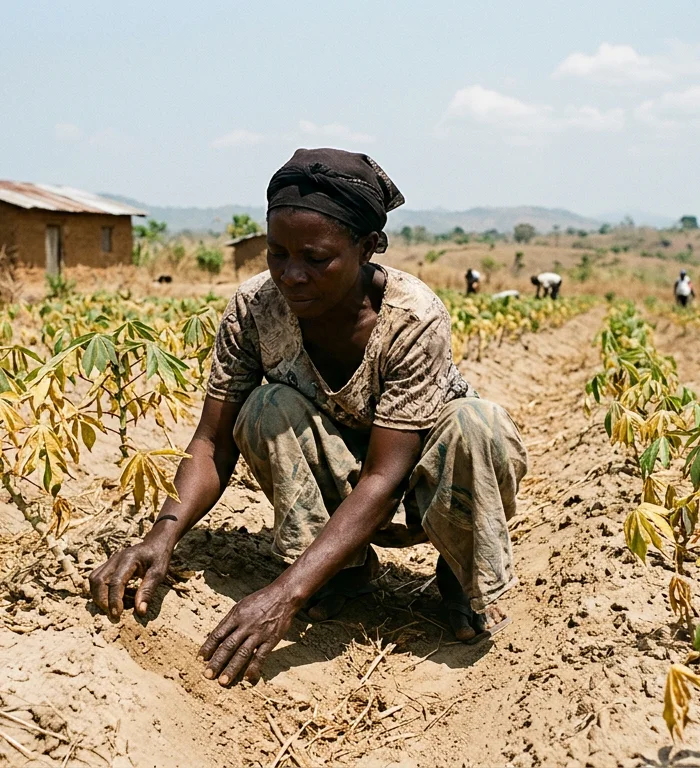
Liberia’s House of Representatives summoned three agencies to appear on Nov. 19 over El Niño preparations, The Liberian Investigator reported on Nov. 11.
The hearing targets food, water and public-health risks as NOAA’s Climate Prediction Center said in a Nov. 9 update there is an 83% chance of a historic El Niño event for October through December, exceeding every El Niño since 1950.
The House called the Environmental Protection Agency, the National Disaster Management Agency and the Ministry of Agriculture after Rep. Taa Z. Wongbe of Nimba County District 9 warned of pressure on food supply and the wider economy.
"If you're importing pepper from Guinea, it's going to be very expensive. When you're importing things from Ghana and other places, it will be very expensive," Wongbe said, according to The Liberian Investigator.
NOAA’s Climate Prediction Center said El Niño is present and strengthening, with a strong-to-very strong event likely. The World Meteorological Organization said El Niño will probably continue through February 2027.
El Niño is the warming of central and eastern tropical Pacific surface waters that can alter weather patterns across regions. Liberian climate expert Isaac Nyaneyon Kannah Teah told New Narratives in September that Liberia could face a hotter, drier January-to-March dry season, with strains on water supplies, agriculture, forests and power generation.
Wongbe said more than 70% of people in his district rely on farming, and questioned whether warnings are reaching rural communities. Albert Momolu Sherman, director of the Liberia Meteorological Service, told the same outlets that the service has no marine weather station to measure sea-surface temperature and depends on global models.
The Famine Early Warning Systems Network said in October that West Africa’s dependence on imported rice leaves the region exposed to price pressure if El Niño reduces output in India and Thailand or leads to renewed Indian export restrictions. The World Food Programme projected food insecurity in West and Central Africa would rise 12% because of El Niño, affecting nearly 6 million additional people.
Climate agencies have not attributed Liberia’s recent rains to El Niño. The FAO said El Niño has historically been linked to below-average rainfall in West Africa and the Sahel from July to September, while the WMO cautioned that a stronger El Niño does not automatically mean stronger impacts in every region.
The three agencies are expected to brief lawmakers on preparedness measures, public awareness and plans for climate-related disruptions. The NDMA is to address disaster preparedness and response, while the Agriculture Ministry is to explain how it plans to protect farmers.
NOAA’s next monthly El Niño assessment is scheduled for Nov. 12, including whether the strong-to-very strong outlook changes. The EPA, NDMA and Agriculture Ministry are due before the House on Nov. 19 to explain preparedness, public awareness and disruption plans.
Source: news article, The Liberian Investigator via AllAfrica, Nov. 11, 2026
More stories
- Cameroon faces succession test after Biya's 10-week absence
- Germany faces integration gaps with 30% migration-background share
- Vance's Iran role shifts as Trump favors blockade pressure
- EU defence start-ups face two funding gaps, MEPs warn
- China rejects US spy claims in Nvidia-linked tech fight
- Italy lower house advances vaccine-sceptic medic return bill
- Spanish workers stage first general strike in 14 years
- Singapore faces 400-post Indonesia disinformation push
- Israel votes as Netanyahu faces first post-attack election
- Lula victory in Brazil tests party unity over vote result
Latest news
- Japan & Asia: Zelda remake tops Japan boxed sales with 537,041
- Sudan gold revenue reaches $3.5bn without price relief
- ADNOC L&S lifts 2026 profit outlook to $4bn
- EU receives 12.89 million tonnes of Russian Arctic LNG before ban
- How did a $4 trillion company miss it?
- UK GDP rises 0.7% as tech services lead third-quarter growth