

Israel votes as Netanyahu faces first post-attack election
Israel holds its first election since the Hamas-led attacks of October 7, 2023, with Benjamin Netanyahu facing a closely contested race.
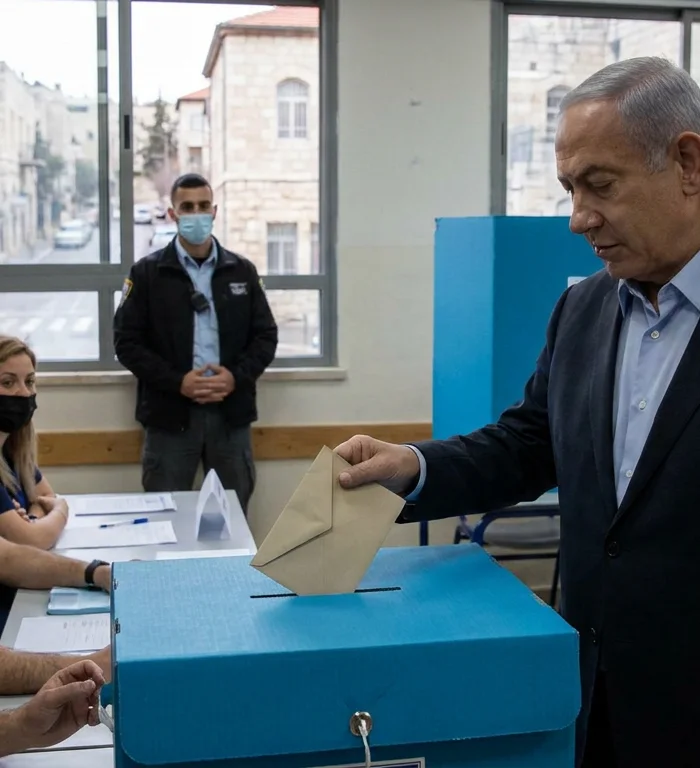
Israel holds its first election since the Hamas-led attacks of October 7, 2023, with Benjamin Netanyahu facing a closely contested race.
Voting on October 27 puts the prime minister’s wartime leadership before the electorate after conflicts involving Gaza, Lebanon and Iran. Opinion polls indicate a tight contest, without a straightforward route to government for either Netanyahu or his principal challenger, Gadi Eisenkot.
Eisenkot, a former military chief of staff with a hawkish security outlook, is seeking support across several political camps. His challenge involves more than defeating Netanyahu personally: he needs parties spanning the right, center and a diminished left to support an alternative government.
Eisenkot seeks a cross-party majority
The opposition’s breadth presents an electoral opportunity but also a coalition-building challenge. If parties from those different camps support Eisenkot, their combined backing could provide a route to replacing Netanyahu; without that cooperation, opposition to the incumbent alone would not settle who governs.
Netanyahu’s existing alliance brings together right-wing, far-right and ultra-Orthodox parties. The fragmented political system complicates his opponents’ effort to displace that grouping, making the strength of potential governing partnerships central to the contest alongside the standing of the two leading figures.
With 19 years as prime minister, Netanyahu has held the office longer than any other Israeli leader. That record provides the backdrop to an election in which he is defending his leadership while Eisenkot offers voters a different security-focused candidate.
War shapes the leadership contest
The Hamas-led assault of October 7 remains central to the election’s political context. The vote gives Israelis their first national electoral opportunity since those attacks to assess the incumbent government, with the subsequent wars also forming part of its record.
Voters described the election as the most consequential the country has faced. That characterization expresses the stakes they attach to the decision, rather than establishing how the result will compare historically with earlier elections or what policies a new government would pursue.
Netanyahu has defended his tenure by arguing that he alone has the resolve needed to confront Israel’s adversaries. Eisenkot’s military background puts security credentials on both sides of the contest, although those credentials do not establish how either would handle the next regional crisis.
Coalition choices determine the next government
A close election would leave the composition of a governing alliance especially important. If Netanyahu’s partners can sustain their coalition, that would offer a path to continued leadership; if Eisenkot assembles sufficient support, it would open a route to a change of prime minister.
Neither scenario establishes the direction of future military or diplomatic decisions. The immediate unresolved questions are how the votes translate into political strength and whether the parties needed by either contender can agree to support a government.
More stories
- South African parties split over Cape Town's 30,000-home annual gap
- Ruto seeks Russian investment in Kenya's $380m trade push
- Sudan teachers seek 20% budget share with 8m children outside school
- Spain rail network faces scrutiny after 64 killed near Toledo
- Spain reports at least 30 dead in high-speed train crash
- Villa Vie disembarks 203 passengers in Cambodia over fuel costs
- Lula victory in Brazil tests party unity over vote result
- Dimaampao seeks 7-year Philippine chief justice term
- UN climate fund earmarks $20m for Nepal flood recovery
- Ethiopia's coffee sector faces $453m EU export risk