Netanyahu arrest debate sharpens before September visit
Trump rejected any Netanyahu arrest in the U.S. as Mamdani weighs city authority over an ICC warrant before September’s UN gathering.
Lauren Collins ·
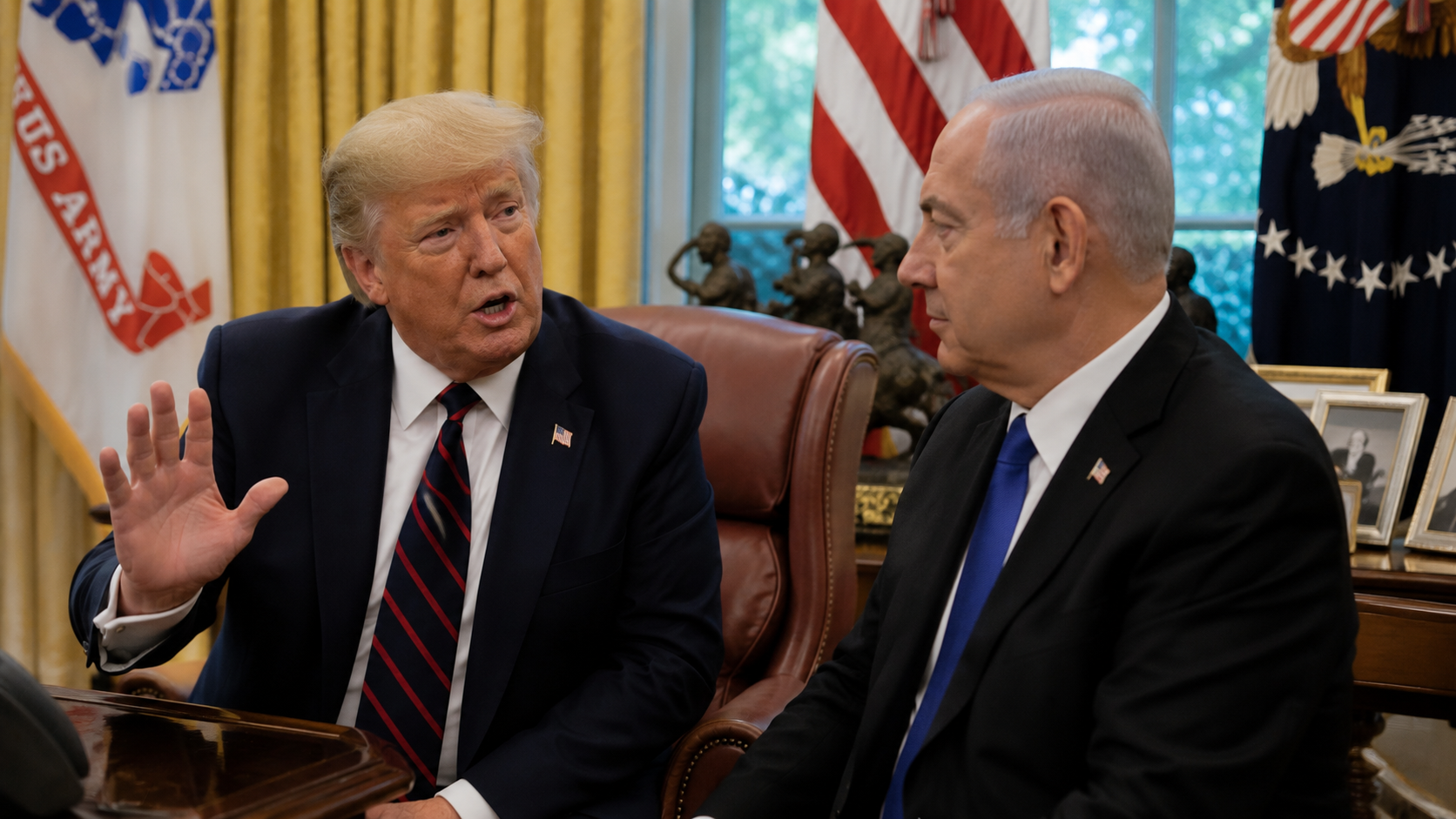
Netanyahu arrest dispute pits Trump against New York Mayor Zohran Mamdani before the Israeli leader's expected UN visit in September.
President Trump said Monday that Benjamin Netanyahu would not be detained in the United States, rejecting Mamdani’s pledge to examine whether city authorities could act on an International Criminal Court warrant. Trump wrote on Truth Social that Netanyahu is fighting Iran, and he also alleged that Iran had killed protesters and American soldiers, claims presented as Trump’s own framing.
Mamdani tests city authority
Mamdani said his administration is speaking with the city’s legal department about what power, if any, New York has to act if Netanyahu enters the city. He said he would follow local law and indicated he was not seeking to change statutes to create new authority.
The mayor has called Netanyahu a war criminal and said the Israeli prime minister belongs before the court in The Hague. The International Criminal Court previously issued an arrest warrant for Netanyahu over alleged war crimes in Gaza, a move Israel has rejected.
Mamdani made the issue part of his mayoral campaign, saying he would seek Netanyahu’s arrest if the Israeli leader came to New York. He has also accused the Israeli government of committing genocide in Gaza, language that has sharpened divisions among moderate Democrats and parts of the city’s Jewish community.
Federal law narrows arrest path
The central obstacle for Mamdani is that the United States does not recognize the International Criminal Court. Brian Ginsberg, a partner at Harris Beach Murtha and a former lawyer in the New York state attorney general’s office, said the 2002 American Servicemembers’ Protection Act bars local law enforcement agencies, including the New York Police Department, from cooperating with ICC procedures.
Ginsberg said the mayor’s idea would be vulnerable almost immediately. "The arrest contemplated by Mayor Mamdani would face significant legal challenges," he said. "It may well set up a three-way clash among local power, federal law, and international law."
Netanyahu’s office rejected both the ICC process and Mamdani’s comments in a social media statement on Sunday. It called the court a "kangaroo court" and said Mamdani should focus on New York’s problems rather than the Israeli prime minister.
September visit sets legal stakes
Netanyahu is expected to travel to New York in September for the United Nations General Assembly, giving the dispute a practical deadline. The annual gathering brings foreign leaders into a city where local policing, federal security and diplomatic obligations often overlap.
Mamdani said the same principle would apply to other foreign leaders facing ICC warrants, including Russian President Vladimir Putin. His argument is that an international warrant for serious crimes should be honored, while critics say a mayor cannot direct police to arrest a foreign leader on a warrant the federal government does not recognize.
David Greenfield, a former Democratic city councilman and chief executive of Met Council, criticized the proposal as dangerous for democratic governance. "The idea that an executive would try to direct a police agency under their jurisdiction to arrest their political opponents is very much third-world behavior," he said. "It’s not what we do in a democracy."
If federal law controls from the start, the mechanism is preemption: Washington’s refusal to cooperate with the ICC would block local action. That path would preserve Netanyahu’s ability to attend the UN gathering, limit the NYPD’s exposure and reinforce the wider U.S. distance from international criminal jurisdiction.
If New York attempts an operational step, the mechanism would likely be litigation or federal intervention before any arrest could occur. That path would turn Netanyahu’s visit into a test of local power, shift global attention from Gaza diplomacy to U.S. legal conflict and force other cities to examine whether their police departments could ever act on ICC warrants.
If Mamdani confines the matter to legal review, the mechanism is political signaling rather than enforcement. That would keep pressure on Netanyahu and Israel’s government, preserve debate inside Democratic politics and leave the broader international justice system facing the same unresolved question: how an ICC warrant works when a powerful non-member state declines to act.