Michigan Senate primary gains Ocasio-Cortez endorsement
The Michigan Senate primary gained national progressive attention after Alexandria Ocasio-Cortez endorsed Abdul El-Sayed for the Democratic nomination.
Atlas Newsdesk ·
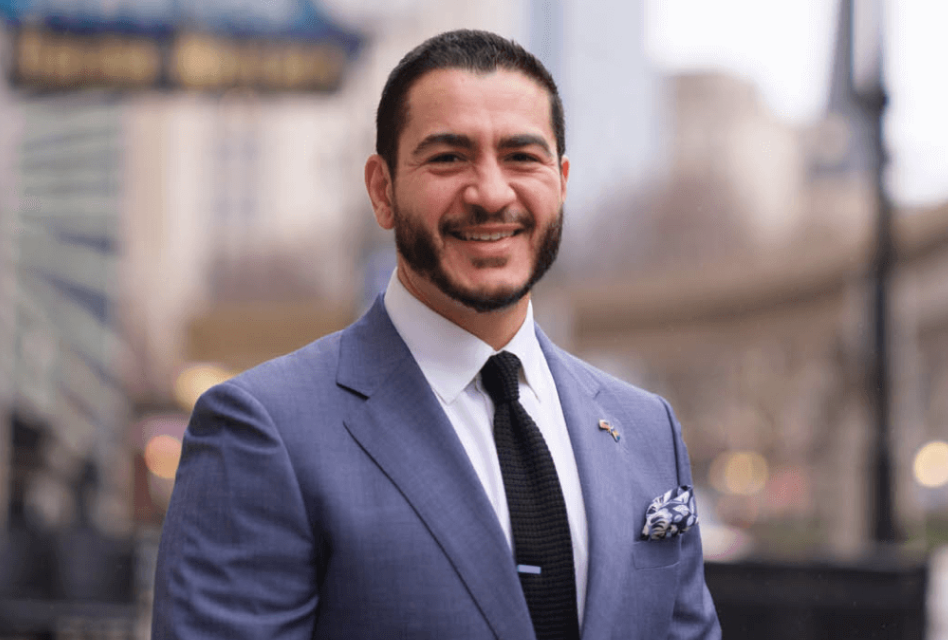
Michigan Senate primary candidate Abdul El-Sayed won Alexandria Ocasio-Cortez's endorsement, sharpening Democratic focus on a must-win seat.
The New York Democrat's support gives El-Sayed another prominent progressive ally as he seeks the nomination for a Senate seat now held by Democrat Gary Peters. The eventual Democratic nominee is expected to face Republican Mike Rogers in a contest both parties are likely to treat as central to the Senate map.
A must-win Michigan seat
The endorsement matters less as a single statement than as a signal to Democratic activists watching where national progressives place their energy. Ocasio-Cortez remains one of the party's best-known left-wing figures, and her decision puts El-Sayed more firmly in that lane of the primary.
Michigan carries extra weight because Peters is leaving the seat, creating an open race rather than a standard incumbent defense. For Democrats, holding the seat is part of the basic arithmetic of regaining Senate control, not a bonus target on the edge of the map.
The party requires a four-seat net improvement to take the majority in the midterm elections, according to the provided race context. Losing Michigan would not merely cost Democrats one seat; it would force them to make up more ground elsewhere before they could claim control.
Progressives test their leverage
For El-Sayed, the immediate value is political definition. Ocasio-Cortez's backing helps identify him as the candidate most closely associated with the party's progressive wing, a distinction that can matter in a primary where voters are choosing both a nominee and a governing style.
The same endorsement also carries a clear uncertainty. If progressive voters consolidate behind El-Sayed, he could strengthen his position inside the primary; if the electorate prioritizes a different general-election profile, the national-left association could become a more complicated asset.
Endorsements do not automatically deliver votes, and the available information does not show polling, fundraising totals or the full primary field. What can be said is narrower but important: Ocasio-Cortez has chosen to spend political capital in a race Democrats classify as essential.
Senate control frames the race
The Michigan contest sits at the intersection of two Democratic problems: defending an open seat and finding enough additional wins to flip the chamber. Those are different tasks, and the Peters vacancy makes the first one harder because Democrats cannot rely on the advantages of an incumbent campaign.
Republicans, represented in the general-election frame by Mike Rogers, will have an incentive to turn the Democratic primary outcome into an argument about the direction of the party. Democrats will have to balance enthusiasm inside the base with the broader coalition needed to keep Michigan in their column.
If Ocasio-Cortez's endorsement helps El-Sayed draw volunteers, attention and progressive support, the mechanism is straightforward: a clearer ideological identity can organize primary voters faster. In that scenario, the company-level equivalent does not apply because no business is at the center of this story; the institutional effect would be felt through party committees, campaign infrastructure and Senate strategy.
If the endorsement instead becomes a line of attack in a general election, the mechanism changes. Rogers and Republican allies could frame the Democratic nominee around national progressive politics, while Democrats would need to show that the nominee can win beyond the primary electorate.
A third path is that the endorsement raises El-Sayed's visibility without settling the nomination. That would leave the race shaped by the next measurable signals: candidate fundraising, additional endorsements, voter outreach and whether Democrats can keep an open Michigan seat from becoming a drag on their four-seat Senate target.