Mercedes-Benz car sales fall 8% as China deliveries slide
Mercedes-Benz reported an 8% fall in third-quarter car deliveries to 407,200, with a 31% decline in China alongside growth in Europe and the U.S.
Hazal Anyalı ·
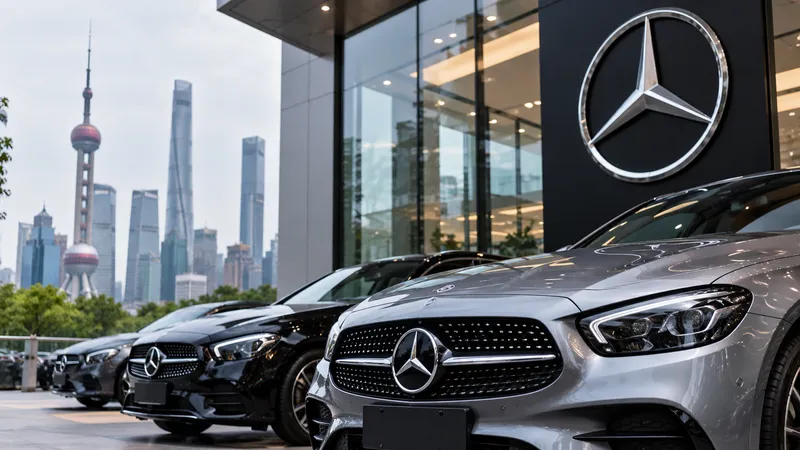
Mercedes-Benz reported an 8% fall in third-quarter car deliveries to 407,200, with a 31% decline in China alongside growth in Europe and the U.S.
The German luxury automaker attributed the overall decline to difficult trading conditions in China in a statement issued Wednesday. Its July–September figures showed contrasting regional results: deliveries increased in both Europe and the U.S., but the worldwide total remained below its year-earlier level.
China accounts for the steepest decline
Mercedes-Benz delivered 86,800 cars in China during the quarter, down 31% from a year earlier, the company said. That contraction was deeper than the 8% decline across its global car operations, putting the Chinese market at the center of the quarterly setback.
The regional comparison matters for interpreting the headline decline. Mercedes-Benz reported a 6% increase in U.S. car sales and a 5% rise in Europe against the corresponding quarter a year earlier, rather than a uniform retreat across those markets.
Those gains did not prevent another quarterly decline in the core car business. The figures establish the direction of sales in each region, but percentage changes alone do not show how many additional vehicles Europe and the U.S. contributed.
Top-End deliveries face two pressures
Deliveries in the company's Top-End category fell 21% from a year earlier to 53,900 vehicles, Mercedes-Benz said. The company cited both China's weaker market conditions and transitions between models as factors affecting that segment.
That explanation identifies two separate issues behind the decline: the market environment and the timing of product changes. Mercedes-Benz attributed pressure to both, without assigning a numerical share of the Top-End contraction to either factor.
The Top-End decline was steeper than the fall in total car deliveries. These are measures of vehicle volumes, however, not a statement of how revenue or earnings changed; the sales figures alone do not establish the financial effect of the shifting product mix.
Electric growth offers a different signal
Battery-electric deliveries across the group increased 52% from the corresponding quarter a year earlier to 78,100 vehicles, according to Mercedes-Benz. That measure covers vans as well as cars, unlike the 407,200-unit total for the core car operation.
The distinction limits direct comparisons between the two totals. The electric result shows growth in one propulsion category across the broader business, but it cannot be read as a car-only electric growth rate or used directly to establish electric cars' share of car deliveries.
If China's weakness persists, Mercedes-Benz would need stronger results elsewhere to offset that pressure on worldwide deliveries. If market conditions improve instead, the company's explanation points to less pressure from China, although that would not by itself resolve the separate model-transition issue affecting Top-End sales.
The next delivery figures will help establish whether European and U.S. growth continues alongside the expansion in battery-electric vehicles. A recovery in China and progress through the Top-End model changes would address the two pressures Mercedes-Benz identified, rather than relying solely on gains elsewhere.