Boston Dynamics names Alexa veteran Rohit Prasad as CEO
Boston Dynamics appoints Rohit Prasad CEO as Hyundai targets 2028 factory deployment for Atlas, advancing its robot commercialization plans.
Cuneyd Erdogan ·
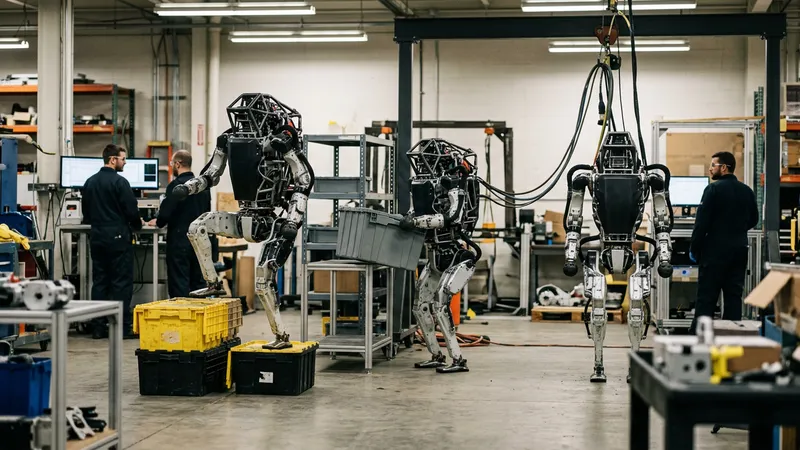
Boston Dynamics appointed Rohit Prasad CEO as Hyundai targets 2028 factory deployment for Atlas, advancing its robot commercialization plans.
The appointment puts an executive with experience developing Amazon.com Inc.'s Alexa assistant in charge of the Hyundai Motor Co.-controlled robotics business. Boston Dynamics announced the selection on October 6, 2026, with commercialization among the priorities for its new leader.
Hyundai sets Atlas deployment targets
Hyundai said earlier this year that it intends to introduce Atlas at its Georgia factory beginning in 2028. The automaker also outlined plans for annual humanoid production capacity of up to 30,000 units, a manufacturing target rather than a measure of current output.
Those plans give Prasad a specific industrial setting for the company's next phase. The Georgia deployment concerns robots working inside an automotive plant; the production-capacity ambition addresses the separate challenge of manufacturing the machines at scale.
Hyundai became Boston Dynamics' majority owner in 2021 and is now pursuing SoftBank Group Corp.'s remaining holding. That transaction would bring the robotics company wholly under Hyundai's ownership, although the supplied account does not establish a completion date or purchase price.
Prasad brings voice AI experience
Prasad worked at Amazon for 12 years, contributing to Alexa's development and expansion, Boston Dynamics said in its announcement. Before that, he spent 14 years at Raytheon BBN Technologies, where his responsibilities included machine-learning research and applications serving government and commercial customers.
His appointment follows Robert Playter's departure earlier this year after six years as CEO. Playter was only the second person to lead Boston Dynamics across a corporate history spanning more than three decades, making Prasad's arrival a change in a historically small leadership succession.
The technical focus is also different from a voice assistant. Boston Dynamics is developing systems intended to operate in factories and other physical settings, a field described as physical AI; Hyundai has established development partnerships involving Nvidia Corp. and Google DeepMind for Atlas.
Atlas faces a commercial test
The distinction between a deployment schedule and demonstrated factory performance is central to assessing the program. Hyundai's announced dates and capacity ambitions establish objectives, but they do not themselves demonstrate robot reliability, customer demand or the economics of operating Atlas on a production line.
If Atlas performs useful factory work reliably, Boston Dynamics would gain an operating example for its commercialization effort, while Hyundai would gain experience integrating humanoids into manufacturing. For the wider robotics sector, that scenario would provide a practical reference for industrial adoption; any broader productivity benefit would depend on replication beyond the initial deployment.
If integration instead takes longer than Hyundai's timetable allows, the commercial case would remain less established for Boston Dynamics. In that scenario, the wider industry would have less evidence from this deployment to guide adoption, and any contribution to manufacturing productivity would be correspondingly delayed rather than assured.
The immediate milestones are Hyundai's ownership transaction and preparations for the planned Georgia introduction. Prasad takes over with a named deployment site and production ambition, but the announcement leaves the program's costs, operating performance and eventual manufacturing scale unresolved.