EU Full Self-Driving review tests Tesla's safety evidence
Tesla's Full Self-Driving bid faces scrutiny over safety evidence after approvals from the Netherlands and seven additional EU states.
Jason Kwon ·
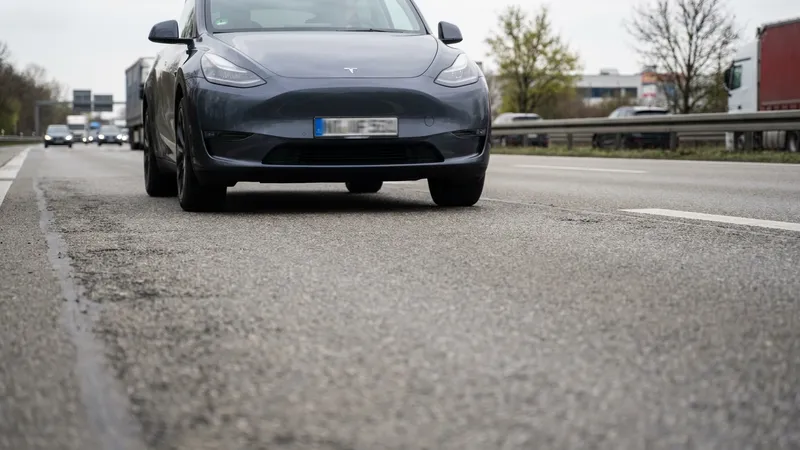
Tesla's Full Self-Driving bid faces scrutiny over safety evidence after approvals from the Netherlands and seven additional EU states.
A Europe-wide decision would bring the technology before regulators representing all 27 EU member countries. The system assists drivers rather than providing full autonomy, a distinction central to the scope of the approval Tesla is seeking.
Dutch clearance sets European route
The Netherlands supplied the initial clearance needed for Tesla to pursue authorization throughout the bloc. Under the process described in the reporting, one member country must first approve the system and support its consideration at EU level.
That makes the Dutch assessment relevant beyond its national market: regulators elsewhere are drawing heavily on it when considering their positions, according to the reported account. Belgium, Denmark and the Czech Republic are among the seven additional countries that have separately authorized the technology nationally.
Reported correspondence between Tesla and RDW, the Dutch vehicle-safety authority, describes repeated company requests to narrow the examination. The exchanges indicate that Tesla obtained some changes to evaluation procedures and testing methods, although the account does not establish that those changes made the approved system unsafe.
Researchers challenge Tesla's crash claims
Seven researchers specializing in traffic safety who examined Tesla's methodology concluded that its research could not substantiate the crash-reduction claims the company presented to regulators and consumers. Their criticism concerns the evidence supporting Tesla's assertions, not a finding that Full Self-Driving necessarily increases crashes.
Tesla circulated its studies among European authorities after obtaining Dutch clearance, according to the reported account. That distribution put the company's safety arguments before officials considering whether to support broader authorization, alongside their reliance on the Dutch assessment.
The company has also encouraged supporters through social platforms to press authorities for faster decisions. Its campaign presents regulatory delays as obstacles to technology that saves lives, a characterization dependent on safety benefits that the researchers say its studies do not establish.
The available account gives no numerical estimate for Tesla's claimed crash reduction and does not detail the methodological objections individually. It therefore supports reporting the researchers' challenge, but not calculating the size of any safety advantage or independently resolving the disagreement.
RDW defends assessment independence
RDW said in a statement that it “assesses driver assistance systems from all manufacturers objectively and independently.” It added that engagement with manufacturers “is a routine part of the assessment process and does not compromise the independence or thoroughness of our assessment.”
Five experts in autonomous-vehicle regulation who examined the exchanges questioned the authority's impartiality, citing accommodating responses from Dutch staff and language emphasizing common objectives. Those concerns remain expert assessments of the correspondence, rather than an established finding of regulatory misconduct.
Tesla did not answer detailed inquiries about its studies or dealings with European authorities, according to the reporting. RDW's statement defended its general process without addressing the particular exchanges or Tesla's European data.
The next decision concerns wider authorization, not whether the product becomes fully autonomous. If national regulators endorse the Dutch assessment, Tesla's existing clearances would support its bid for broader access; if they require additional safety evidence, the adequacy of the company's research would remain an unresolved condition of that review.