

Madibeng residents blame officials after 15 years of water cuts
Research described by The Conversation Africa says residents in three communities view water failures as a matter of corruption, neglect and broken trust.
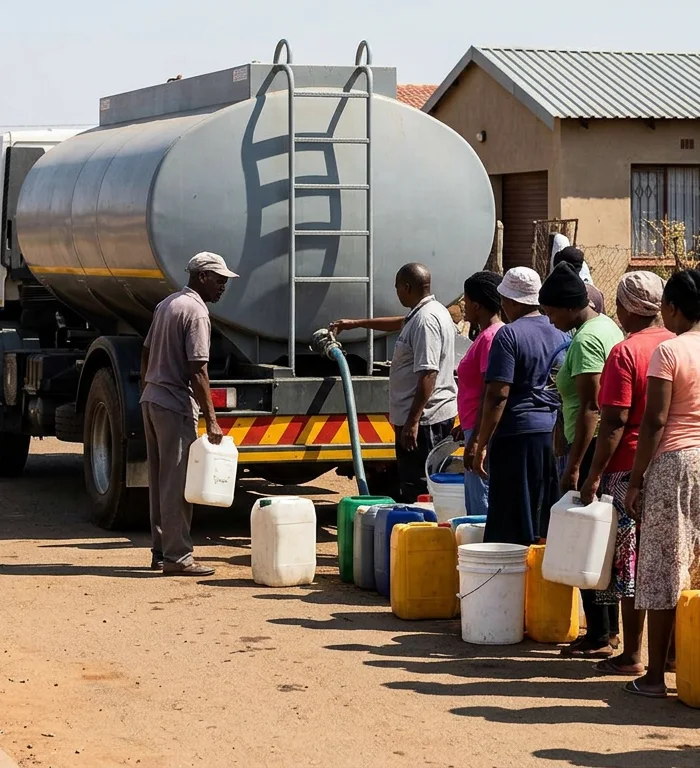
Madibeng residents have endured unreliable water services for 15 years and blame municipal corruption and neglect, according to a Conversation Africa article published Nov. 2 on sociological research in South Africa’s North West province.
The findings matter because the municipality serves more than half a million people, while official explanations cited by the article focus on ageing pipes, broken pumps and skills shortages rather than residents’ accounts of unfairness.
The research covered Damonsville, Mothutlung and Mmakau, communities where residents have experienced persistent supply problems. It asked how often water stopped, how households coped, what residents believed caused the crisis, how the municipality responded and who they held responsible.
One Damonsville resident identified as Andre, who had lived there for 30 years, said: “The money is there … The problem is that they don’t use that money to replace these things … They eat the money, and then we have a water problem.”
Another resident, Thabo in Mmakau, gave a similar account: “The people (municipal officials) do not fix the pipes because they eat the money.” The article said the South African phrase “eating the money” refers to public officials stealing state funds to finance expensive lifestyles.
Madibeng means “place of water” in Setswana, according to the article, making the long-running shortages especially politically charged. Emergency supplies have been used, but the article said those deliveries were often erratic and the water sometimes poor in quality. In Itireleng village, a single tank supplying hundreds of residents was filled once a week, according to the article’s photo caption.
The article said water-related protests have occurred regularly in Madibeng. It cited a 2014 protest in which police opened fire, killing at least two people, while another person later died from injuries sustained in the shooting.
Residents also described the crisis as a failure of duty. Felicity, a young graduate in Damonsville raising two nieces, asked: “Isn’t it the municipality’s main responsibility to provide water and other services at all times?”
The research does not verify allegations of misconduct, and the article says the residents’ claims should not be treated as proof of corruption. Its central finding is narrower: repeated failures and limited explanations led residents to interpret the water crisis through their own observations, including delays, perceived favouritism in tanker deliveries, health concerns and municipal silence.
The article said broader problems of corruption and weak management have been documented in South Africa’s water sector. In Madibeng, the research suggests the service failure has become a governance problem as well as an infrastructure problem, with residents no longer accepting broken equipment as a sufficient explanation.
More stories
- Monrovia mayor-designate seeks $14.5m city budget
- Iran's attacks hit 25 tankers near Strait of Hormuz
- Russia strikes Ukraine as Odesa faces electricity strain
- Bahrain reports two injuries after Iranian aerial attacks
- Baltic responders fight Sparta II fire after drone strike
- Estonia to close 5 Russia road crossings for six months
- Iran faces renewed strikes after IRGC's 100% readiness claim
- Kallas urges UK to deepen EU defence ties before Nov. 20 summit
- Washington and Moscow in Talks on Data Centers, Nuclear Energy, Putin’s Envoy Claims
- Starshield limits disrupt Ukraine drones, officials say
Latest news
- Nvidia board gets Trump input on Jensen Huang return as CEO
- Rwanda faces budget strain from 85% electricity access push
- ICE arrests at Seattle airport draw protests and scrutiny
- AI doubts leave Asian stocks facing a new investment test
- EU rejects COP31 deal as fossil fuel divisions block pact
- Deal Sheet: Fortis shutdown costs over 400 jobs
- Germany to pay about $11 a month into child pension accounts
- Laura Brand curbs prison messages after YouTube dispute