

Leipzig/Halle airport drone case nears German attribution
Germany will soon identify who it says was behind the Leipzig/Halle airport drone attack attempt, Chancellor Friedrich Merz said.
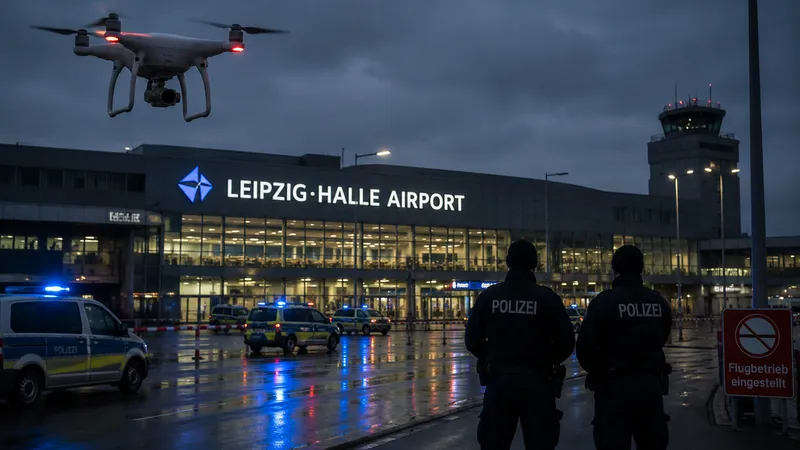
Leipzig/Halle airport investigators found three drones linked to a suspected attack on a NATO logistics hub, as Berlin prepares attribution.
Chancellor Friedrich Merz said on Tuesday that the German government would soon set out who it believes was responsible for the attempted attack earlier this month. Speaking at a coalition summit, Merz said Berlin was coordinating with security authorities before making a public assessment.
Merz points to attribution
Merz did not name a suspect, and the German government has not made a direct accusation. German media reports, citing security sources, have pointed to suspected Russian intelligence involvement; Moscow has denied any role in the incident.
The case began on August 4, when an explosives-laden drone was found near a Ukrainian Antonov cargo aircraft used for military supplies. Investigators also suspect that a second drone struck a DHL cargo plane shortly after the airport was temporarily shut, according to the accounts cited in the reports.
Three drones near cargo hub
Leipzig/Halle airport is not only a commercial cargo site. It is also used by NATO and Ukraine's Antonov Airlines for military logistics, giving the incident a security dimension beyond airport operations in eastern Germany.
Investigators found a third drone 10 days after the August 4 discovery, according to German media reports. The drone was located west of the airport, where investigators also found about 50 grams, or 1.8 ounces, of a substance they suspected was hexogen, a military explosive.
The office of Germany's prosecutor general declined to comment on the reported discovery. That leaves the public record anchored for now to Merz's statement, the earlier airport incident and media accounts citing security sources.
Germany weighs public accusation
A formal attribution would carry diplomatic weight if Berlin links the attempted attack to a foreign intelligence service. Germany is a major European backer of Ukraine, and the airport's role in military logistics makes the site more sensitive than a conventional freight facility.
For Leipzig/Halle airport, the immediate issue is operational security around cargo aircraft, perimeter access and drone detection. For DHL and other cargo operators using the site, any additional checks could affect handling times if authorities tighten procedures after the investigation.
The wider air-cargo sector will read the German decision through a security lens rather than a routine aviation lens. If an explosives-laden drone can approach aircraft at a logistics hub used for military supplies, other airports with dual commercial and defense functions may face pressure to review counter-drone systems.
If Berlin names Russia and presents evidence that allies regard as credible, the macro effect would likely run through European security spending and higher protection costs around transport infrastructure. Leipzig/Halle airport would face closer scrutiny of its role in Ukraine-related logistics, while cargo operators across Europe could see more inspections and restrictions around sensitive flights.
If Germany stops short of naming a state actor, the immediate diplomatic effect would be more limited, but the operational response may still tighten. The airport would remain under pressure to show that drone risks are being managed, and the cargo industry would still need to account for a method of attack that targets ground operations rather than aircraft in flight.
The main open question is the evidentiary threshold Berlin will use when it makes its attribution public. The answer will determine whether the case becomes primarily a criminal investigation, a NATO-linked security issue or another point of confrontation over the logistics network supporting Ukraine.
More stories
- Putin relays Iran view to President Trump
- Red Cross says Gaza hostage access involved Haniyeh talks
- Trump urges Zelensky replacement over refinery strikes
- Saudi Arabia suspends Riyadh airport operations after attack
- Kyiv playground blast puts Ukraine air-defense stocks back on Washington’s agenda
- Rubio’s Athens speech hardens Washington’s public line on Iran
- UK Premier to Lobby US for Ukraine Patriot Systems
- Bangladesh Cancels India Summit Over Sheikh Hasina Speeches
- Russia Observes National Flag Day Amid Unity Efforts
- Former Ukrainian Minister Questions Corruption Oversight