Kyiv depot blast kills 37 after Russian drone strike in Myla
A Kyiv-area depot blast killed at least 37 people after a Russian drone strike, prompting negligence cases and a nationwide weapons-storage audit.
Omar Farouk ·
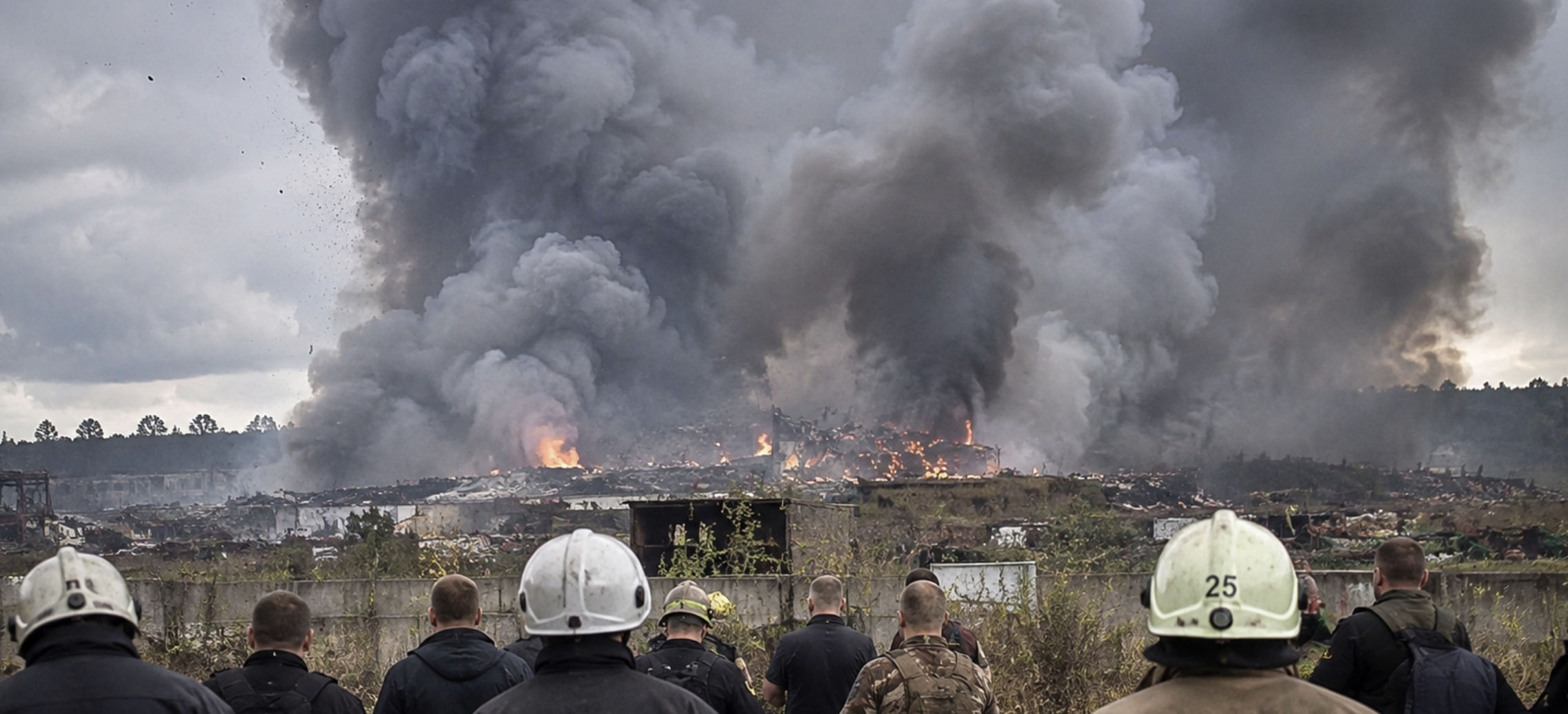
A Russian drone strike on a Kyiv-area ammunition depot killed at least 37 people, and President Volodymyr Zelenskiy cited negligence cases over storage near civilians.
Zelenskiy said Saturday that the late-Friday attack hit the village of Myla and set off detonations at a military facility. Dozens of people were injured, and hundreds were evacuated from the area, according to his account.
Zelenskiy described the storage of explosives near homes as "A terrible situation and terrible negligence on the part of those who stored explosives right next to people." He said the dead included the head of a neighboring village who had gone to help after the strike.
Myla fires spread overnight
Officials said the attack ignited fires across the area after the stored ammunition detonated. Residential buildings and a facility for elderly people and people with disabilities were among the sites damaged nearby, Zelenskiy said.
The strike came during a third straight day of Russian air attacks on Kyiv and its surrounding region. The reported toll was higher than the 10 deaths Zelenskiy cited from a similar strike-related blast in the Kyiv-area town of Vyshneve last month.
Vyshneve blast set precedent
In the Vyshneve incident, a Russian strike triggered secondary explosions that killed 10 people and damaged hundreds of houses, according to Zelenskiy. He said another such episode after Vyshneve was unacceptable and called for details to be made public quickly.
Criminal cases have already been opened on charges of official negligence, Zelenskiy said, without naming suspects. Ukraine's Defense Ministry said Saturday that everyone responsible for weapons storage should complete a full audit of their locations.
Zelenskiy said the Myla site held artillery shells, mines, drones and other ammunition. That mix makes storage location a civilian-safety issue as well as a military-logistics issue, since a direct hit can be followed by secondary blasts.
Depot audit tests wartime logistics
For civilians around Myla, the immediate effect is displacement, damaged housing and the loss of local officials and neighbors. For Ukraine's military system, the audit creates pressure to review where ammunition is held while Russia continues to target the capital region from the air.
If the audit finds depots close to residential areas, the Defense Ministry could face demands to move ammunition stocks farther from settlements. With no company at the center of the incident, the institutional exposure sits with the ministry and the military chain overseeing storage.
If relocations follow, Ukraine's defense logistics sector may have to trade shorter supply routes for lower civilian exposure. If storage sites remain near populated areas, the mechanism of risk is unchanged: a strike on a military target can extend damage into nearby communities.
If Russian attacks remain concentrated around Kyiv-area military sites, the direct global macro effect would likely run through European security policy, insurance costs and defense procurement rather than broad commodity markets. If attacks widen to energy or export infrastructure, the transmission could shift toward power supply, transport costs and grain logistics.
The main unresolved issue is whether the negligence cases identify individual failures, system-wide storage practices or both. The next official disclosures will determine whether the Myla blast becomes a criminal proceeding, a logistics overhaul or another wartime loss absorbed without structural change.