Strait of Hormuz traffic rises under US naval convoy cover
U.S. officials say the Strait of Hormuz is partly reopening under military protection, with tanker flows still below pre-war levels.
Claire Dubois ·
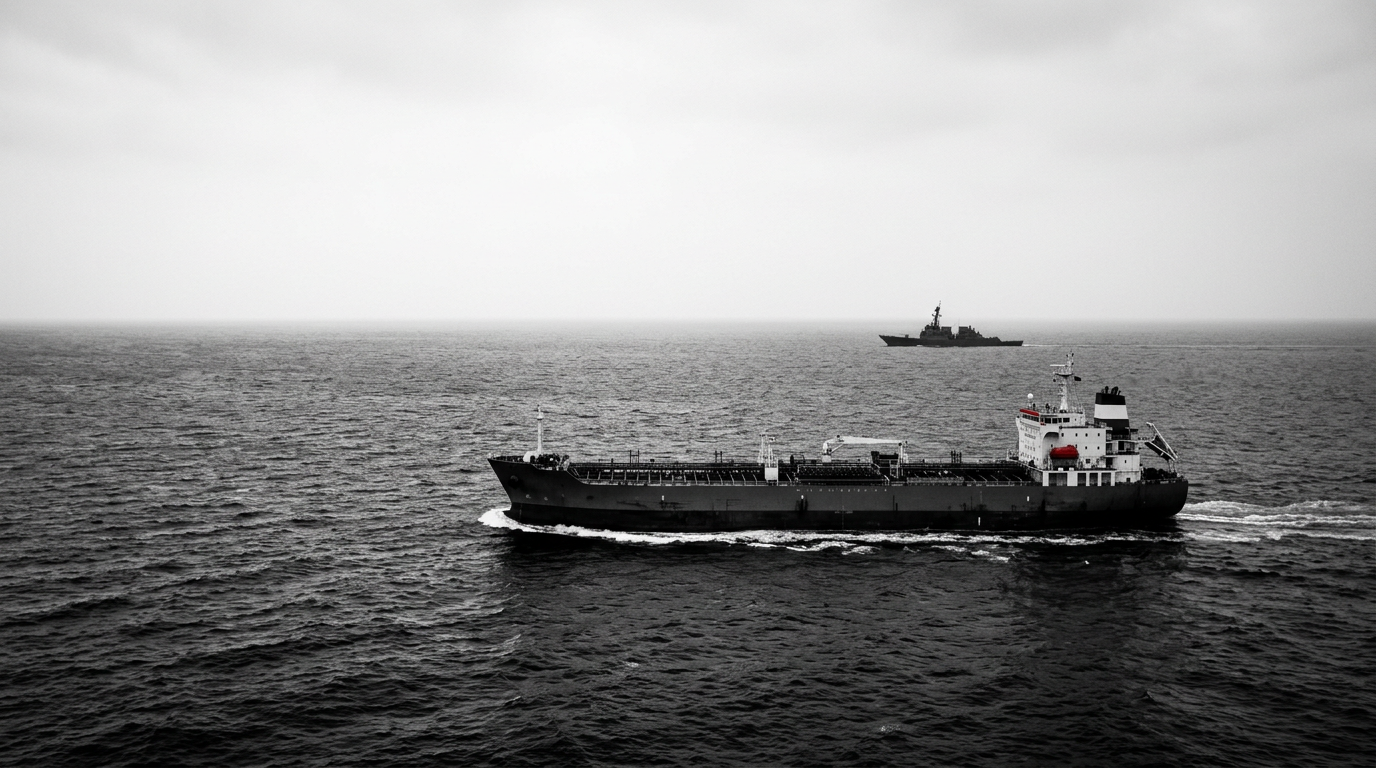
U.S. officials say the military is escorting 20 to 30 tankers a night through the Strait of Hormuz, reopening a wartime energy chokepoint.
The claim marks a shift in a conflict that began in late February with U.S. goals focused on Iran’s missile capacity and nuclear infrastructure. Brent crude was near $72 a barrel at the start of the war and later reached $126, up $54 as shipping risks climbed after Iran warned tankers not to transit.
Iranian mines in the main lane
U.S. and Israeli officials say General Alireza Tangsiri, then commander of the Islamic Revolutionary Guard Corps Navy, ordered naval mines into the Traffic Separation Scheme, the main international shipping lane through the strait. Those officials said Tangsiri was killed three weeks later in an Israeli airstrike in Bandar Abbas.
Iran announced during the first 72 hours of the war that it was closing the strait and would attack tankers trying to pass. Commercial shipping then slowed sharply as vessel attacks and mine threats made the route harder for owners, insurers and crews to price.
The pressure helped drive President Trump’s April 8 ceasefire decision, according to the account from U.S. officials, as higher gasoline costs and energy-market strain hit the U.S. economy. A June 17 memorandum of understanding made reopening the strait central to a U.S.-Iran arrangement, but officials said the passage never fully returned to normal and the deal later collapsed.
Southern channel carries tanker convoys
After the memorandum failed, the U.S. military moved to reopen the route without a new accord, working with the United Arab Emirates to guide vessels through the southern channel. U.S. officials said the operation included air cover and interceptions of Iranian drones and cruise missiles aimed at ships.
The campaign also included two weeks of U.S. strikes that officials said reduced the IRGC’s ability to attack shipping in the strait. Mine clearance involved Navy divers, Navy SEALs, underwater and surface drones, and private contractors, while a blockade of Iranian ports was restored.
U.S. officials said only 2% of ships crossing the strait over the past month were hit, a figure they presented as evidence that Iran’s targeting capacity has weakened. They also said more than 200 mine-like objects had been removed from the main lane, including 11 actual mines and only a few that were properly deployed.
Traffic through the southern channel has grown to 20 to 30 tankers a night, carrying an average of 9 million to 10 million barrels, according to U.S. officials. That remains roughly half of pre-war volume, and oil experts and tanker trackers have challenged whether the current flow is as high as U.S. officials say.
Mediators return to Tehran
Regional diplomacy has resumed as the military balance in the strait changes. Two regional sources said Pakistan’s army commander visited Tehran on Sunday, Oman’s foreign minister followed later in the week, and Qatar’s prime minister arrived Thursday at Iran’s request.
Iran has publicly held to its demand that the U.S. implement the June 17 memorandum and offer terms for reopening the strait. President Trump has said publicly that he is not seeking direct talks with Tehran: "I don't want to meet, they do. In fact, they are begging to make a deal," he wrote Thursday.
White House envoy Steve Witkoff is still speaking with Qatar and other mediators, according to U.S. officials. U.S. negotiators are testing whether the blockade, economic pressure campaign and stronger naval position in Hormuz will push Iran toward new terms rather than a revival of the June agreement.
Oil markets face three paths
If U.S.-protected traffic keeps expanding, officials aim by mid-September to widen the main channel enough for at least 50 ships to move in and out of the Gulf each night. In that scenario, global energy prices would face less supply pressure, tanker operators would get a clearer risk framework, and Gulf producers could restore more export capacity.
If Iranian attacks continue but remain inaccurate, the macro effect would more likely be a persistent risk premium than a full supply shock. For tanker owners and insurers, the mechanism would be higher escort, crew and coverage costs; for Gulf exporters, convoy limits would keep volumes below the pre-war baseline.
If mines or missiles again close the main lane, the damage would run first through crude and liquefied natural gas pricing, then into fuel costs and inflation expectations. For U.S. diplomacy, a renewed shutdown would weaken claims that Iran’s leverage has been reduced; for the shipping industry, it would delay the return of commercial traffic until mine clearance and air defense capacity improve.