Nepal and China Halt Rescues as Glacial Lake Swells
Nepal and China suspended rescue operations for flash flood victims as a growing glacial lake threatens downstream communities along their shared Himalayan…
Lauren Collins ·
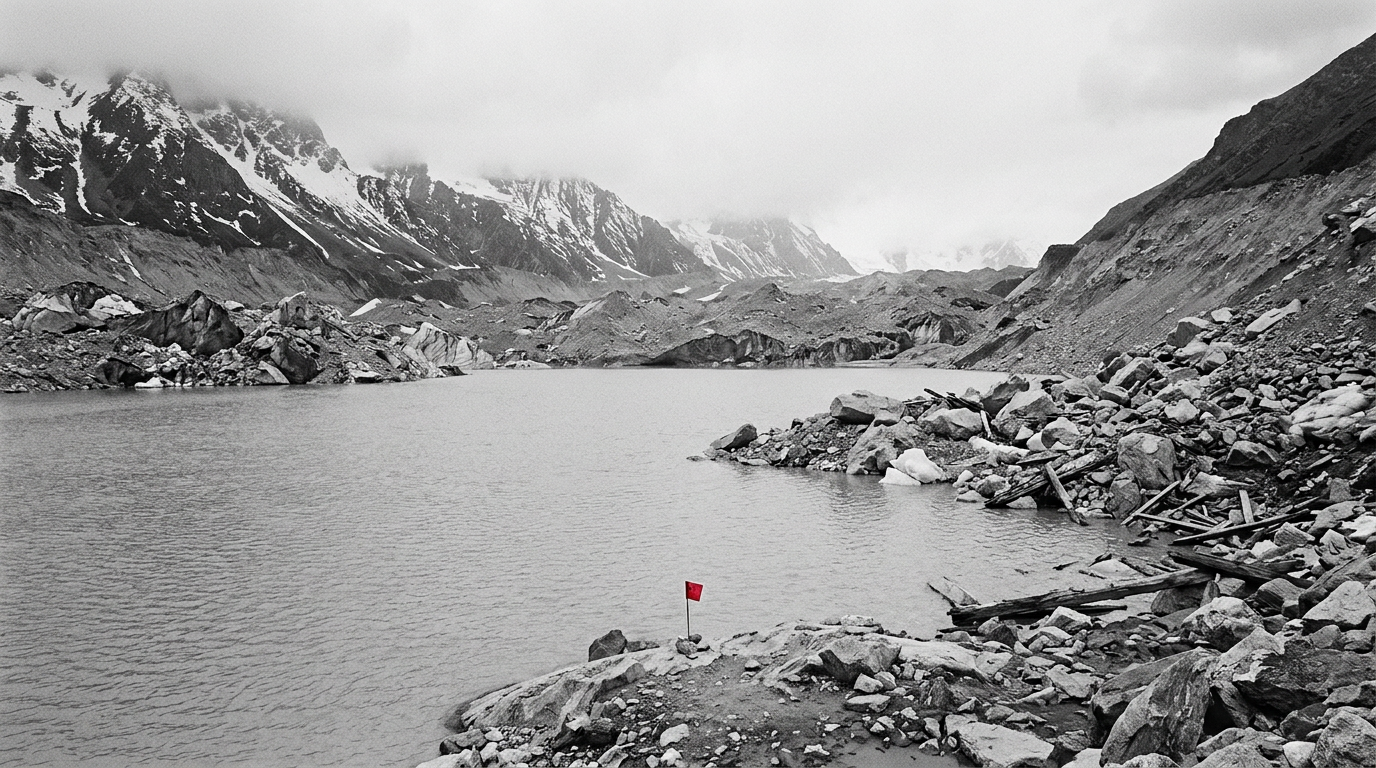
Emergency rescue operations in Nepal and China have been suspended after a glacial collapse led to the formation of a barrier lake that began overflowing on Friday. This development poses a significant threat to communities situated downstream along the Himalayan border, following a flash flood on Wednesday that resulted in at least 475 confirmed fatalities and left more than 1,500 individuals missing across both nations.
The barrier lake, created by debris obstructing a river valley, has expanded considerably, now holding an estimated volume exceeding 2.5 million cubic meters. This substantial increase in water volume has necessitated the halt in ongoing search and rescue efforts for those affected by the initial flood event.
Evaluating the Natural Dam Structure
In response to the escalating situation, Chinese engineering teams are actively conducting aerial surveys and employing 3D modeling techniques. Their objective is to rigorously evaluate the structural integrity of the natural dam and assess the potential risks it presents. Simultaneously, Nepalese authorities have issued evacuation orders for residents in the Rasuwa district, urging them to move to higher ground due to the imminent risk of a secondary surge from the overflowing lake.
The initial disaster inflicted severe damage on critical regional infrastructure. Roads, bridges, and essential hydropower facilities have been compromised, effectively isolating survivors in remote valley areas. While approximately 1,550 people have been successfully rescued, the Red Cross has reported that rising water levels are creating significant obstacles to the delivery of vital relief supplies to affected populations.
Uncertainty for Downstream Regions
Security forces from both countries remain on high alert, with Nepal alone deploying 30,000 personnel. They are on standby amid the persistent and grave threat of a catastrophic breach of the barrier lake. The immediate prospects for downstream communities remain highly uncertain and precarious.
Should the natural dam hold, rescue and relief efforts could potentially resume, though challenges in reaching isolated areas would persist. However, if the barrier lake were to breach, it would unleash a secondary and potentially far more destructive flood wave. Such an event would inundate regions already impacted by the initial flooding, severely escalating the humanitarian crisis and further impeding recovery efforts across the cross-border area.
Historical Context of Glacial Lake Outburst Floods
The formation of glacial lakes and the subsequent risk of outburst floods are not uncommon in the Himalayan region, which is particularly vulnerable to climate change impacts. Historically, changes in glacial melt patterns have led to increased instances of these phenomena, posing a recurring threat to densely populated valleys. These events highlight the complex interplay between environmental shifts and regional disaster preparedness, demanding robust transboundary cooperation.
The current situation underscores the continuous need for advanced early warning systems and resilient infrastructure development in high-mountain environments. International collaboration in data sharing, risk assessment, and emergency response protocols is crucial for mitigating the widespread consequences of such natural disasters.