

South Africa recycles 301,000 tonnes of plastic waste
Researchers point to weak local capacity, uneven enforcement and limited inclusion of waste reclaimers as barriers to higher recycling rates.
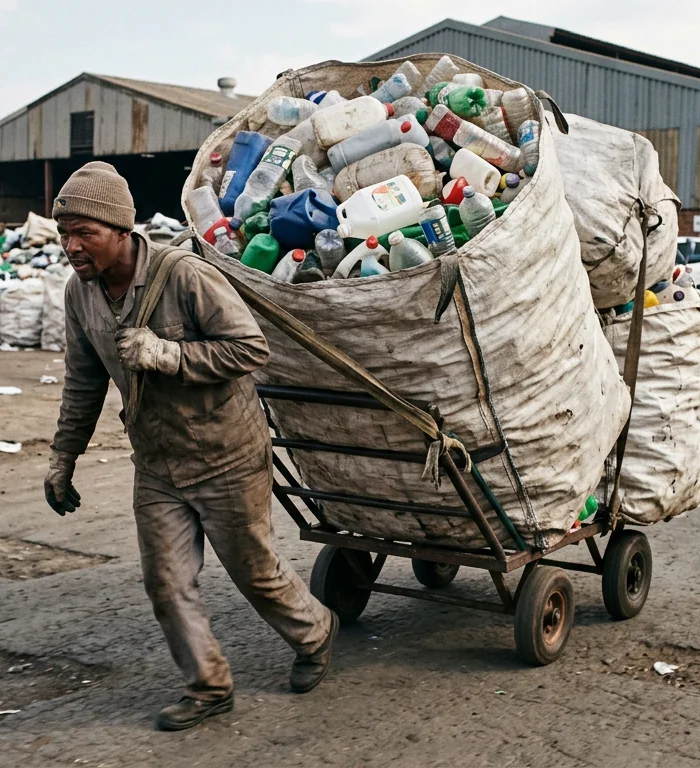
South Africa recycled 301,000 tonnes of about 1.55 million tonnes of plastic waste generated in 2020, The Conversation Africa article published Nov. 19 said, citing an estimate.
The gap matters because four out of every five tonnes became garbage despite nearly 20 years of waste policy, including the 2008 Waste Act and 2021 producer-responsibility rules.
The country’s Waste Act says waste should be avoided where possible, with reuse and recycling preferred before safe disposal. The National Waste Management Strategy, revised in 2020, sets out how those goals should be implemented.
The authors, conservation scientists studying plastic and microplastic pollution in South Africa’s oceans and estuaries, wrote that “laws alone don’t reveal how much plastic is being recycled – or not.”
Their research identified three main constraints: municipalities may lack money, staff and facilities; “biodegradable” labels can mislead consumers without clearer standards; and new collection systems could reduce income for waste reclaimers if those workers are excluded from design.
Extended producer responsibility, a system that makes companies responsible for products after sale, applies to South African paper and packaging producers. Producers of plastic are required to register with the government and have duties to collect or recycle products rather than allow them to become waste.
The article said those obligations do not ensure collection and recycling work evenly across the country. South Africa’s constitution makes refuse removal and solid-waste disposal a local-government function, but there is no dedicated national recycling grant for municipalities.
That leaves local authorities potentially short of funding, staff, vehicles, sorting facilities and local markets needed to run recycling systems. The result is a policy chain that depends on municipal capacity to deliver national rules.
The authors also warned that green labels need stronger standards and oversight. They said “biodegradable” plastics can still take a long time to break down and should not imply packaging will disappear harmlessly if dumped in rivers, on beaches or in landfills.
Waste reclaimers are central to the proposed policy response. The article said collection schemes should be designed with reclaimer organisations so workers retain access to valuable plastic and can receive paid roles or service contracts where appropriate.
The authors proposed a phased national plastics-governance framework coordinated by the Department of Forestry, Fisheries and the Environment with provincial and municipal governments, producers, recyclers and reclaimer groups. The framework would clarify responsibilities and identify where municipalities need support.
They also said deposit-return schemes, where consumers pay a deposit refunded when a container is returned, should be tested through pilot projects. Other options include rules for single-use plastics, microplastic sources, reuse and refill systems, and taxes or incentives.
The analysis did not determine which intervention would deliver the largest reduction in plastic pollution. It said South Africa must weigh environmental effects, social consequences, cost and enforceability before deciding whether a dedicated Plastics Act is needed or stronger enforcement of existing laws would be more effective.
More stories
- Iraq hits suspected ISIS sites with 2 strikes after US exit
- Kenya construction regulators face scrutiny after 84 collapses
- Africa faces COP31 power goal with 560m lacking electricity
- Thailand orders 3,000 waste-plant inspections after floods
- EU urges households to manage first 72 crisis hours
- Russian man faces 15 years over alleged Palantir spying
- Japan pursues Quad talks alongside outreach to Xi Jinping
- UN Talks on AI-Powered Autonomous Weapons Face Opposition from Major Military Powers
Latest news
- 30-year mortgage APR falls 8bp to 7.19%
- Vehicle service contracts can cost several thousand dollars a year
- Tumaini trial to test 2 Bundibugyo Ebola vaccines in DRC
- Iran caps subsidized bread at 8kg a month in three provinces
- Jeff Buckley track tops 500,000 TikTok uses this year
- Singapore charges 2 men over 19 deregistered vehicles
- Southwest charged 275,000 points for cardholder Maui trip