

Japan pursues Quad talks alongside outreach to Xi Jinping
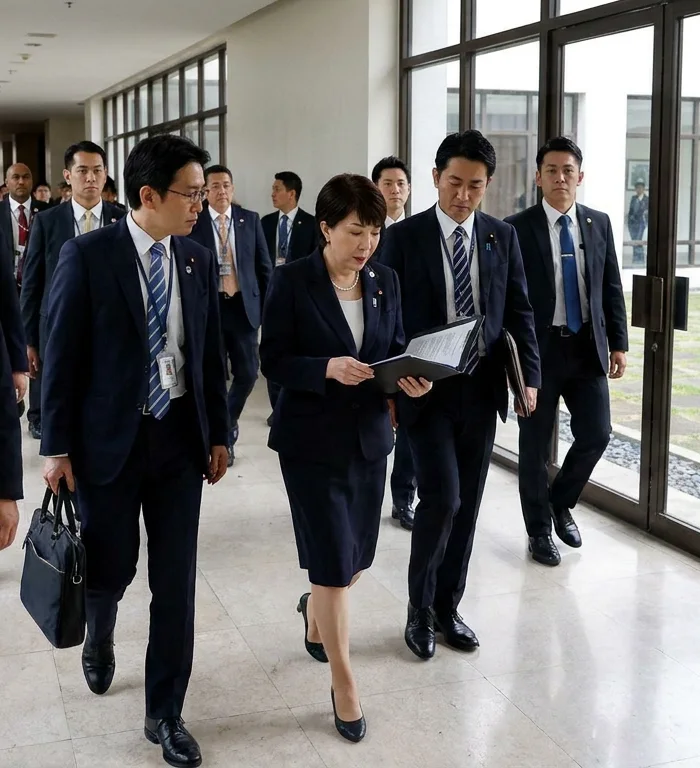
President Trump announced Quad initiatives on AI and critical minerals in Manila as Japan sought talks with China's Xi Jinping.
The announcement preceded Tuesday's meeting with Japanese Prime Minister Sanae Takaichi, Indian Prime Minister Narendra Modi and Australian Prime Minister Anthony Albanese. Their gathering brought the four leaders together after a two-year interval, placing technology and resource supplies alongside Japan's effort to restore dialogue with Beijing.
Trump described an AI “accelerator” and agreements aimed at making critical-mineral supplies more secure. His announcement establishes the initiatives' stated purpose, but does not by itself demonstrate that new supplies have been secured or that the AI program is operating.
Takaichi seeks an opening with Xi
Takaichi reached Manila on Monday for a four-day diplomatic itinerary covering the Philippines and China. Her administration has sought a meeting with Xi during the Asia-Pacific Economic Cooperation forum, which the Chinese leader is hosting in Shenzhen.
The outreach follows more than a year of strained relations after Takaichi discussed possible Japanese military involvement during a crisis involving Taiwan. She has not withdrawn those remarks, leaving the position at the center of the dispute unchanged while her administration pursues direct talks.
A meeting with Xi would provide an opportunity for the leaders to address the disagreement, but the effort to arrange one is not a confirmed appointment. Nor would a meeting alone establish that either government had altered its position.
Taiwan dispute accompanies economic diplomacy
The diplomatic backdrop also includes a statement issued last week by foreign ministers from the Group of Seven. They reiterated their “strong opposition” to efforts to alter existing arrangements through force, explicitly including the Taiwan Strait.
That statement sets out the ministers' position; it does not establish an agreed response to a particular crisis. For Takaichi, the immediate diplomatic task is narrower: securing contact with Xi while maintaining remarks she has declined to retract.
The Manila gathering and the Shenzhen forum therefore involve different forms of engagement. The Quad announcement concerns cooperation among the United States, Japan, India and Australia, while Japan's outreach to China concerns a bilateral dispute that those economic initiatives do not resolve.
Delivery separates announcements from economic effects
If the mineral agreements produce dependable additional supplies, participating companies could gain more predictable access to resources, with potential benefits for supply-dependent industries and cross-border production. If implementation stalls, the announcement alone would offer no such improvement; no company-level outcome can yet be established from the commitments described.
The AI initiative presents a similar distinction between announcing cooperation and delivering it. If it translates into usable support for participating businesses, it could strengthen technology collaboration across the four economies; its broader economic effect would depend on the program's reach and execution.
Diplomatically, a confirmed Takaichi-Xi meeting would be the next concrete step beyond outreach. Whether the leaders meet, and whether the Quad initiatives acquire operational commitments, would help distinguish this summit sequence's immediate diplomatic results from its longer-term economic possibilities.
More stories
- UN Talks on AI-Powered Autonomous Weapons Face Opposition from Major Military Powers
- Russian airspace incident adds pressure to Japan relations
- Iran targets Bahrain radar as US strikes back near Hormuz
- Indian authorities search for 1 sailor after Oman tanker attack
- Atiku aide backs crude-contract review for petrol subsidy
- Sudan drone strikes killed more than 1,630 civilians, UN says
- China rejects US spy claims in Nvidia-linked tech fight
- Italy lower house advances vaccine-sceptic medic return bill