

Russian airspace incident adds pressure to Japan relations
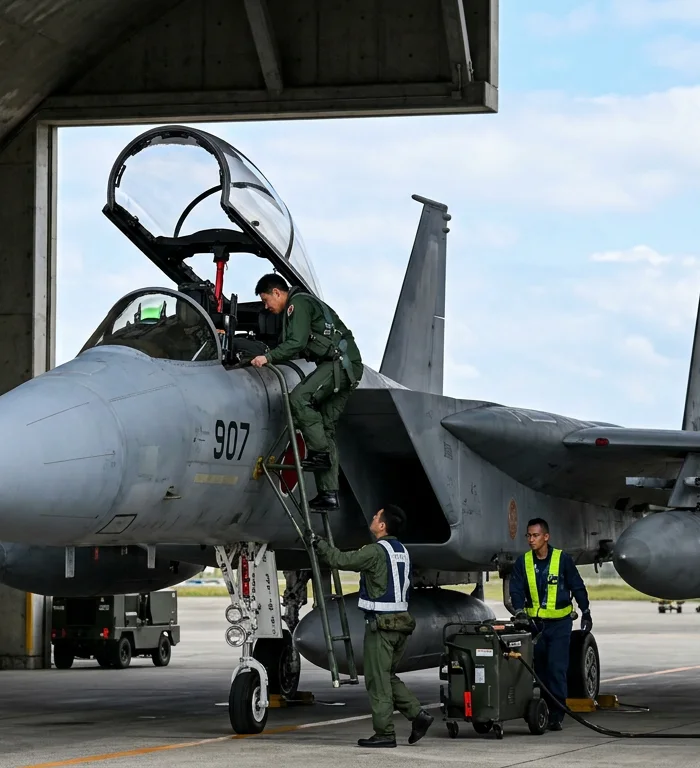
Japan said two suspected Russian aircraft breached its airspace near Fukuoka on Tuesday, prompting fighter deployments and a diplomatic protest.
Defense Minister Shinjiro Koizumi put the incursion at roughly five minutes and said Japanese fighters issued warnings. The aircraft were described as suspected Russian planes; Koizumi did not identify their models or explain the purpose of their flight.
The allegation differs from separate reports by Taiwan and South Korea about Russian aircraft entering their air defense identification zones. South Korea explicitly said its territorial airspace was not breached, while Taiwan reported a passage through its identification zone rather than a territorial incursion.
Flights draw three governments' attention
Koizumi described a route through the Tsushima Strait, followed by a southbound flight over the sea separating Taiwan from Yonaguni, Japan’s farthest-west island. He said Tokyo delivered “an extremely stern protest” to Moscow and demanded action to prevent another incident.
Taiwan’s defense ministry separately reported detecting two Russian military aircraft on Tuesday. According to the ministry, they approached its identification zone from the northeast, traveled along Taiwan’s eastern side and departed south of Taitung County.
The Taiwanese ministry said it used coordinated intelligence gathering and surveillance to track the aircraft and respond. Its statement did not establish whether these were the same planes described by Japan, leaving that connection unconfirmed.
South Korea’s Joint Chiefs of Staff reported a separate encounter on Monday over the sea separating Japan from the Korean Peninsula. It said several Russian military planes briefly entered its identification zone, with South Korean fighters dispatched after the aircraft had already been detected.
The South Korean military withheld both the aircraft count and their models. Its account nevertheless drew a clear distinction between entry into the identification zone and an intrusion into national airspace.
Japan places sovereignty at issue
Koizumi characterized the alleged Japanese airspace breach as a violation of sovereignty and a danger to national security. He offered no explanation for the flight and said Japan would maintain close scrutiny of Russian military operations.
Japan has also expressed concern about military operations conducted jointly by Russia and China near its shores. The accounts of this incident, however, do not identify any Chinese participation, and the separate regional detections do not establish a coordinated operation.
Island dispute complicates bilateral relations
The confrontation comes against a territorial disagreement dating to World War II, when Soviet forces took the Kuril Islands from Japan during the conflict’s closing days. Competing claims have left Tokyo and Moscow without a treaty formally concluding wartime hostilities.
Another recent disagreement concerns Japan Tobacco Inc. Japan demanded reversal of a presidential order by Vladimir Putin that placed several of the company’s Russian subsidiaries under temporary administration by a Russian business.
For the aviation dispute, the unresolved issues include the aircraft’s identity, its mission and whether Moscow will address Japan’s demand for preventive action. The supplied account contains no Russian response, leaving Tokyo’s allegation without Moscow’s explanation or an independently corroborated account of the reported breach.
More stories
- UN Talks on AI-Powered Autonomous Weapons Face Opposition from Major Military Powers
- Iran targets Bahrain radar as US strikes back near Hormuz
- Indian authorities search for 1 sailor after Oman tanker attack
- Atiku aide backs crude-contract review for petrol subsidy
- Sudan drone strikes killed more than 1,630 civilians, UN says
- Turkey Silences Its Last Opposition Voices on TV: Sozcu Seized in a Dawn Raid
- Ukraine talks bring Witkoff to Oslo as US tensions deepen
- Britain sends Typhoon jets to defend Saudi Arabia airspace