

Thailand orders 3,000 waste-plant inspections after floods
Floodwaters are spreading pollution across a Thai food-producing province, prompting closures and scrutiny of hazardous-waste enforcement.
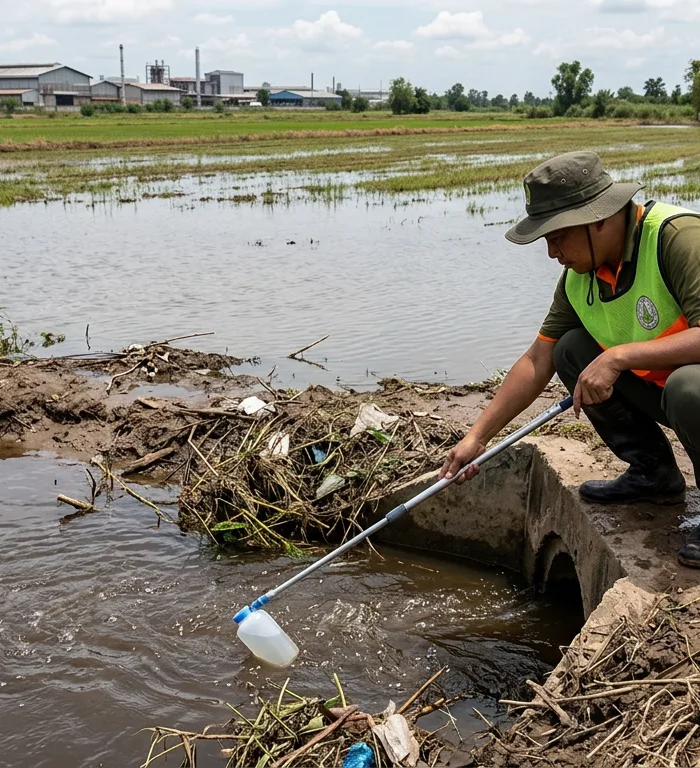
Thai authorities ordered inspections of 3,000 waste plants nationwide after September-October floods exposed pollution in Prachinburi, The Straits Times reported in a Nov. 19 news report citing AFP.
The Nov. 19 report said the Industry Ministry temporarily closed one landfill, suspended two other waste facilities and found 300 plants in the inspection drive had breached rules, raising health and food-security concerns in a farming province.
Water sampled near one landfill in October contained “unusually high” petroleum hydrocarbons, chemicals associated with oil and fuel, and toxic concentrations of aluminium, the report said. Flooding carried contaminated-looking water across farms and villages, residents told AFP.
Adisorn Lakonburee, a 43-year-old home builder in Prachinburi, said he had stopped catching fish for his family after oil slicks and chemical smells reached his village. “Now I’m too afraid to catch or eat them,” he told AFP, adding that his family was also afraid to drink tap water.
Green Environment Technology, the landfill operator, denied wrongdoing, according to the report. The Industry Ministry ordered the site temporarily closed after complaints from residents.
Navaporn Sanguanmoo, director of industrial waste management at the Department of Industrial Works, said the episode exposed gaps in oversight. “Prachinburi is a lesson that makes us rethink many things,” she told AFP.
Prachinburi lies between Bangkok and Thailand’s Eastern Economic Corridor, the flagship industrial zone covering Rayong, Chonburi and Chachoengsao. The province is also a food-producing area, with rice, sugarcane, cassava, orchards, livestock and fish farms.
Environmental researcher Somnuck Jongmeewasin, an adviser to a Thai parliamentary industrial sub-committee, said his research had identified more than 60 suspected illegal dumping sites in Prachinburi in recent years. Dawan Chantarahassadee of EARTH Thailand blamed cheap land and weak enforcement for the spread of waste facilities.
Campaigners traced part of the problem to a 2016 military junta order exempting waste facilities from town-planning laws, which allowed them into agricultural green zones. Local activist Sumet Rianpongnam said waste-processing factories had been built near homes in areas designated for agriculture.
Thailand banned plastic-waste imports in 2025 and tightened electronic-waste controls. Navaporn said Thailand still handles about 3 million tonnes of hazardous industrial waste a year and more than 30 million tonnes of non-hazardous waste, with low-value waste vulnerable to illegal dumping because treatment costs are high.
Academics warned the chemicals could cause skin irritation or breathing difficulties, the report said. Farmer Chalida Mongkon said floodwaters left her rice paddies blackened and rotten, adding: “We don’t even know if we’ll be able to grow anything next year.”
The government pledged in early November to expand testing to riverbed sediment for heavy-metal contamination. Somnuck warned delays could weaken efforts to identify responsibility, saying: “Delay is injustice.”
Source: news report, The Straits Times, Nov. 19, 2026
More stories
- South Africa recycles 301,000 tonnes of plastic waste
- Iraq hits suspected ISIS sites with 2 strikes after US exit
- Kenya construction regulators face scrutiny after 84 collapses
- Africa faces COP31 power goal with 560m lacking electricity
- EU urges households to manage first 72 crisis hours
- Russian man faces 15 years over alleged Palantir spying
- EU methane rule faces three-year delay push by gas groups
- Russian strikes leave many Kyiv homes with 4 hours of power
Latest news
- 30-year mortgage APR falls 8bp to 7.19%
- Vehicle service contracts can cost several thousand dollars a year
- Tumaini trial to test 2 Bundibugyo Ebola vaccines in DRC
- Iran caps subsidized bread at 8kg a month in three provinces
- Jeff Buckley track tops 500,000 TikTok uses this year
- Singapore charges 2 men over 19 deregistered vehicles
- Southwest charged 275,000 points for cardholder Maui trip