Kerala suspends teacher over Savarkar quiz question
Kerala has suspended a teacher and opened an inquiry after a school “Freedom Quiz” question on Savarkar triggered a political dispute.
Mei Lin ·
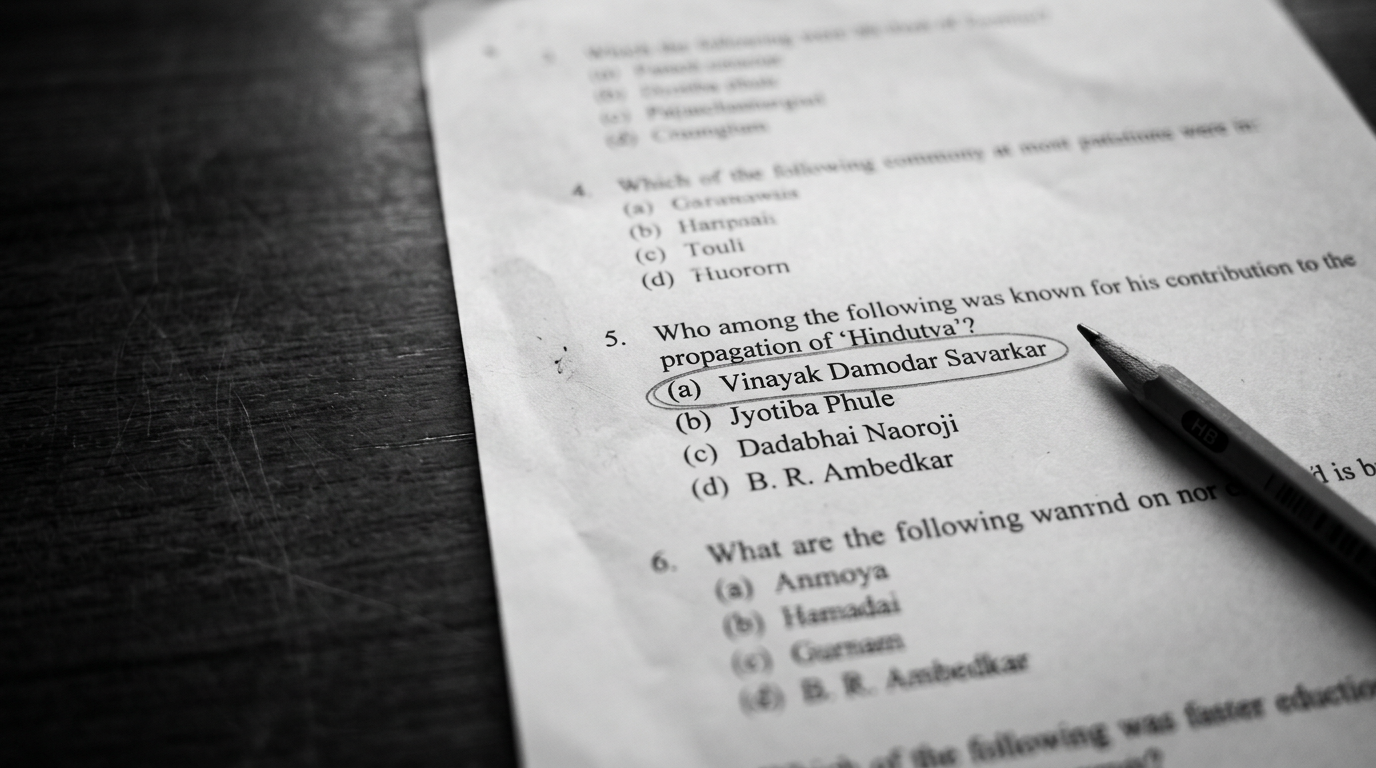
Kerala’s general education department has suspended a teacher and ordered an inquiry after a question in a school “Freedom Quiz” about Vinayak Damodar Savarkar escalated into a political dispute, officials said. The department said it would review how the question was drafted and cleared, and whether it followed official guidelines for school activities.
The question at the center of the row asked whether Savarkar received the British empire’s “most severe punishment.” That wording prompted arguments over how his imprisonment should be described and how it compares with the incarceration of other freedom fighters, according to officials and accounts of the dispute.
Inquiry to examine wording, approvals, and compliance State authorities said the inquiry will look at State authorities said the inquiry will look at the framing of the question, identify who approved it, and assess whether it matched existing rules for school programmes. The department’s decision to suspend the teacher while the inquiry proceeds reflects the sensitivity surrounding how historical figures are presented in school settings. Officials indicated the focus is procedural as well as substantive: not only what the quiz asked, but how internal checks worked, including vetting and oversight for co-curricular content. The case has drawn attention to the operational pressures on schools when political actors scrutinise classroom-adjacent activities. Savarkar’s place in India’s historical debate The controversy sits within a wider national argument over historical interpretation, where educational content and public commemorations can become political flashpoints. Savarkar remains a polarising figure in Indian public life, praised by supporters for anti-colonial activism and criticised by opponents for his ideology and for petitioning the colonial administration for clemency.
Disputes over how much emphasis should be placed on his life and legacy in curricula and public debate have surfaced repeatedly across different Indian states. In that environment, even an internal quiz or school event can be read as taking sides, particularly when it contains comparative claims about suffering, punishment, or sacrifice during the independence movement.
Implications for schools and civic education
Kerala’s response signals that schools have become more exposed to political scrutiny, including around language choices that can be interpreted as endorsing a viewpoint rather than prompting discussion. For educators, the episode underlines how a single ambiguous phrase can shift a learning activity into a controversy over ideology and national identity.
Beyond the school system, public disputes over historical framing can influence social media narratives and electoral discourse, shaping how parties position themselves on civic education and the legacies of the independence movement. Officials have not announced the outcome timeline, but attention is expected to focus on the inquiry’s findings and whether the department issues broader directions for quiz content and review standards.
One open question is whether the probe results in written, system-wide guidance or ends as a stand-alone disciplinary case. Officials said the inquiry will determine how the question reached students and whether processes need tightening to ensure future school activities remain aligned with official guidelines.