

Kempe contrasts ChatGPT-style AI with 20-watt brain benchmark
The arXiv monograph argues spiking neural networks may complement, rather than replace, transformer-based AI where low-power computing matters.
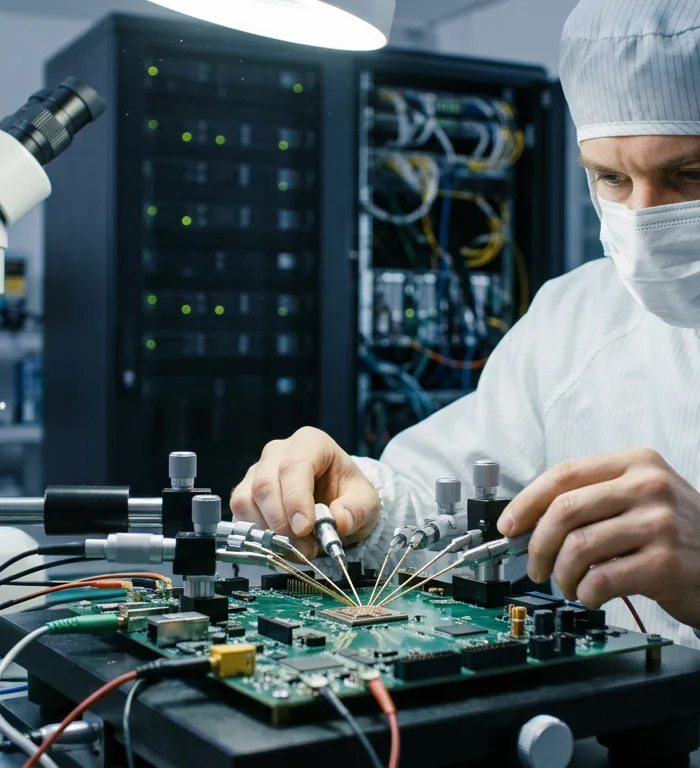
Volker Kempe submitted an 88-page arXiv monograph on Oct. 29 comparing ChatGPT-style transformer AI with neuromorphic systems, using the human brain’s continuous 20-watt operation as a benchmark.
The preprint matters because it frames energy use as a central constraint for AI: Kempe writes that developing and operating large AI models consumes gigawatt- to terawatt-hours of energy, versus 20 watts for the brain.
The paper, titled “AI at a Turning Point: From ChatGPT through Neural Networks to Neuromorphic AI,” is listed under Machine Learning and Neural and Evolutionary Computing. It has 20 figures and an arXiv-issued DOI.
Kempe’s core comparison is between connectionist AI, including transformer-based text generation, and spiking neural networks, or SNNs. SNNs are models that process information through discrete spikes over time, rather than through the continuous numerical activations common in today’s neural networks.
The abstract says SNNs bring “local learning instead of global error backpropagation, event-driven computing, and time as a carrier of information” into AI methods. Backpropagation is the dominant training method in modern neural networks, where errors are propagated through a model to update its parameters.
Kempe does not present neuromorphic AI as a direct substitute for today’s systems. The abstract says SNNs “do not replace today’s AI but extend it,” with hybrid systems assigning tasks according to each approach’s strengths.
The monograph also covers spike-timing-dependent plasticity, population and temporal coding, the Neural Engineering Framework, Intel’s Loihi 2 neuromorphic hardware and commercial edge processors. The source page does not report new benchmark results, commercial deployments or peer review.
Source: arXiv preprint page, Oct. 29, 2026
More stories
- Europe faces attribution gap after 16 cyber, physical incidents
- PIF backs Grand Theft Auto as Saudi players embrace game
- Signal limits screenshots to curb AI access to messages
- Cognition runs Devin Mac workspaces on EC2 in 6 AWS regions
- Salesforce engineers cut 600-failure triage to 90 minutes
- Türkiye Desk: GTA 6 puts console access and network demand in focus
- Flow Games raises $49m as platform control tightens
- Japan & Asia: Switch 2 leads Famitsu as Korea fines stores
- Chi pushes Chinese rocket engine test program to 2,000s
- NASA finds warm, wet episodes in Gale Crater depths on Mars
Latest news
- Trump prepares tariffs on China and other major exporters
- New-car buyers pay record average $50,087 in October
- Banks face ECB reserve debate over liquidity and profits
- Investors see Anthropic debut gains fade below $83 a share
- Iraq orders federal control over Kurdish-area oilfields
- Germans oppose Ukraine aid as poll shows support slipping
- Kim Jong-un receives 10 envoys after constitutional shift
- Ukraine claims Libya strike sinks Russian naval corvette