NASA finds warm, wet episodes in Gale Crater depths on Mars
NASA: Hematite crystals from Gale Crater reveal prolonged warm, wet conditions, refining timelines for early Mars climate and habitability.
Jason Kwon ·
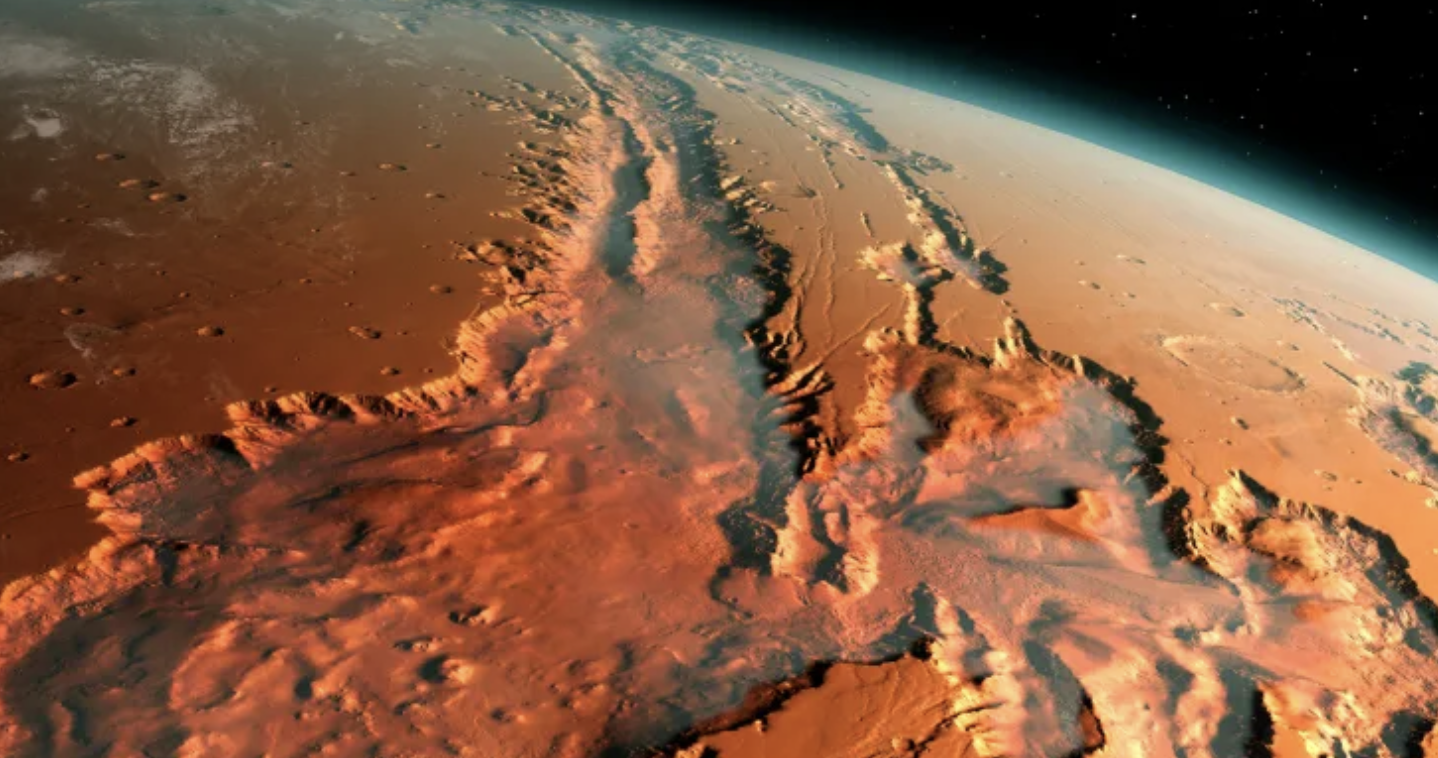
NASA says hematite crystals from Gale Crater record temperature and water-pressure shifts, pointing to prolonged warm, wet phases in early Mars’ layers.
Crystals as climate logs
Iron oxides are considered indicators of past water activity, and hematite’s crystal forms act as physical ledgers of their growth environment. NASA said the crystals’ shape and structure reflect formation conditions, including temperature and water pressure.
New data indicate that crystals within hematite can help identify changes in the planet’s early climate. In practical terms, grain size and texture serve as proxies for how long water was present and how warm it was.
Layered readings across Gale Crater
NASA said it analyzed 20 samples across different elevations in Gale Crater, whose layered walls preserve Mars’ environmental history. Deeper layers capture the planet’s earliest conditions, offering a vertical timeline in rock.
“What we found was that warm and wet conditions were present for extended periods in buried rocks, despite Mars’ climate becoming colder,” NASA researcher Tanya Peretyazhko said. She noted those conditions may have supported habitability for longer than previously believed.
She added the crystals indicate upper layers were colder and lacked sufficient water. That vertical contrast points to evolving climate regimes within the same site.
“The crystallites didn’t have sufficient time and conditions to grow in size,” Peretyazhko said. “But the lower layers had long-standing warm water that allowed those crystallites to grow.”
Images align with shifting surface states
Images from NASA also show evidence of ancient rivers and lakes that later gave way to dry dunes. The surface record lines up with a long drying trend captured in mineral growth patterns below.
Methodologically, the signal is indirect and the sample size is modest at 20. Even so, crystal morphology mapped against elevation gives a stratified readout of duration, temperature, and water availability through time.
The picture that emerges is layered: lower horizons retained warmth and water for extended periods, while upper strata cooled and dried sooner. That staggered timeline refines how rapidly Mars shifted toward the cold, arid conditions observed today.
The approach hinges on simple physics: larger, better-ordered crystallites generally require more time in stable, liquid-water settings. Where grains remain small and disordered, conditions were likely brief, colder, or water-poor.
Gale Crater’s stacked walls act as a natural archive, with deeper beds archiving earlier environments. Reading that archive through hematite reduces ambiguity compared with relying on single-surface snapshots.
NASA did not outline next analytical steps for Gale Crater. Additional sampling across more layers and adjacent terrains would test whether the observed growth patterns repeat beyond the surveyed sections.
Further imaging that traces rivers-to-dunes transitions could tighten links between surface textures and subsurface mineral growth. Converging evidence would strengthen the case that habitability in buried rocks persisted longer than at the surface.