

Johannesburg Infrastructure Crisis Persists Amidst Stalled Coalition Negotiations
Johannesburg’s electrical grid is in a state of collapse as political parties negotiate a new coalition government, with residents demanding service delivery…
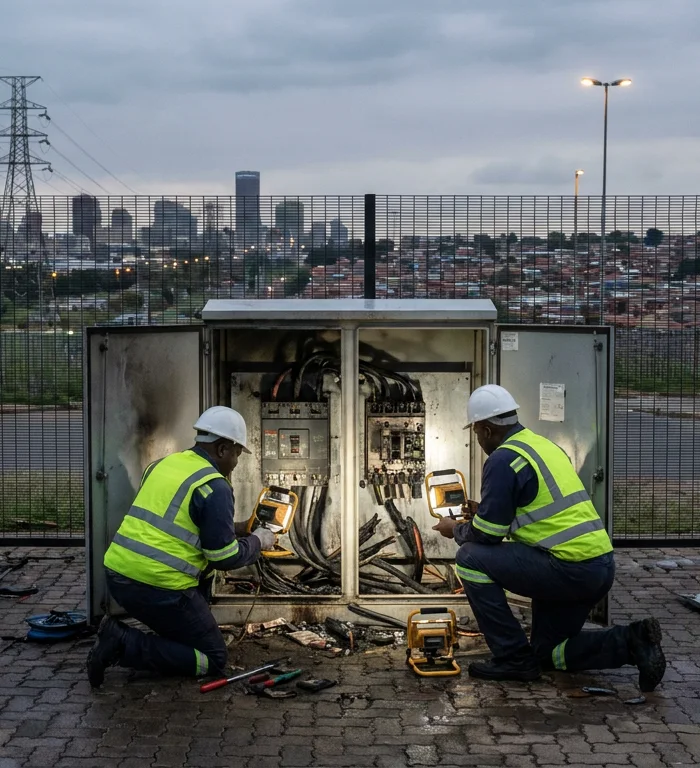
Johannesburg faces a critical infrastructure failure as the city's electrical grid experiences a sustained decline. Recent fires at the Mayfair/Brixton substation have disrupted power for over 20,000 residents and critical facilities, including the Garden City Clinic and the SABC. Data indicates 574 outage incidents occurred in October alone, with Alexandra and Randburg recording the highest frequency of service interruptions. The city's electrical infrastructure is currently described as being in a state of terminal decline, necessitating immediate intervention from the incoming administration.
Political parties are currently engaged in a two-week window to finalize a coalition government following recent elections. The Joburg Crisis Alliance (JCA), representing 57 resident associations, has formally requested that coalition agreements prioritize service delivery and ethical governance over the distribution of political positions. The JCA emphasizes that any governing arrangement must reflect proportional voter support rather than granting disproportionate influence to minor parties. Voter turnout for the 2026 election reached 52.8%, an increase from 42.1% in 2021, signaling heightened public demand for administrative accountability.
Johannesburg remains a significant economic hub, contributing approximately 18% to South Africa's total GDP. The failure of municipal entities, including City Power, Johannesburg Water, and Pikitup, poses a direct risk to the city's operational stability and long-term economic viability. Analysts suggest that a "confidence-and-supply" coalition model could potentially balance power between the largest parties, though negotiations remain focused on leadership roles rather than structural reform. The JCA has committed to monitoring the new administration's performance and financial transparency through its "Follow The Money" initiative.
Institutional risk remains elevated as the city's governance remains in flux. The inability to stabilize basic service delivery threatens to exacerbate social instability and further erode the city's fiscal health. Market participants and policymakers are monitoring the negotiations for signs of a stable, service-oriented administration capable of addressing the systemic grid failures that currently impede economic activity in the region.
More stories
- Germans oppose Ukraine aid as poll shows support slipping
- Kim Jong-un receives 10 envoys after constitutional shift
- Ukraine claims Libya strike sinks Russian naval corvette
- COP31 climate talks collapse over fossil fuels and funds
- Russian military faces 1,087 recorded suicides in Ukraine war
- US faces China, Russia in Africa minerals contest
- Bundeswehr faces misconduct gap as few as one-sixth reported
- Megaspeed’s 2024 affiliate filings widen Nvidia chip scrutiny
- De Wever offers resignation as Belgium budget talks stall
- Airlines face bomb threats as Europe orders plane checks
Latest news
- Trump prepares tariffs on China and other major exporters
- New-car buyers pay record average $50,087 in October
- Banks face ECB reserve debate over liquidity and profits
- Investors see Anthropic debut gains fade below $83 a share
- Iraq orders federal control over Kurdish-area oilfields
- Nvidia shares retreat as AI rally cools before PCE data
- Macy’s parade faces balloon limits as storm winds approach