

James Capon challenges 200-year-old BMI use
The Guardian letter argues body mass index began as a population measure and should not be treated as a verdict on individual health.
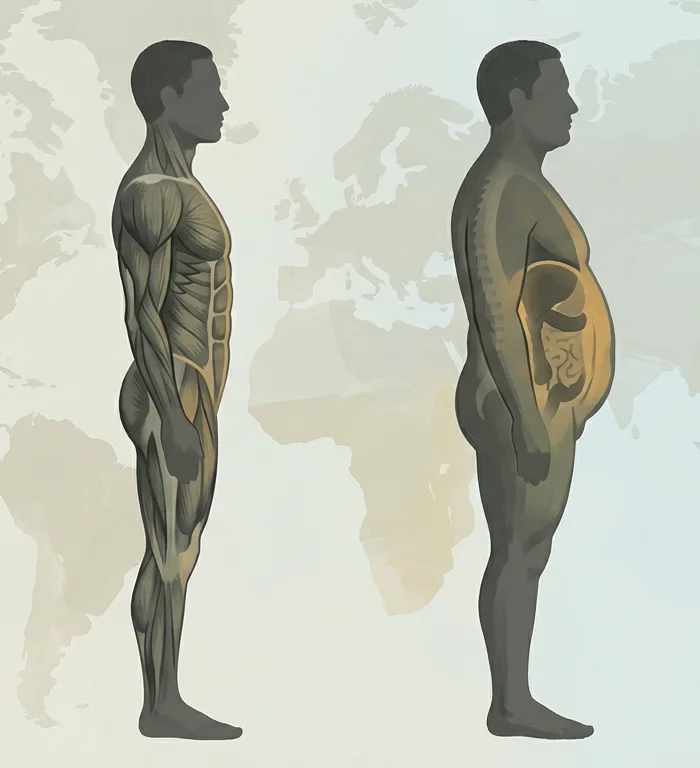
James Capon urged clinicians to stop treating body mass index (BMI) as a stand-alone test for obesity in a Nov. 18 letter to The Guardian Health, citing its 1830s origins.
The argument matters because BMI remains cheap, quick and widely absorbed by medicine, Capon said, even though Adolphe Quetelet designed the index for populations and Ancel Keys revived it in 1972 for population studies.
Capon wrote that Quetelet, a Belgian statistician, created the measure to describe the “average man” across whole populations, not to judge one person’s health. Keys, an American physiologist, later gave the index its current name, again for population research, Capon said.
The letter traces BMI’s spread into medicine through a simpler logic used by U.S. life insurers, which priced policies using weight relative to height. Capon said medicine adopted the same kind of yardstick because it required only scales and a tape measure.
“We measured what was easy, not what mattered, then overinterpreted individual results,” Capon wrote. He argued that BMI can misclassify people with high muscle mass or miss people with dangerous fat around organs.
Capon said the Lancet Commission approach, which adds waist measurements and organ-function tests, moves diagnosis in a better direction, though it still starts with BMI. His letter is an opinion piece, not a new clinical study comparing diagnostic methods.
For readers, the limited point is that BMI is a screening shortcut with population roots, not a complete assessment of individual health. Capon’s stated preference is for clinicians to begin with the patient rather than Quetelet’s population average.
Source: letter, The Guardian Health, Nov. 18, 2026
Atlas360 reports health research and does not provide medical advice.
More stories
- Dietitians advise small swaps for plant-based eating
- TikTok dementia videos mislead in 66.4% of sample, researchers say
- Aberdeen Royal Infirmary faces police inquiry call over 19 deaths
- Bariatric surgery group loses 28.2% after GLP-1 use
- TOFA boosts mouse energy use 18% while preserving muscle
- ICO probes NHS therapy notes accessible to up to 140,000 staff
- Europe faces 35,000 drug-resistance deaths a year
- U.S. faces loss of measles elimination status after 5,412 cases
- FDA removes black-box warnings from 3 menopause patches
- Intensive diet and exercise put diabetes in remission for 54%
Latest news
- David Parr House to honor Victorian art-workman with blue plaque
- Iran's attacks hit 25 tankers near Strait of Hormuz
- FCC approves prison cellphone jamming despite 2.5-mile warning
- Russia strikes Ukraine as Odesa faces electricity strain
- Bahrain reports two injuries after Iranian aerial attacks
- Congress tests Black Democrats' growing policy influence
- Baltic responders fight Sparta II fire after drone strike
- Europe faces attribution gap after 16 cyber, physical incidents