

Israeli strike at Nasser Hospital kills six
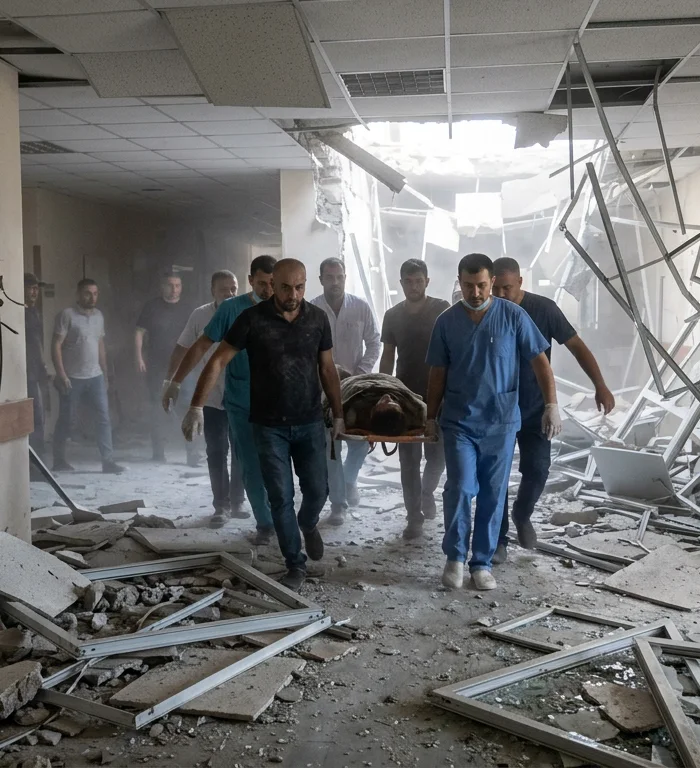
An airstrike on a Gaza hospital has killed at least six people, according to officials, raising urgent concerns over medical infrastructure safety.
Facility status under fire
The strike on a building within the Nasser Hospital complex in Khan Younis marks the latest instance of combat operations affecting critical medical infrastructure in southern Gaza. Civil defense authorities reported six deaths following the incident, which occurred amid ongoing military activity in the area. The hospital, historically the primary referral center for the southern strip, has been the site of repeated incursions throughout the current conflict.
De-confliction mechanism collapse
The IDF maintains that militant groups use civilian infrastructure, including medical facilities, to stage attacks and hide personnel. This framing has resulted in a recurring pattern of military operations targeting buildings adjacent to or within hospital grounds. In contrast, international health organizations and humanitarian monitors argue that these strikes effectively disable the health system, rendering remaining facilities unable to provide surgical or trauma care to the civilian population.
Infrastructure and aid risk
Regional mediators in Cairo and Riyadh have cited the lack of site protection as a primary obstacle to long-term aid delivery. The recurring nature of these strikes has effectively collapsed the informal de-confliction protocols that previously allowed for limited medical supply distribution. Diplomatic channels are now attempting to formulate a security framework that provides specific immunity to healthcare zones, though negotiations have stalled due to the intensity of combat operations.
Reconstruction aid uncertainty
The wider implications for Gaza's post-war infrastructure remain tied to the security of such sites. Should donor nations, including those in the Gulf Cooperation Council, determine that no facility can be guaranteed against military strikes, the prospect of large-scale, international reconstruction funding faces a total freeze. The immediate diplomatic focus is shifting toward whether a third-party security presence can be established to oversee medical corridors, a move currently rejected by active combatants on both sides of the border.
More stories
- Germans oppose Ukraine aid as poll shows support slipping
- Kim Jong-un receives 10 envoys after constitutional shift
- Ukraine claims Libya strike sinks Russian naval corvette
- COP31 climate talks collapse over fossil fuels and funds
- Russian military faces 1,087 recorded suicides in Ukraine war
- US faces China, Russia in Africa minerals contest
- China rejects US spy claims in Nvidia-linked tech fight
- Italy lower house advances vaccine-sceptic medic return bill
- Liberia House summons 3 agencies over El Niño heat risk
- Spanish workers stage first general strike in 14 years
Latest news
- Trump prepares tariffs on China and other major exporters
- New-car buyers pay record average $50,087 in October
- Banks face ECB reserve debate over liquidity and profits
- Investors see Anthropic debut gains fade below $83 a share
- Iraq orders federal control over Kurdish-area oilfields
- Nvidia shares retreat as AI rally cools before PCE data
- Macy’s parade faces balloon limits as storm winds approach