

Israel opposition weighs direct PM vote after Netanyahu bloc’s 53 seats
Reports by Maariv said the proposal would revive Netanyahu’s 2021 model, but it would need legislation and would not guarantee a governing majority.
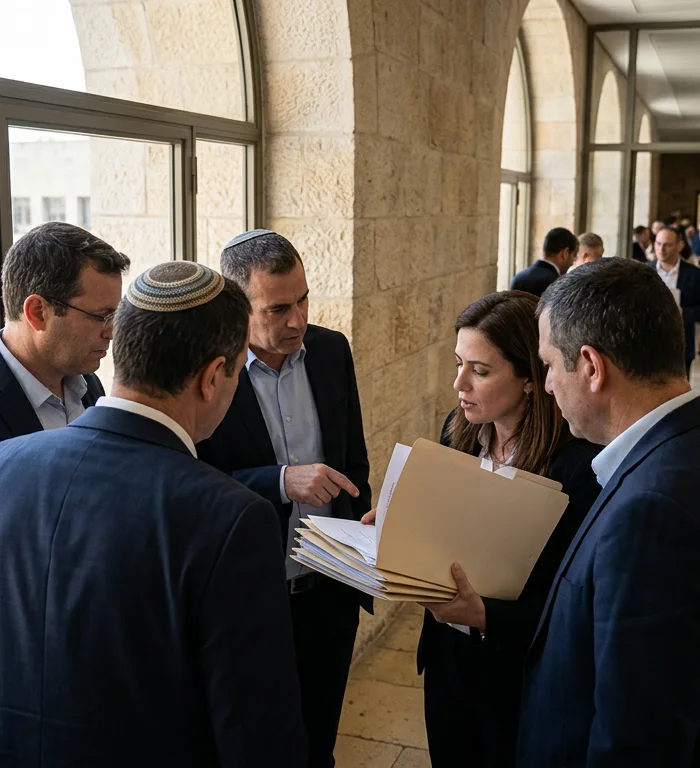
Senior figures in Israel’s opposition bloc are weighing a direct election for prime minister without a new Knesset vote after Netanyahu’s bloc won 53 seats in the Oct. 27 election, Maariv reported Oct. 31.
The idea matters because the results left no bloc with the 61 seats normally needed to form a government: Netanyahu’s bloc has 53 seats, the opposition has 48 and Arab parties have 19.
Maariv commentator Ben Caspit reported that if Prime Minister Benjamin Netanyahu seeks another election, the voting rules could be changed to allow a direct contest for prime minister, a system Israel used in the past.
Netanyahu himself promoted a similar proposal after the March 2021 election for the 24th Knesset. “Direct elections for prime minister will be held. The public will directly elect the prime minister in a snap election, without dissolving the Knesset,” he said at the time.
Journalist Michael Hauser Tov reported on Ulpan Shishi that senior opposition figures confirmed the option was being examined. According to Hauser Tov, the bloc has referred to it as the “Netanyahu 2021 direct election model.”
The proposal reflects the opposition’s difficulty in turning the arithmetic against Netanyahu into a working coalition. Although 67 Knesset members sit outside his bloc, the opposition parties have not agreed on whether or how to rely on Arab parties.
Democrats chairman Yair Golan has called for including Arab parties in efforts to replace Netanyahu, while Naftali Bennett and Avigdor Liberman set limits during the campaign on cooperation with them, according to the report.
Under Israel’s parliamentary system, a government does not necessarily need 61 votes in favor if abstentions lower the number participating in the confidence vote. The report gave an example in which 56 votes in favor, 53 against and 11 abstentions could approve a government.
Direct election of the prime minister would not by itself solve the central parliamentary problem. A prime minister chosen directly by voters would still need enough Knesset support to form and maintain a government, depending on the legislation enacted.
Israel previously used direct voting for prime minister in 1996, 1999 and 2001. The 2001 contest chose only the prime minister, without a new Knesset election, before the system was abolished later that year.
Restoring the model would require legislation because current law is based on parliamentary confidence. Caspit also said lawmakers could seek a separate limit of two terms or eight years for a prime minister, but any retroactive application to Netanyahu would raise legal and constitutional questions.
At this stage, the direct-election idea remains a proposal under discussion, not an agreed bill backed by opposition party leaders, while Netanyahu continues as caretaker prime minister.
More stories
- Germans oppose Ukraine aid as poll shows support slipping
- Kim Jong-un receives 10 envoys after constitutional shift
- Ukraine claims Libya strike sinks Russian naval corvette
- COP31 climate talks collapse over fossil fuels and funds
- Russian military faces 1,087 recorded suicides in Ukraine war
- US faces China, Russia in Africa minerals contest
- Ukraine rail attacks expose Dnipro passenger safety risks
- Pyongyang rejects sanctions push on labor, military ties
- French election poll puts Le Pen, Melenchon in runoff vote
- Iran talks draw Qatar push as Hormuz terms loom this week
Latest news
- Trump prepares tariffs on China and other major exporters
- New-car buyers pay record average $50,087 in October
- Banks face ECB reserve debate over liquidity and profits
- Investors see Anthropic debut gains fade below $83 a share
- Iraq orders federal control over Kurdish-area oilfields
- Nvidia shares retreat as AI rally cools before PCE data
- Macy’s parade faces balloon limits as storm winds approach