

Pyongyang rejects sanctions push on labor, military ties
North Korea rejects a sanctions enforcement appeal from a multinational monitoring group, defending its nuclear position against US and Western pressure.
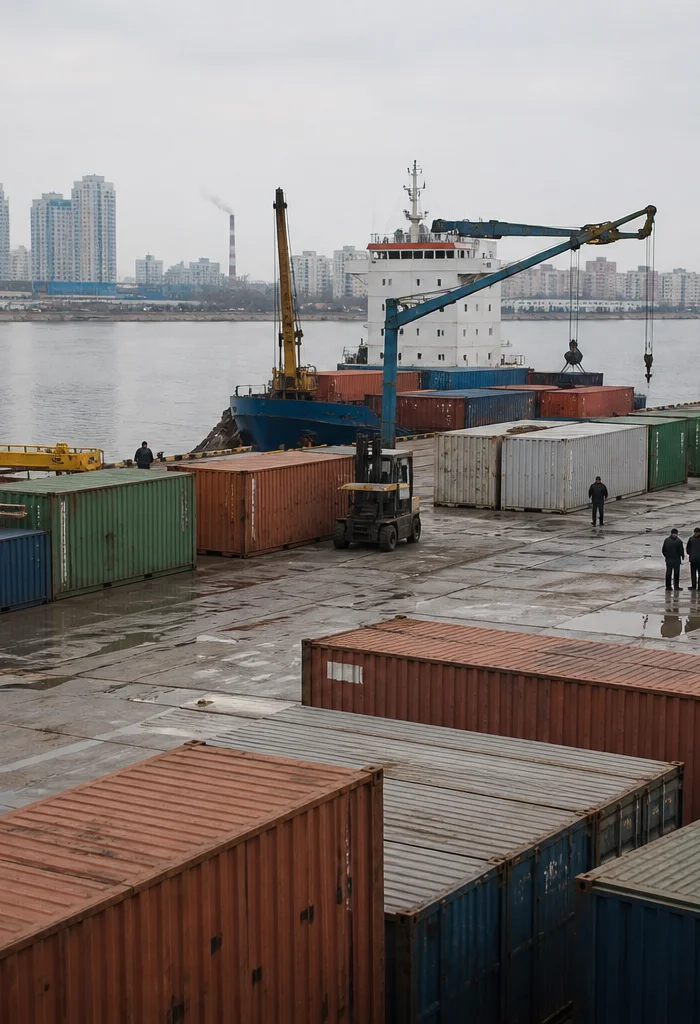
North Korea rejects a sanctions enforcement appeal from a multinational monitoring group, defending its nuclear position against US and Western pressure.
The group, whose members include the US, Australia, the UK and South Korea, urged UN members to enforce restrictions concerning North Korean labor and military cooperation. Pyongyang’s foreign ministry rejected that appeal in a statement carried by state media.
The exchange concerns compliance with existing UN Security Council measures rather than a newly announced sanctions package. The monitoring countries sought implementation of those obligations; North Korea characterized their joint statement as an infringement of sovereignty.
Monitoring countries press for implementation
The joint appeal focused on Security Council resolutions prohibiting the employment of North Korean workers and military collaboration with Pyongyang. It addressed UN member countries, making enforcement by other governments the immediate subject of the dispute.
That distinction separates the monitoring group’s request from North Korea’s response. The countries called for governments to carry out sanctions obligations, while Pyongyang answered by defending its sovereign rights and rejecting the effectiveness of external pressure.
The available account does not identify a particular employment arrangement, military agreement or alleged breach underlying the appeal. It therefore provides no basis for determining which transactions or bilateral relationships might face additional scrutiny following the statement.
Pyongyang defends its nuclear position
An unnamed foreign ministry spokesperson attributed the initiative to hostility from Washington and Western governments. The spokesperson said: "Sanctions and pressure may work on the weak but never on us," according to the statement carried by state media.
The spokesperson also rejected sanctions as a means of changing North Korea’s position as a nuclear-armed country. That assertion represents Pyongyang’s stated position, not evidence establishing whether the restrictions have affected its economy, military programs or diplomatic choices.
The Security Council began adopting the relevant resolutions in 2006, with the objective of ending North Korea’s nuclear weapons and ballistic missile programs. Those programs provide the broader setting for a confrontation whose immediate focus is compliance with labor and military restrictions.
Enforcement remains the practical test
The two statements leave a distinction between diplomatic demands and practical measures. The monitoring countries called for implementation, but the supplied account describes no accompanying enforcement action; North Korea’s response likewise sets out opposition rather than a negotiated alternative.
If member governments translate the appeal into additional enforcement, the relevant developments would be decisions affecting prohibited labor arrangements or military cooperation. Without such decisions, the exchange alone does not establish a change in how the restrictions operate.
The immediate uncertainty is whether any government will announce concrete compliance measures following the group’s statement. Pyongyang’s rejection establishes its public stance, but neither statement settles whether enforcement will change or whether the diplomatic disagreement will lead to further action.
More stories
- Ukraine rail attacks expose Dnipro passenger safety risks
- US approves $2.1 billion Patriot missile sale for Ukraine
- France faces recession risk after 0.1% GDP drop
- Israel faces UN warning over 70% Gaza deployment aim
- RSA Facts chatbot generates false R1,500 grant notice
- Nigeria says troops repel two attacks, kill 48 insurgents
- Thailand cuts biofuel taxes for three months
- Deadlock hits Israel election as coalition math tightens