

Iraq’s Iran border closures test U.S. troop drawdown
Baghdad’s move follows more than 1,000 reported strikes on Kurdistan and 600 militia attacks across the region since October 2023.
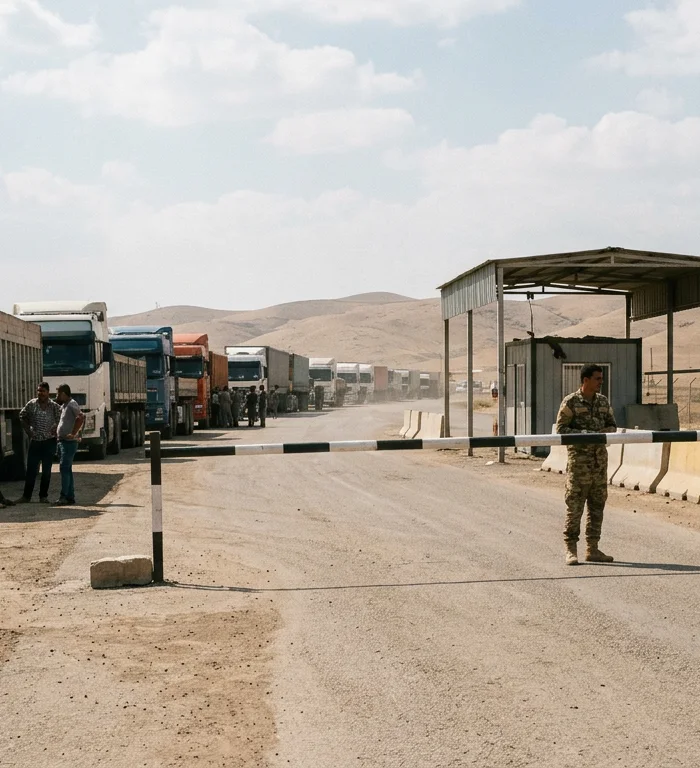
Iraq closed several crossings with Iran this week after more than 1,000 reported strikes on Kurdistan and 600 militia attacks since October 2023, a secondary report said.
The closures put new pressure on Washington’s plan to shift the U.S.-led CJTF-OIR mission by September 2025, after the U.S. and Iraq agreed in September 2024 to move toward bilateral defense arrangements.
The Kurdistan Regional Government also denied hosting Ukrainian drone operations against Iran, according to the report. That denial matters in Washington because Erbil remains one of the main locations tied to the U.S. military presence in Iraq.
For the Pentagon, the immediate question is whether Iraqi airspace, Kurdistan Region territory and federal institutions can absorb another Iranian reprisal cycle while U.S. commanders prepare for a smaller coalition footprint. U.S. forces have operated at Ain al-Asad and Erbil Air Base as part of the mission against Islamic State remnants.
Baghdad is trying to keep Iraq from becoming a launchpad or target in a wider Iran conflict. The federal government’s border move and the Kurdistan Region’s denial both point to the same risk: Iran may treat Iraqi territory as part of the battlefield if Tehran sees hostile activity coming from across that frontier.
Iran-backed militias in Iraq, often grouped under the Islamic Resistance in Iraq label, have launched more than 600 drone and rocket attacks across the region since October 2023, according to the supplied material. Those attacks have drawn repeated warnings from Israel and the Pentagon.
Tehran has also increased pressure on Iraqi Kurdistan over Kurdish-Iranian opposition groups and alleged Israeli intelligence activity in Erbil. The Kurdistan Region’s denial of Ukrainian drone operations is aimed at cutting off another pretext for Iranian pressure, according to the report.
The Washington policy problem is narrower than the regional rhetoric.
If the Pentagon keeps the drawdown timeline unchanged, it accepts more risk that Iraqi bases and airspace can be pressured while the U.S. mission changes shape. If it pauses or stretches the transition, it risks friction with Baghdad over sovereignty and the public terms of the September 2024 agreement.
Congress would likely read any pause through two lenses: whether President Trump’s administration is protecting U.S. troops from militia fire, and whether the White House is giving Tehran-backed groups a veto over the U.S. posture in Iraq. The State Department’s concern would be keeping Baghdad aligned without making Prime Minister Mohammed Shia al-Sudani look dependent on Washington.
The clearest test is whether the Pentagon or Joint Staff announces any review, pause or alteration to the Higher Military Commission timeline for U.S. force-posture changes in Iraq. If U.S. officials maintain or extend current positions at Ain al-Asad and Erbil Air Base citing proxy escalation risks, the border crisis will have changed the drawdown calculus. If Washington and Baghdad proceed on schedule with no delay tied to militia clashes, the closures will look more like crisis management than a shift in U.S. policy.
More stories
- Eisenkot secures first coalition deal but lacks majority
- Germans oppose Ukraine aid as poll shows support slipping
- Kim Jong-un receives 10 envoys after constitutional shift
- Ukraine claims Libya strike sinks Russian naval corvette
- COP31 climate talks collapse over fossil fuels and funds
- Russian military faces 1,087 recorded suicides in Ukraine war
- Philippine internet users 16 and older use AI at 94.4% rate
- Nelson Mandela Bay faces 70 Route 67 fixes
- Trump administration sanctions International Criminal Court
- Delhi police detain hundreds during election protest
Latest news
- Trump prepares tariffs on China and other major exporters
- New-car buyers pay record average $50,087 in October
- Banks face ECB reserve debate over liquidity and profits
- Investors see Anthropic debut gains fade below $83 a share
- Iraq orders federal control over Kurdish-area oilfields
- Nvidia shares retreat as AI rally cools before PCE data