

Iran’s helicopter strike reach may grow with 90 Russian launchers
Reported Russian export documents point to reciprocal arms flows, widening Washington’s sanctions and Gulf-security problem.
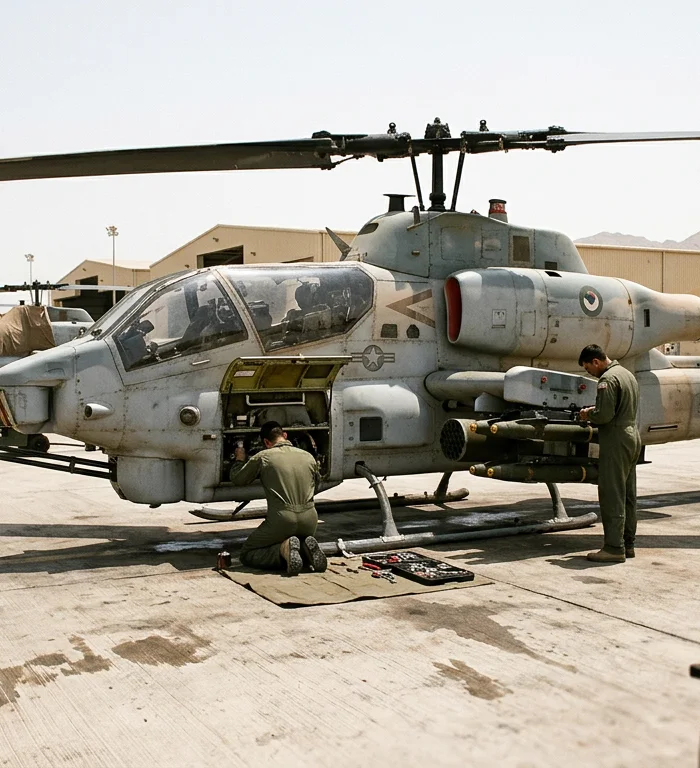
Iran is set to receive 90 Russian launchers for Mi-28 helicopters and precision missiles under export plans described in a secondary news report citing Russian defense-production documents.
The reported order matters in Washington because it points to Russia-Iran military cooperation moving beyond Iranian drones for Moscow toward Russian aviation hardware for Tehran, though the report did not confirm delivery.
The launchers are described as systems used by Russian forces in Ukraine for precision missile strikes. The documents also outline planned exports of additional aircraft and weapon systems to Iran, according to the report.
For the White House and State Department, the reported deal adds to a sanctions problem already shaped by Iran's support for Russia's war effort. Washington has accused Tehran of supplying Russia with Shahed-136 loitering munitions and Fath-360 ballistic missiles, while warning that Moscow could repay Iran with advanced air-defense and aviation systems.
For the Pentagon and U.S. Central Command, the operational issue is different: whether Iranian forces gain more accurate rotary-wing strike options that could threaten Gulf shipping lanes, U.S. partner facilities or regional air bases. The report does not say whether the launchers have been transferred, installed or integrated into Iranian aircraft.
White House Congress is likely to treat the report as another test of enforcement against Russia-Iran military channels, including companies, logistics firms and financial intermediaries.
If the documents are corroborated by U.S. intelligence, the next pressure point would be Treasury Department designations against Russian aerospace or defense-export entities tied to the order.
If the contract remains a paper export order delayed by Russia's own battlefield needs in Ukraine, the macro effect is limited to diplomatic pressure and sanctions signaling. If deliveries are confirmed, the wider defense-sector effect would be a tighter Russia-Iran weapons loop, with Iranian support for Moscow repaid through conventional systems that complicate U.S. planning in the Gulf.
The next public test is whether the Treasury Department or State Department names Russian entities linked to Iranian rotary-wing precision systems, or whether CENTCOM folds the launchers into an updated regional threat assessment.
More stories
- Germans oppose Ukraine aid as poll shows support slipping
- Kim Jong-un receives 10 envoys after constitutional shift
- Ukraine claims Libya strike sinks Russian naval corvette
- COP31 climate talks collapse over fossil fuels and funds
- Russian military faces 1,087 recorded suicides in Ukraine war
- US faces China, Russia in Africa minerals contest
- Tundu Lissu faces Nov. 6 treason ruling in Tanzania
- AVPA sees Africa risk-capital gap despite $4tn in assets
- Russia outreach tests Trump's divided base, Mead argues
- Turkey's $1.1 trillion energy bill spotlights deficit
Latest news
- Trump prepares tariffs on China and other major exporters
- New-car buyers pay record average $50,087 in October
- Banks face ECB reserve debate over liquidity and profits
- Investors see Anthropic debut gains fade below $83 a share
- Iraq orders federal control over Kurdish-area oilfields
- Nvidia shares retreat as AI rally cools before PCE data
- Macy’s parade faces balloon limits as storm winds approach