Iran missile production resumes at underground sites again
Officials say Iran has restarted ballistic missile assembly underground, complicating U.S. and Israeli claims that the war crippled Tehran’s arsenal.
Lauren Collins ·
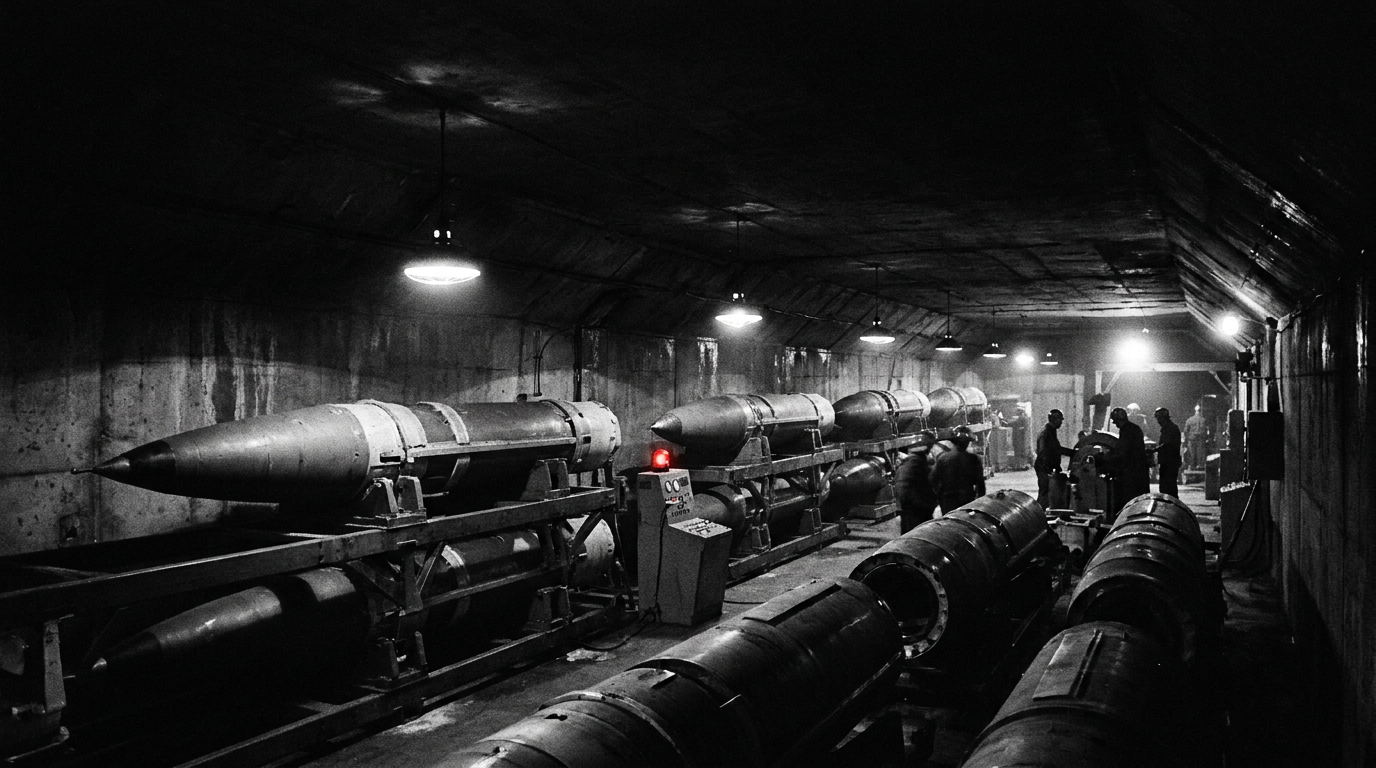
Iran missile production has resumed underground, officials said, extending Tehran’s capacity to keep firing as interceptor stocks tighten.
Officials from the U.S. and the Middle East familiar with the matter said Tehran is using components held before the war and working from underground facilities. The renewed activity follows U.S. and Israeli attacks that damaged missile sites and industrial plants during the war’s opening phase.
Khojir returns to focus
The officials pointed to work at several underground locations, including the Khojir missile facility in southeastern Iran. They also said Iran is trying to create additional underground assembly points, a shift meant to reduce the exposure of missile work to further strikes.
The reported production is not a full restoration of Iran’s prewar capacity, according to the officials. They described the current pace as more limited, with new missiles mainly assembled from existing parts rather than a fully functioning industrial chain.
The distinction matters for the battlefield. Liquid-propellant missiles must be fueled shortly before launch, while solid-propellant systems can be stored closer to a ready-fire condition, giving commanders more flexibility if enough components and fuel inputs are available.
Stockpiles narrow strike gains
The U.S. and Israel began the war on February 28 with missile production among the targets they sought to degrade, according to officials familiar with the campaign. Damage to industrial facilities has constrained Iran’s ability to make both missile components and complete systems.
A naval blockade has also complicated imports of parts and ingredients needed for solid fuel, the officials said. That pressure leaves Iran with a narrower production base, but it has not prevented assembly work from restarting where usable stockpiles remain.
Tal Inbar, a senior analyst at the U.S.-based Missile Defense Advocacy Alliance, said Iran’s ability to recover should not be underestimated when attacks pause. "When there are no bombings of the facilities, you can replace damaged infrastructure, and you can buy new components from other countries and store them in the facilities," Inbar said. "You have to be extremely naive to think that Iran is not rebuilding its missile-production capabilities."
The office of Israel’s prime minister did not respond to a request for comment. A White House official did not address directly whether Tehran had resumed ballistic missile production, but said Iran’s nuclear facilities had been obliterated and its military forces severely weakened.
"Iran is weaker now than ever before, and President Trump will never allow Iran to have a nuclear weapon," the White House official said. Sean Parnell, the Pentagon’s chief spokesman, said the U.S. had "destroyed up to 90% of Iran’s drone, ballistic missile, and naval industrial base" and had "significantly degraded" Iran’s ability to launch missiles and drones.
Interceptors set the next constraint
The operational pressure now runs in both directions. Iran is trying to stretch its missile inventory through underground assembly, while the U.S. and Gulf partners face shrinking stocks of missile interceptors as the conflict becomes a contest of replacement rates.
If the blockade keeps limiting solid-fuel inputs, Iran’s missile program would remain dependent on stored parts and smaller batches, reducing the pace at which Tehran can rebuild sustained launch capacity. That path would support U.S. and Israeli claims of degradation, while keeping regional air-defense manufacturers under pressure to replenish interceptors.
If Iran instead secures fresh components or protects enough underground assembly sites, the balance shifts toward a longer attrition fight. The macro effect would be felt through defense spending and Gulf security planning, Iran would gain a larger reserve of usable missiles, and the missile-defense sector would face a longer cycle of demand for interceptors, radars and related systems.