Iran Calls for Cultural Alliance with Russia Against External Threats
Iran's Culture Minister advocated for a strategic cultural dialogue with Russia, emphasizing its role in building resilience against future crises and…
Omar Farouk ·
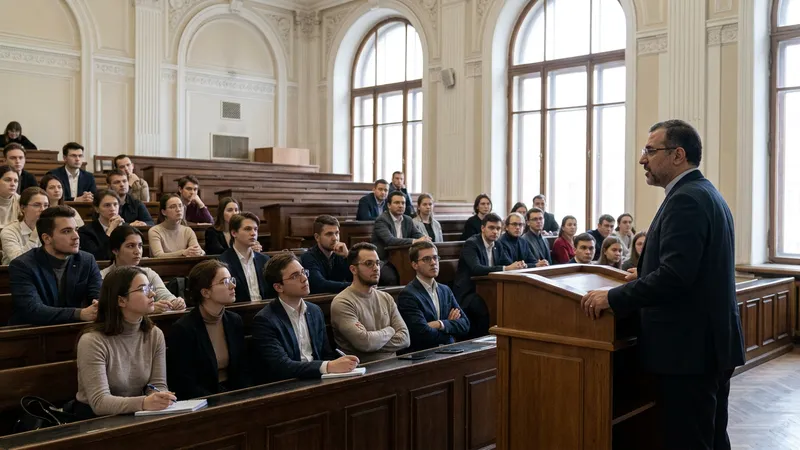
Iranian Minister Addresses St. Petersburg Academics
Iran’s Minister of Culture and Islamic Guidance, Mohammad Mehdi Esmaeili, on Sunday called for a strategic cultural and civilizational dialogue with Russia to bolster resilience against future crises. Addressing faculty and students at the St. Petersburg State University of Culture and Arts, Minister Esmaeili emphasized this partnership as a “cultural shield” against military threats.
Deepening Tehran-Moscow Alignment
The minister's remarks underscore an ongoing alignment between Tehran and Moscow, rooted in shared geopolitical interests and a common stance against perceived Western dominance. Both nations have faced extensive international sanctions and have deepened cooperation across economic, military, and energy sectors. This includes Iran supplying drones to Russia amidst the conflict in Ukraine, and both countries participating in joint naval drills.
Tehran has consistently advocated for a multi-polar world order, a position echoed by Moscow. Bilateral trade has seen an increase, with Russia facilitating some Iranian oil exports. The Islamic Revolutionary Guard Corps (IRGC), a key Iranian military and political entity, plays a significant role in shaping the country's strategic foreign policy, including its outreach to allies like Russia.
Cultural Shield Concept
Iran's concept of a “cultural shield” has historically referred to its efforts to preserve its Islamic and revolutionary values against what it perceives as Western cultural infiltration and influence. This approach extends to resisting political and military pressures by fostering alliances through shared cultural and civilizational foundations. The minister’s framing suggests an expanded application of this doctrine, positioning cultural ties as a bulwark against broader geopolitical and military challenges, especially in the context of persistent regional tensions and sanctions.
Implications for Regional Balance and Global Spillover
The deepening cultural and strategic ties between Iran and Russia have implications for the regional balance of power, particularly in the Middle East and Central Asia. This partnership could provide Iran with additional diplomatic and soft power leverage, potentially influencing dynamics in areas where both countries have interests, such as Syria. The alliance also offers a counterweight to traditional Western influence in these regions.
Globally, this collaboration could impact international trade routes, notably shipping lanes like the Strait of Hormuz and the Bab al-Mandab, which are critical for global energy supply. Increased coordination between Tehran and Moscow, including potential naval exercises or intelligence sharing, could affect stability in these strategic waterways. It also signals a continued erosion of Western-led global institutions, as both countries seek to establish alternative frameworks for international relations and trade.
Future Joint Cultural Initiatives
This call for cultural dialogue indicates a proactive move by Iran to solidify its strategic partnership with Russia beyond military and economic cooperation. Such initiatives aim to foster mutual understanding and support, presenting a united front in international forums. It also seeks to project a narrative of resilience and defiance against external pressures.
Outlook and Observables
Future developments will hinge on the tangible follow-through of this cultural push, potentially manifested in joint educational programs or art exchanges. If Iran and Russia announce significant new cultural agreements or educational exchange programs that explicitly link to strategic objectives or countering Western narratives, it would signal a robust progression of this alliance. Conversely, if subsequent statements from either capital downplay the strategic importance of cultural ties, or if announced initiatives remain purely ceremonial without tangible follow-through, this cultural diplomacy may prove to be more symbolic than substantive.