Radcliffe Line legacy still shapes India-Pakistan border
Radcliffe Line feature revisits how a five-week 1947 boundary award set India-Pakistan borders, with no new policy action or market move reported.
Mei Lin ·
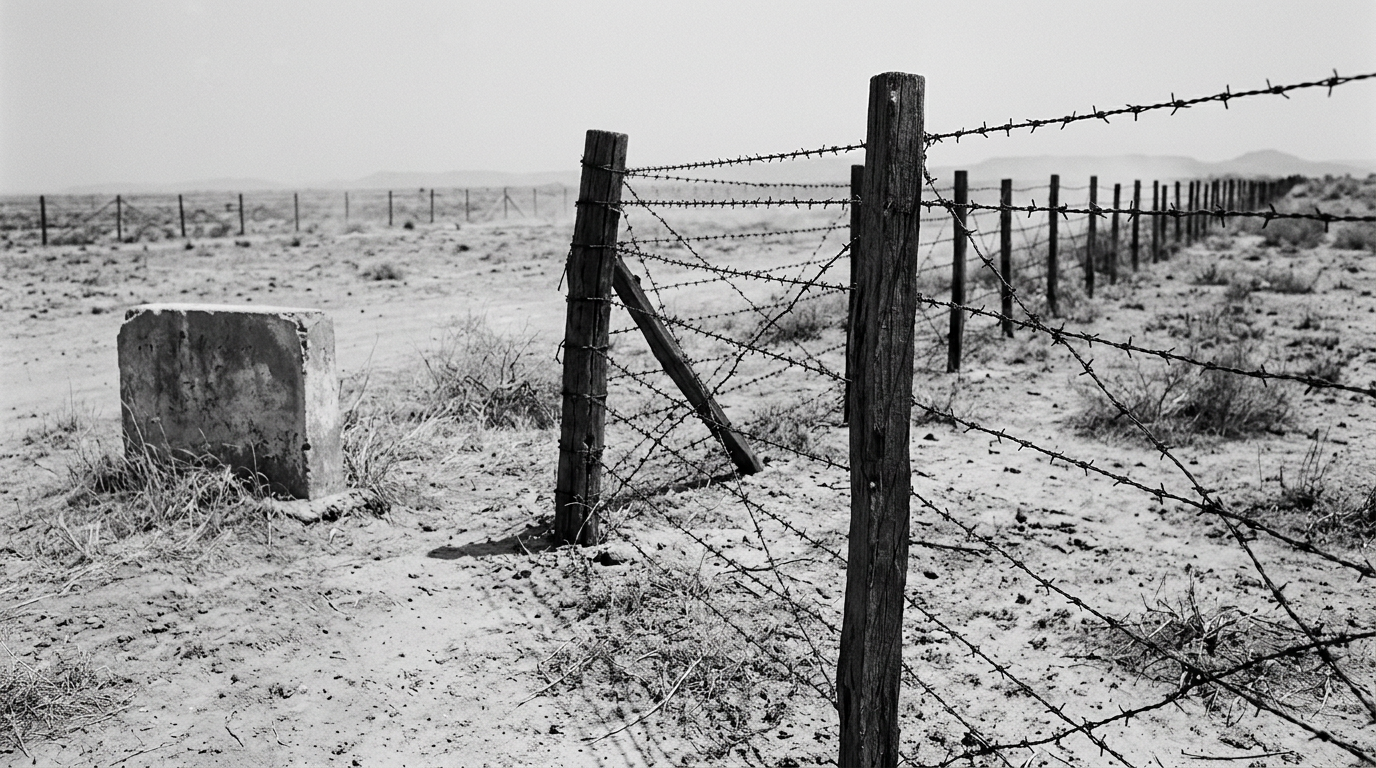
A resurfaced historical feature around India’s Independence Day revisits how the 1947 Radcliffe Line became the baseline for the borders of India and Pakistan, without pointing to any fresh government decision or institutional move that would make it a current policy or markets story.
According to the account, British lawyer Cyril Radcliffe arrived in India on July 8, 1947, and departed on August 15, 1947. In that compressed period, he produced a boundary award that the source describes as having “defined the maps of India and Pakistan.”
Partition and the 1947 boundary award
The feature places the Radcliffe Line inside the wider process of Partition in 1947, which created two new states, India and Pakistan. It says that dividing the provinces of British India required a boundary award, and Radcliffe’s judgments became the reference point for the international boundary that followed.
A central theme is the pace of the work: the narrative underscores the five-week timeline between Radcliffe’s arrival and departure, and notes his limited familiarity with India during the assignment. Beyond these dates and the line’s enduring impact on maps, the feature does not cite additional documentary discoveries or new archival releases.
No current policy peg in the latest signal
In framing the material for present-day Asia-Pacific coverage, the source characterises the piece as historical context rather than a new institutional action. It does not point to official commemorations containing policy content, and it does not cite statements by current Indian or Pakistani authorities that would change the immediate diplomatic, security, or economic outlook.
Independence Day
The account also does not report a market reaction, a named decision by a current institution, or an active bilateral step that would support a specific, time-bound linkage to trade flows, foreign exchange, or defence balance in the coming weeks.
Why the line still matters to stability and commerce Even without a new trigger, the source argues that the durability of the Radcliffe Line continues to matter for regional stability and cross-border commerce. It says the India–Pakistan boundary remains central to bilateral relations, security postures, and the movement of people and goods.
When tensions rise, the source says the most exposed economic channels typically include trade restrictions, border closures, and knock-on effects for logistics routes connecting South Asia to the Gulf and Southeast Asia. For global spillovers, it adds that the most direct mechanisms generally run through security risk pricing and supply chain reliability, rather than immediate macroeconomic data.
What would turn the story into a live update The source sets a test for timeliness tied to official action: a dated measure linked to the Radcliffe Line that changes cross-border rules. Examples it lists include a border management measure, a shift in visa or trade policy, or a formal diplomatic démarche.
It specifies a monitoring window through 2026-08-31, with the condition that at least one named ministry or agency in India or Pakistan issues a dated statement, order, or bilateral notice that changes border operations or trade or visa rules. Absent that, the source says the item remains commemorative rather than policy-relevant.