Trump weighing military action in Mali
The Trump administration is weighing Mali military options against JNIM, exposing a split over force versus conflict resolution.
Lauren Collins ·
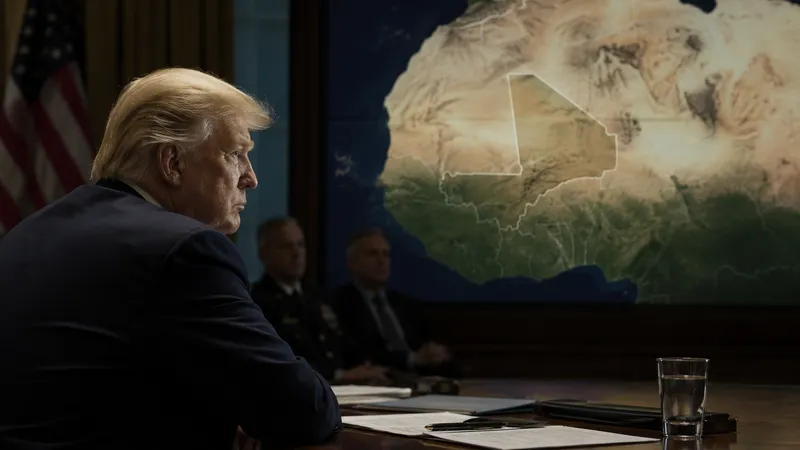
Mali military options under review by the Trump administration could widen U.S. strikes if officials back action against JNIM.
Current and former U.S. officials said the administration is considering military action in Mali against JNIM, a group they described as affiliated with al-Qaeda. The account provided no decision date, no operational plan, and no public order from President Donald Trump.
JNIM review divides officials
The central policy question is not whether Washington views JNIM as a hostile actor; the supplied account says the dispute is over method. Some officials are pressing for force, while others are urging conflict resolution as the preferred route.
The deliberations matter because officials said Mali could join the list of countries where Trump has ordered strikes during his second term. That would broaden the geographic scope of U.S. military activity linked to the administration’s counterterrorism posture.
Mali decision lacks public detail
The source material does not say which military options are under review. It does not specify whether the discussion involves airstrikes, special operations, intelligence support, partner assistance, or another form of action.
Those omissions are central to the risk profile. A direct strike would raise questions about legal authority, target verification, and civilian harm mitigation, while support to local forces would shift attention toward partner capacity and political consent.
The account also does not describe any request from Mali’s government or any diplomatic coordination around a possible operation. Without that detail, the policy debate can be reported only as an internal U.S. deliberation, not as an agreed bilateral plan.
Counterterrorism choice meets restraint argument
The disagreement inside the U.S. government reflects a familiar tension in counterterrorism policy. Military action can disrupt an armed group’s commanders, facilities, or logistics, but officials favoring conflict resolution appear concerned that force alone may not settle the underlying conflict.
For the Trump administration, the immediate effect of choosing force would be political and operational. It would make Mali another test of how far the White House is prepared to extend overseas strikes during the president’s second term.
For the wider security sector, any order would put fresh attention on intelligence collection, regional access, and strike capabilities tied to militant groups in West Africa. If the administration instead holds back, diplomatic and conflict-resolution channels would carry more of the policy burden.
Three paths shape the stakes
If the administration authorizes a limited strike, the global macro effect would be hard to size from the supplied information because no trade, energy, fiscal, or market data were provided. The mechanism would be mainly geopolitical: a wider U.S. strike map could influence risk perceptions around security policy, while the administration would claim a more active counterterrorism stance and defense planners would focus on execution risk.
If officials choose conflict resolution instead, the global effect would likely run through diplomacy rather than markets. The Trump administration would avoid adding Mali to its strike list for now, while the broader security community would watch whether nonmilitary tools can reduce JNIM’s threat without a visible U.S. kinetic operation.
If the review remains unresolved, uncertainty becomes the main policy signal. U.S. officials would continue debating force versus negotiation, JNIM would remain the named concern in the account, and allies or partners would have limited public guidance on Washington’s intended course.
The open questions are specific: what option is being weighed, who would approve it, whether Mali’s authorities are involved, and what threshold would trigger action. Until those answers are public, the story is a live policy review rather than a confirmed military campaign.