India protest cases dropped as CJP cancels Sept. 5 march
India protest cases were ordered dropped by the Supreme Court, prompting CJP to cancel its Sept. 5 march after government concessions.
Raj Patel ·
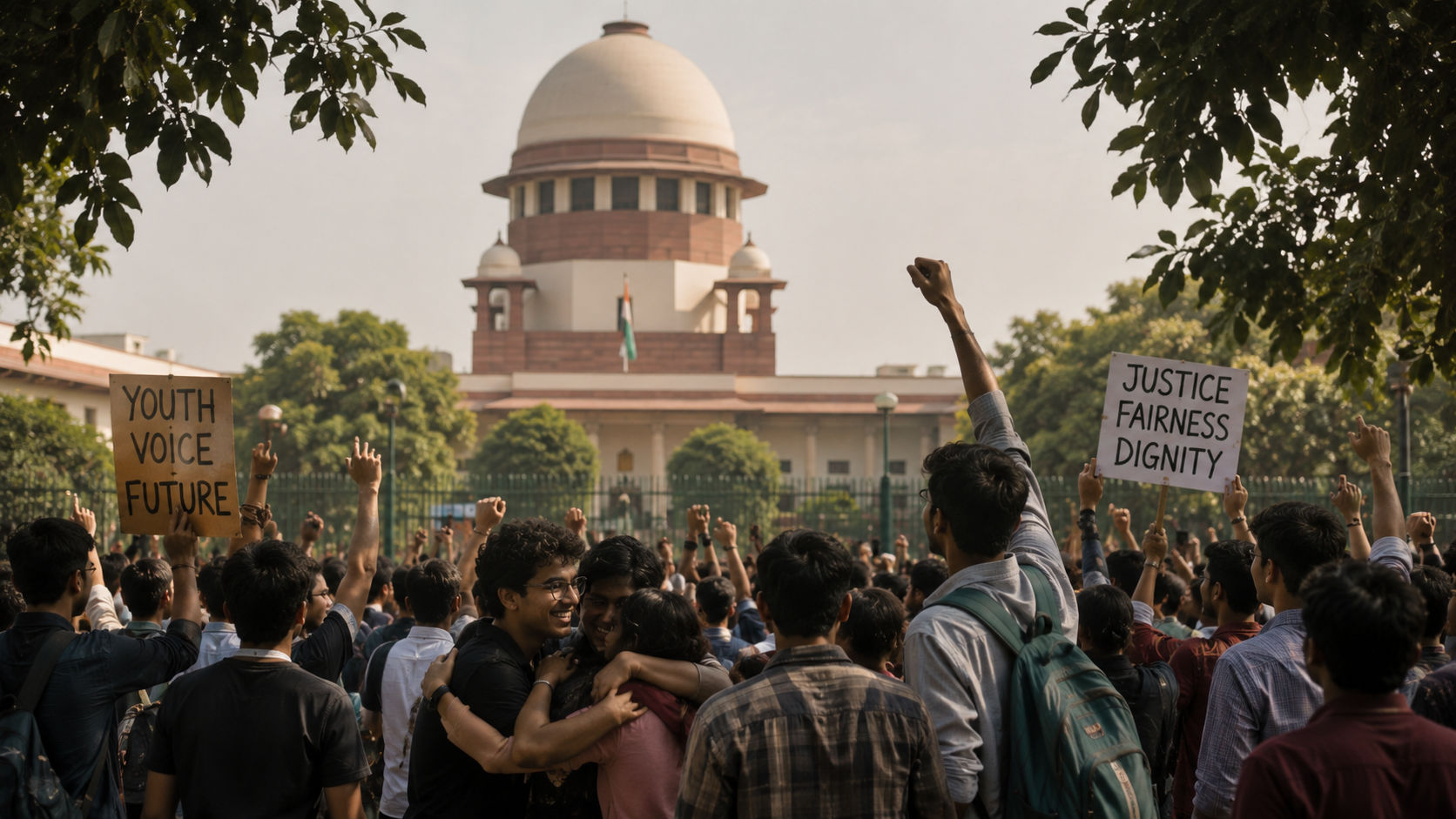
India’s Supreme Court ordered July protest cases dropped, leading Cockroach Janta Party to cancel a Sept. 5 march after government concessions.
Court shields young protesters
A bench led by Chief Justice Surya Kant also told states and union territories not to file new cases over the same demonstrations. The court said it was weighing "the future prospects of the young protestors," a formulation that put the legal consequences for students ahead of further prosecution.
The order followed a government request Monday for the court to use its special constitutional powers to deliver "complete justice." By Tuesday, the ruling had removed the immediate legal trigger for a new round of street action by the youth-led group.
Sept. 5 march is shelved
The CJP had planned to march again after saying commitments made after the July protests had not been met. Its demands included the withdrawal of cases against demonstrators and compensation for families of students who died by suicide, according to the group.
CJP co-convener Ashutosh Ranka said in a post on X that the group was calling off the Sept. 5 march after two moves: the court’s order on criminal cases and the government’s commitment to compensate affected families within 90 days. The 90-day window now gives the dispute a dated test rather than an open-ended promise.
More than 2,500 excluded
The court did not shut every file opened around the protests. It allowed proceedings to continue against more than 2,500 people described as having "serious criminal antecedents," while saying investigations involving them must be confined to separate offenses.
That carveout matters for the students covered by Tuesday’s order as it separates participation in the July demonstrations from allegations tied to other conduct. It also gives police a narrower path: cases can proceed against people in the excluded category, but not as a renewed sweep over the same protest activity.
Exam anger drove July rallies
The July demonstrations in New Delhi grew out of allegations of exam irregularities, an issue with political force in a country where public tests often decide access to jobs and higher education. No specific examination was identified in the accounts provided, leaving the claim tied to the protest group’s framing.
The CJP began as a satirical movement before becoming a youth-led pressure group. The group adopted its unusual name after an earlier hearing in which remarks attributed to Kant referred to some unemployed young people as "parasites" and "cockroaches," comments that drew a social media backlash before he later said he had been misquoted.
After the order, CJP leader Saurav Das thanked the court and called the decision "historic." Kant responded in court, "The credit goes to you all," closing a confrontation that had partly been shaped by his earlier disputed remarks.
Ninety days sets next test
If the government pays compensation within 90 days and no fresh cases are filed, the CJP’s near-term incentive to return to the streets would narrow. That path would ease pressure on the government, limit disruption in New Delhi and leave the exam sector facing scrutiny mainly through administrative rather than criminal channels.
If compensation stalls or police test the limits of the carveout for more than 2,500 excluded people, the group could argue that the settlement has not held. That scenario would increase the chance of renewed mobilization, with any macro effect likely confined to perceptions of governance risk rather than trade, inflation or capital flows.
For the CJP, the court order converts a protest demand into an enforceable legal outcome, but it also shifts attention to delivery by the state. For India’s exam and recruitment system, the unresolved question is whether the alleged irregularities that brought students into the streets are addressed before the 90-day compensation period expires.