Putin envoy warns Russian economy may bend toward war needs
Boris Titov warned the Russian economy could go "berserk" if state policy fully prioritizes the military-industrial complex.
Sofia Reyes ·
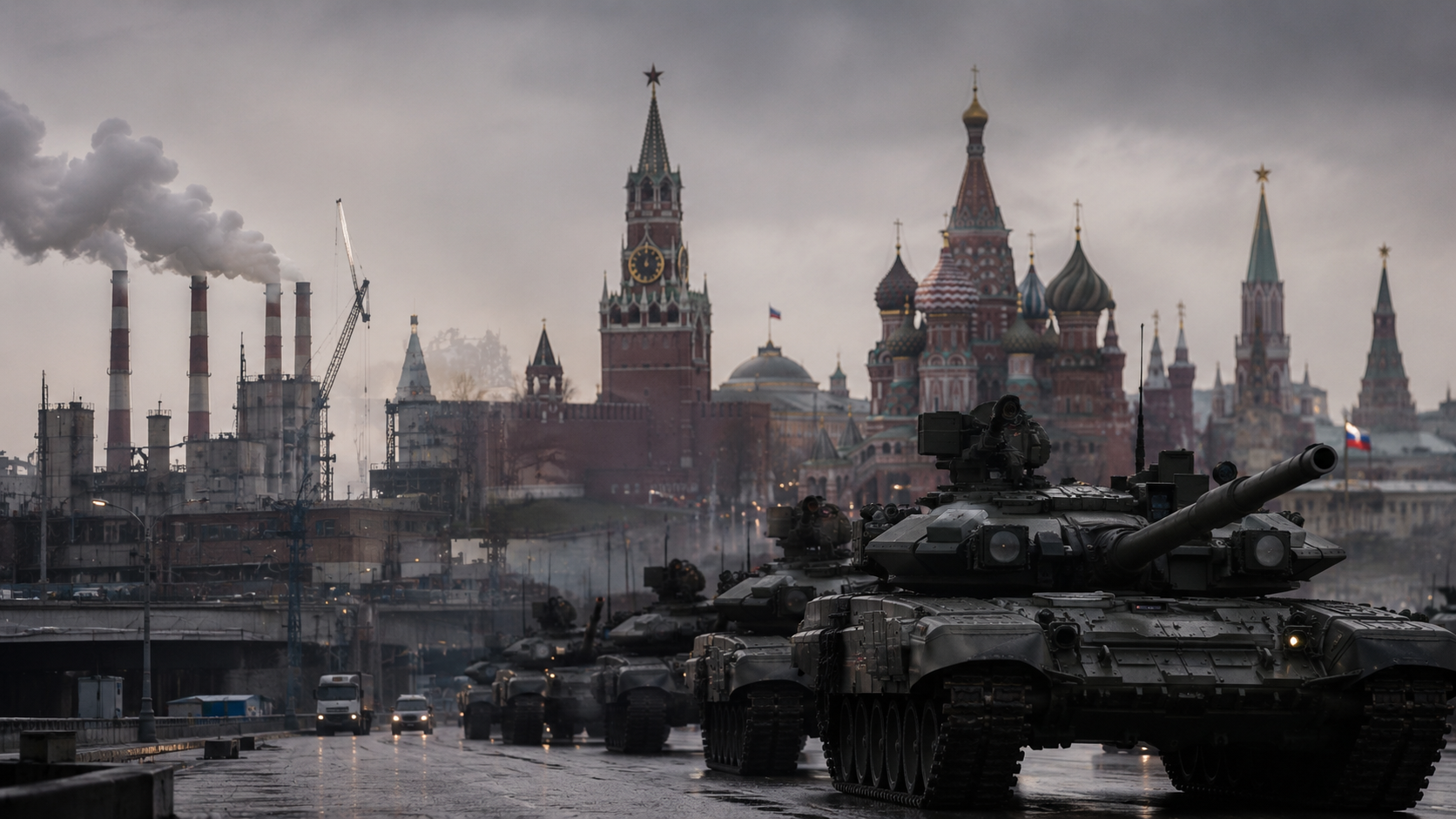
The Russian economy risks going "berserk" if policy is built entirely around defense production, Boris Titov said in published remarks.
Titov, President Vladimir Putin's international development envoy, made the warning in comments carried by a Russian business publication on September 1. The statement stood out because it came from an official linked to the Kremlin's policy orbit, not from an opposition figure or an outside economist.
Titov's defense warning lands
Titov's core point was narrow but pointed: an economy organized solely around the military-industrial complex can lose balance. He did not give a public numerical estimate for that risk in the reported remarks, and no policy measure was announced alongside the comments.
The timing gives the statement its weight. Russia is still fighting the war in Ukraine, now described in the source as 4-1/2 years old, and the state has been under pressure to sustain the industrial capacity needed for that campaign.
The remarks were presented as a rare signal of concern within circles close to power about the burden that wartime priorities place on a slowing economy. That framing is important because Russian officials more often emphasize resilience, output and adaptation under sanctions than the risk of policy imbalance.
Ukraine war strains policy
The phrase "military-industrial complex" points to more than weapons factories. It covers state orders, defense suppliers, labor allocation, financing channels and the political priority given to production that serves the war effort.
If those channels dominate economic management, civilian sectors can face tighter competition for workers, capital and government attention. Titov's warning implies that the problem is not defense production itself, but a system in which defense needs become the economy's organizing principle.
The direct effect falls first on the Russian state and its industrial base. A defense-first model can keep orders flowing to military suppliers, but it can also reduce flexibility for private firms that depend on consumer demand, imported inputs or investment not tied to state procurement.
For the wider sector, the mechanism is allocation. When labor and financing move toward favored defense production, companies outside that chain may find expansion harder even if headline output remains supported by government demand.
Three paths for industry
One scenario is that Moscow keeps defense production at the center of policy while avoiding a full crowding-out of civilian activity. In that case, the macro effect would be a more state-directed economy; the main institution at the center, the Kremlin, would preserve war-related capacity; industry would remain split between protected defense suppliers and less-favored civilian firms.
A second scenario is the one Titov cautioned against: military-industrial needs take priority over nearly everything else. If that holds, the global macro effect would be a Russian economy less responsive to ordinary market signals; the Kremlin would gain near-term production focus but face a higher risk of distortions; the industrial sector would become more dependent on state orders.
A third scenario would involve a gradual policy rebalance, with defense production still funded but no longer treated as the sole economic center. That would ease pressure on civilian firms if capital and labor became more available outside defense supply chains, while leaving the state to manage the political cost of shifting priorities during the Ukraine war.
The main open question is whether Titov's remarks reflect a wider debate inside policy circles or a limited warning from one envoy. Without a primary transcript or fresh official response, the comments show concern about direction, not a confirmed change in Russian economic policy.