

ICJ orders Myanmar to allow Rohingya return after genocide ruling
The court’s first state-genocide finding adds pressure over 1.2 million refugees in Bangladesh, even as enforcement runs through the UN Security Council.
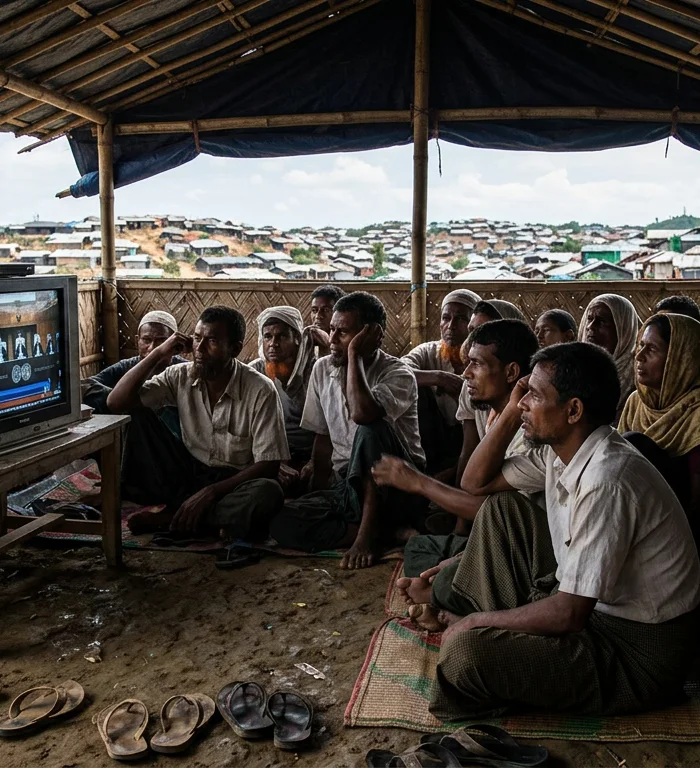
The International Court of Justice ordered Myanmar on Nov. 19 to let Rohingya return safely after saying evidence showed its forces killed about 10,000 Rohingya, Channel NewsAsia reported in a Nov. 21 news report.
The decision is the court’s first ruling that a state committed genocide, raising legal and diplomatic pressure over about 1.2 million Rohingya refugees now living in Bangladesh, mostly in Cox’s Bazar camps.
In Cox’s Bazar, hundreds of Rohingya refugees watched coverage of the ruling from the Netherlands on a large screen inside the camp, according to the report. Many said the judgment offered hope, but that return to Myanmar remained their central demand.
Mohammad Rofik, a Rohingya community leader in the camp, told The Associated Press the ruling was “a victory” because it recognised the community’s suffering, but was “not an end” to its ordeal. “Justice has started,” Rofik said, adding that the Rohingya still have “a long way to go”.
Sayed Ullah, another Rohingya community leader, said the judgment mattered because it recognised the Rohingya as a distinct ethnic group. “Myanmar denies the existence of the Rohingya, but now the (UN) court made it clear,” he said.
The court also ordered Myanmar’s military-supported government to pay reparations to Rohingya Muslims and prosecute people suspected of genocide, Channel NewsAsia reported. Myanmar’s government on Friday dismissed the decision as “unfair”.
Enforcement remains limited. The court’s rulings are final and legally binding, but it has no enforcement arm beyond reporting non-compliance to the UN Security Council, according to the report.
Bangladesh Foreign Minister Khalilur Rahman, who is also president of the UN General Assembly, went to Cox’s Bazar on Friday and told Rohingya refugees there must be action, spokesperson Melissa Summers said. Rahman said suspects must face prosecution, return must be voluntary and safe, reparations must be paid and Myanmar’s government must prevent any repeat, according to Summers.
Myanmar’s military launched what it called a clearance campaign in Rakhine state in August 2017 after an attack by a Rohingya insurgent group. The campaign led to accusations that security forces carried out mass rapes and killings and burned thousands of homes.
Under the 1948 Genocide Convention, the court had to find intent to destroy the Rohingya “in whole or in part”. Bangladesh has urged international support for repatriation as refugees in Cox’s Bazar face fire risks, infectious diseases, monsoon landslides, inadequate sanitation and strict work limits.
Source: AP via Channel NewsAsia news report, Nov. 21, 2026.
More stories
- Germans oppose Ukraine aid as poll shows support slipping
- Kim Jong-un receives 10 envoys after constitutional shift
- Ukraine claims Libya strike sinks Russian naval corvette
- COP31 climate talks collapse over fossil fuels and funds
- Russian military faces 1,087 recorded suicides in Ukraine war
- US faces China, Russia in Africa minerals contest
- Middle powers pursue trade links beyond Trump diplomacy
- South Africa's preschool subsidies face repair-cost barrier
- Lapid accuses Netanyahu of undermining Israel vote
- Lufthansa cuts profit outlook on 28% fuel-bill increase
Latest news
- Trump prepares tariffs on China and other major exporters
- New-car buyers pay record average $50,087 in October
- Banks face ECB reserve debate over liquidity and profits
- Investors see Anthropic debut gains fade below $83 a share
- Iraq orders federal control over Kurdish-area oilfields
- Nvidia shares retreat as AI rally cools before PCE data
- Macy’s parade faces balloon limits as storm winds approach