

China Dominates Global Humanoid Robot Manufacturing
China accounts for 90% of global humanoid robot production, driven by a strategic state initiative to integrate AI across diverse sectors.
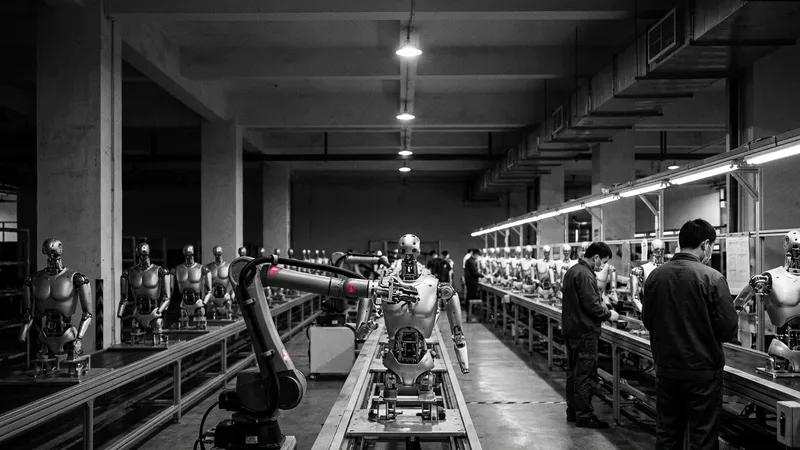
China currently produces approximately 90% of the world's humanoid robots, a figure that underscores a significant state-backed push to integrate embodied artificial intelligence throughout its economy. This strategic focus on physical AI systems is a central element of the nation's current five-year plan, designed to broaden robotics applications from traditional industrial settings into wider public and commercial domains.
Recent public demonstrations in major cities like Shanghai and Beijing illustrate a deliberate effort to familiarize the populace with humanoid robot interactions. These events also aim to cultivate domestic consumer interest and demand for these advanced machines. Developers are actively deploying these robots in various service-oriented sectors, including retail, tourism, and entertainment, as part of a strategy to overcome long-standing obstacles to widespread adoption, such as elevated manufacturing expenses and technological constraints related to battery longevity and operational stability.
Strategic Integration and Market Expansion
strategy aims to position humanoid robotics as a transformative technology, moving beyond the factory floor into daily life and various service industries. This extensive integration is envisioned to enhance productivity and reshape human-technology interactions. The government's backing provides a robust framework for research, development, and deployment, fostering an ecosystem conducive to rapid innovation and market penetration.
Globally, some reservations exist concerning the practical efficiency of robots designed in human form, particularly compared to more specialized robotic systems. However, the sheer scale of China's manufacturing capabilities provides a substantial competitive edge. This allows for extensive data collection and iterative design improvements at an unprecedented pace, accelerating the refinement of these complex machines.
Implications for Global Standards and Automation
The rapid rollout of humanoid robots in China signals a deliberate shift towards large-scale, state-supported commercialization. This aggressive deployment strategy has the potential to influence global benchmarks for human-robot interaction and significantly impact labor automation across various industries worldwide. As Chinese manufacturers innovate and scale, their practices could set new standards for performance, cost, and functionality in the burgeoning humanoid robotics market.
This initiative extends beyond manufacturing prowess, encompassing efforts to develop sophisticated AI algorithms that enable robots to perform increasingly complex tasks and interact more naturally with humans. The long-term vision includes leveraging these robots to address demographic shifts, enhance public services, and maintain a competitive edge in advanced technological sectors. The implications for international technological leadership and future economic models are substantial.
More stories
- AI coding agents add 30% more code, not software output
- Google tests Gemini 4 update as coding competition grows
- OpenAI defends safety firings over trust breach
- Mastercard puts stablecoins at center of cross-border push
- Asos Customer Data Compromised via Employee Account Breach
- 4-bit AdamW quantization could invert AI hardware spend toward memory
- Bitcoin's 2026 Outlook Shaped by Three Core Factors
- AI Vision Processing Reshapes Automotive Procurement
- FCC Ban on HoverAir Versa Hits US Drone Sales
- Apple Cuts 200 Jobs in Vision Pro and Siri Shakeup
Latest news
- Kyiv playground blast puts Ukraine air-defense stocks back on Washington’s agenda
- Rubio’s Athens speech hardens Washington’s public line on Iran
- Saudi airport hit in new Houthi attack, officials say
- New Horizon posts $4.1 million Q1 loss as R&D rises
- French Borrowing Costs Hit 5% as Debt Crisis Deepens
- Houthis claim Riyadh airport strike as injuries reported
- Germany Reaffirms Russia Sanctions Amid Potential US Policy Shift
- China beats Thailand 2-0 to reach junior badminton final