

AI Vision Processing Reshapes Automotive Procurement
Multi-camera vehicle systems are shifting procurement toward specialized AI vision units and integration, prioritizing advanced AI architecture over hardware.
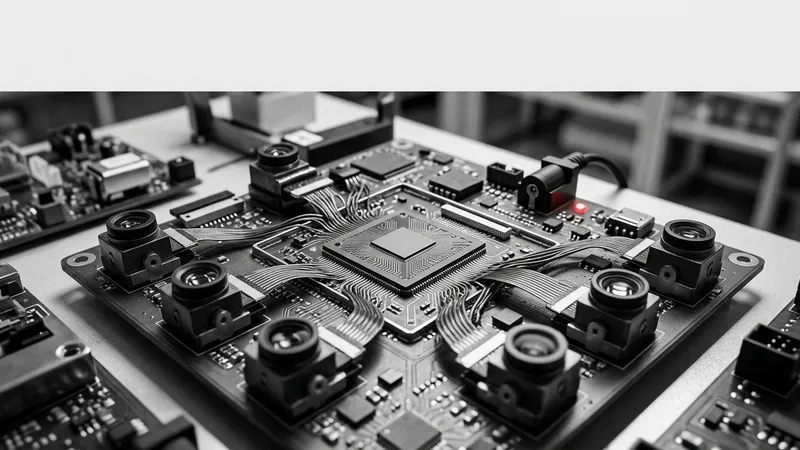
A fundamental shift is underway in procurement strategies for multi-camera systems, particularly within the automotive sector, driven by the increasing need for specialized AI vision processing. Rather than simply acquiring more cameras, procurement managers are now grappling with the significant downstream costs and capabilities required to imbue these systems with intelligence. This evolving landscape redefines how companies approach investments in advanced vehicle technologies.
The core driver behind the expanding market for camera-rich systems in both automotive and industrial applications is not merely the camera count itself. Instead, the critical factor lies in specialized AI vision processing units (VPUs) and the comprehensive services needed to integrate them with existing software and control mechanisms. This nuance suggests that while market reports might highlight camera growth, the true leverage point for procurement teams resides in the architectural design of the AI vision stack and the long-term integration expenses.
Redefining Value in Vision Systems
Many market observers often emphasize the proliferation of cameras as the primary engine for growth, citing consumer demand for enhanced vehicle safety and advanced driver assistance features. However, this perspective overlooks where the real incremental value is generated. The crucial elements emerge after camera installation, encompassing how data streams are fused, latency is managed, and computational resources are provisioned and funded.
The critical bottlenecks are not confined to hardware components but extend to the specialized computational and software layers essential for real-time perception across diverse operational environments. Consequently, procurement strategies must pivot from a device-centric approach to focusing on the design, sourcing, and integration services for AI vision compute capabilities. This represents a significant re-evaluation of where investment delivers the most impact.
Procurement Challenges and Future Outlook
Over the next 12 to 18 months, should the market continue its trajectory towards a larger installed base of multi-camera systems, buyers will face a secondary procurement challenge. This involves securing specialized AI vision processing units and ensuring the capability to integrate them seamlessly with sensor fusion pipelines, perception stacks, and regulatory compliance frameworks for safety. This transition implies moving beyond single-source camera vendors to a broader ecosystem that includes VPUs, robust software stacks, and integrators capable of delivering end-to-end, high-grade reliability akin to aviation or automotive standards.
Financially, this could lead to a capital expenditure-heavy yet asset-light hybrid model. This involves substantial upfront investment in high-performance vision hardware combined with ongoing financial commitments for calibration, validation, and software maintenance. In this context, the sheer size of the camera market becomes a proxy for a much more intricate procurement calculation, where the architectural integrity and functionality, rather than raw hardware numbers, determine value.
Key Indicators for Executives
Executives are advised to monitor several concrete indicators in the near future. These include announcements from Original Equipment Manufacturers (OEMs) and Tier 1 suppliers regarding the implementation of dedicated AI vision compute on new platforms. Furthermore, early disclosures on integration costs — whether rising or falling relative to camera hardware costs as pilot programs expand — will be crucial. Earnings calls and investor days where the focus shifts from hardware unit shipments to comprehensive end-to-end perception stacks and associated service contracts will also provide valuable insights.
Additional signals involve partnerships between camera suppliers and AI accelerator vendors, along with the early deployment of standardized perception modules designed to reduce integration complexities. These combined indicators would substantiate the procurement-driven trajectory implied by current forecasts, even if specific market size figures remain subject to debate and further validation.
Strategic Implications for Manufacturing
For manufacturing and industrial users, this strategic pivot towards procuring AI vision compute and integration services could fundamentally alter the balance between capital expenditure (capex) and operational expenditure (opex). An initial investment in high-end VPUs, coupled with long-term service agreements, may either supplement or entirely replace the traditional ongoing costs associated with sensors and software licenses. Risks in this evolving paradigm revolve around the reliability and interoperability of multiple suppliers, alongside the potential for mispricing the market value between basic camera hardware and the advanced capabilities offered by AI processing and fusion.
Therefore, it becomes imperative to observe not just the overall market size but also the evolving shape of the supply chain itself. Key questions include who is issuing purchase orders, who is assuming the integration risks, and the degree of standardization achieved by perception modules across various platforms. Until broader validation from independent market research, operator pilot programs, and regulatory or standardization bodies emerges, specific market forecasts should be treated as directional benchmarks rather than definitive predictions.
More stories
- AI coding agents add 30% more code, not software output
- Google tests Gemini 4 update as coding competition grows
- OpenAI defends safety firings over trust breach
- Mastercard puts stablecoins at center of cross-border push
- Asos Customer Data Compromised via Employee Account Breach
- 4-bit AdamW quantization could invert AI hardware spend toward memory
- Apple Introduces M6 and M5 Ultra Chips for Enhanced AI Performance
- Healthcare providers face a labor shift as patient engagement market nears USD 45.90B by 2035
- China’s humanoid robots race toward soldier debate at Games
- Taiwan Indicts Nine Over Illicit AI Server Exports to China
Latest news
- Red Cross says Gaza hostage access involved Haniyeh talks
- Trump urges Zelensky replacement over refinery strikes
- Tesla takes 90% of output from Arizona solar project
- Saudi Arabia suspends Riyadh airport operations after attack
- Kyiv playground blast puts Ukraine air-defense stocks back on Washington’s agenda
- Rubio’s Athens speech hardens Washington’s public line on Iran
- Saudi airport hit in new Houthi attack, officials say
- New Horizon posts $4.1 million Q1 loss as R&D rises