

Apple Introduces M6 and M5 Ultra Chips for Enhanced AI Performance
Apple announced its new M6 and M5 Ultra processors, designed to boost performance, efficiency, and on-device AI capabilities for its professional desktop…
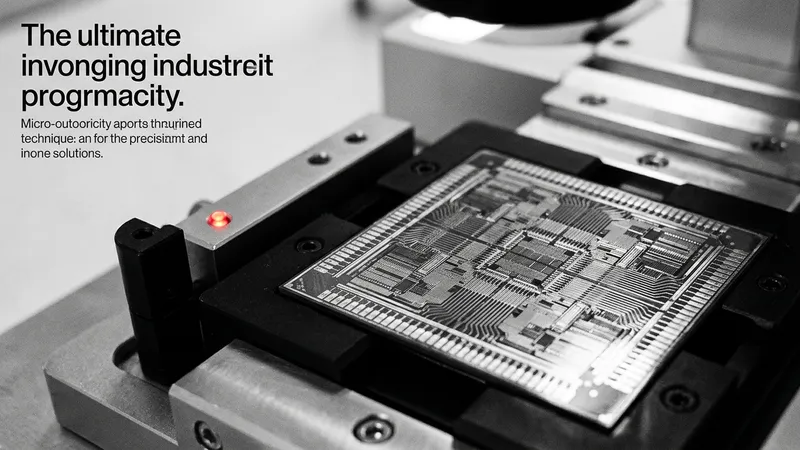
Apple has officially unveiled its latest custom silicon, introducing the M6 and M5 Ultra processors, engineered to significantly advance performance, power efficiency, and integrated artificial intelligence processing across its desktop computer range. This initiative reinforces Apple's ongoing commitment to developing its own chip technology, aiming to deliver specialized hardware solutions for demanding professional and AI-intensive applications.
The M6 processor marks a substantial technological leap, incorporating advanced 2-nanometer manufacturing technology. This sophisticated fabrication process facilitates increased transistor density and improved operational efficiency. It features a 12-core central processing unit (CPU) and a 12-core graphics processing unit (GPU). A standout characteristic of the M6 is its dual 16-core Neural Engine, specifically optimized for handling artificial intelligence tasks directly on the device. This integration is poised to enhance both multithreaded performance and energy efficiency compared to the previous M5 generation of chips.
Advanced Performance for Professional Workflows
Concurrently, the technology company also presented the M5 Ultra, a new high-end processor tailored for the most demanding computational requirements. This chip utilizes a quad-die architecture, leveraging Apple's proprietary UltraFusion interconnect technology to merge multiple silicon dies into a single, potent unit. The M5 Ultra is capable of supporting an impressive 512 gigabytes of unified memory, which ensures highly efficient data access and processing. Its design specifically targets intensive computational tasks, such as intricate 3D rendering and the deployment of advanced, cutting-edge artificial intelligence models, serving professional users who demand maximum computational power.
These recent hardware announcements underscore Apple's strategic focus on increasing local computing capacity. This emphasis is particularly crucial for enterprise environments and creative professional workflows, where the ability to process substantial datasets and execute complex applications on-device is paramount. By enhancing both on-device AI capabilities and raw processing power, Apple seeks to keep sensitive data local and diminish reliance on cloud-based services for certain AI functions. This approach potentially offers advantages in terms of speed, security, and data privacy.
Availability and Market Positioning
The M6 processor is scheduled to debut in the updated Mac Mini, a compact desktop computer recognized for its versatility. The more powerful M5 Ultra will be integrated into the Mac Studio, Apple's high-performance desktop workstation designed for creative professionals. Both new models are set to be available for preorder starting August 26. Customers can anticipate the commercial release and general availability of these updated product lines by September 22.
These product launches strategically position Apple to compete robustly in market segments requiring high-end computing and dedicated AI acceleration. This development is expected to influence purchasing decisions for professionals in design, engineering, and scientific research sectors, further solidifying Apple's stance in the advanced computing landscape.
More stories
- AI coding agents add 30% more code, not software output
- Google tests Gemini 4 update as coding competition grows
- OpenAI defends safety firings over trust breach
- Mastercard puts stablecoins at center of cross-border push
- Asos Customer Data Compromised via Employee Account Breach
- 4-bit AdamW quantization could invert AI hardware spend toward memory
- Healthcare providers face a labor shift as patient engagement market nears USD 45.90B by 2035
- eGain's AI CX push could shift procurement margins to fixed software
- Google AI Pivot Triggers Executive Exodus Over Strategy
- Lightfoot solar cargo scooter adds panels for daily errands
Latest news
- Pune police detain 92 over election-roll protest
- Putin relays Iran view to President Trump
- Red Cross says Gaza hostage access involved Haniyeh talks
- Trump urges Zelensky replacement over refinery strikes
- Tesla takes 90% of output from Arizona solar project
- Saudi Arabia suspends Riyadh airport operations after attack
- Kyiv playground blast puts Ukraine air-defense stocks back on Washington’s agenda
- Rubio’s Athens speech hardens Washington’s public line on Iran