Lightfoot solar cargo scooter adds panels for daily errands
Otherlab's Lightfoot solar cargo scooter uses body-mounted panels, dual hub motors and lockable storage to target short urban trips.
Jason Kwon ·
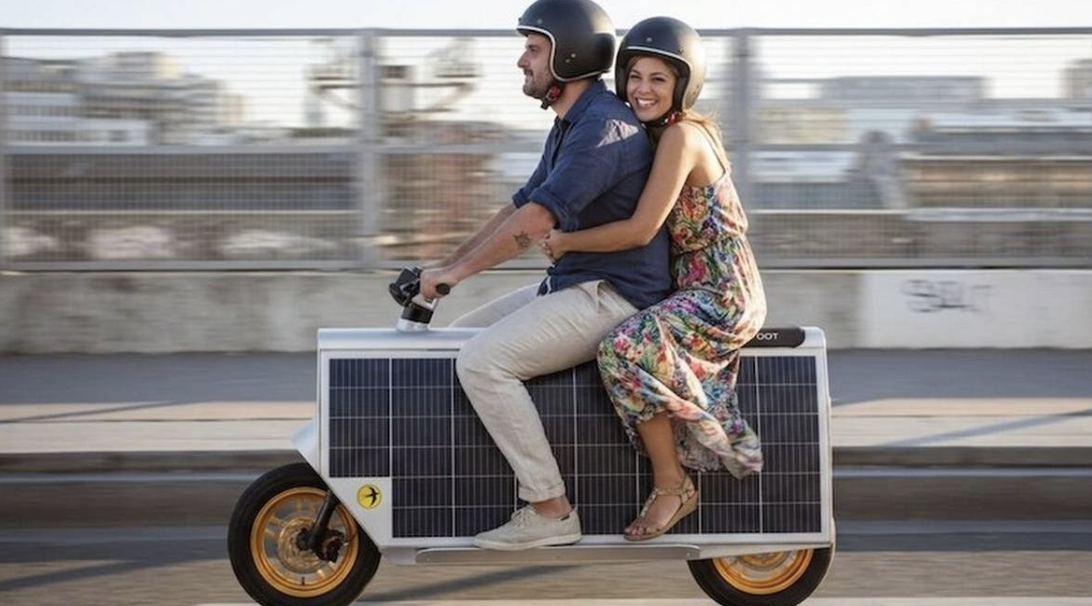
Lightfoot solar cargo scooter brings solar charging to a two-seat city EV built for errands, cargo and short trips. It starts at $4,995.
California-based Otherlab has introduced Lightfoot as a micromobility vehicle for urban users who need more than a stand-up scooter but less than a car. The design puts two solar panels into the clamshell body, making energy collection part of the shell rather than an accessory bolted on later.
Solar panels become bodywork
Otherlab says the scooter uses two 120-watt solar panels mounted along the sides of an aircraft-grade aluminum frame. Under favorable sunlight, the company says the panels can add up to 18 miles, or about 30 kilometers, of range per day.
The company also estimates roughly three miles of added range for each hour of quality sunlight. That claim matters because Lightfoot is aimed at repeated short trips, where a parked vehicle may spend more time collecting energy than consuming it.
The solar system does not remove the need for plug-in charging. The current product page lists a lithium-ion battery with up to 37 miles, or 60 kilometers, of plug-in range, and the onboard charger reaches 80% in about 90 minutes.
Lockable space carries groceries
Lightfoot's strongest practical pitch is not speed. Behind the solar bodywork is a weather-resistant, lockable cargo compartment with 45.2 liters of volume and a listed payload capacity of up to 20 kilograms.
That storage is meant for groceries, a helmet, work gear or other errand cargo that usually forces riders into backpacks or car trunks. Otherlab places the compartment low and central, a design choice that can help balance at slow urban speeds.
The scooter has an elongated bench for two riders, matching its use case more closely to short household trips than solo commuting alone. The company says the vehicle draws visual cues from the Vespa and Volkswagen bus, but the operating brief is closer to a compact cargo platform.
Two hub motors cap speed
Two brushless hub motors, one in each wheel, provide 750 watts of nominal power apiece. Otherlab lists a top speed of 19.9 mph, or 32 km/h, keeping Lightfoot in city-lane territory rather than highway use.
The controls are deliberately simple: a twist throttle, no pedals, no gears and no clutch. The hardware list includes hydraulic disc brakes, regenerative braking, 10-inch wheels and motorcycle-style suspension for a vehicle weighing 62 kilograms.
A waterproof 2.8-inch touchscreen shows speed, battery status, lighting and other ride data. Safety and security features include a 2,000-lumen front lamp, accelerometer-activated rear lights, a 120-decibel horn and electronically locking wheels.
Otherlab says Lightfoot is built with modular, serviceable components that can be maintained at home or through local bicycle workshops. The company is offering purchase, reservation and preorder options through its website, though the source material did not provide delivery timing or independent road-test results.
If daily outdoor parking delivers the claimed solar gain, Lightfoot can reduce wall charging for short errand loops, strengthening the product case and pushing scooter makers to treat energy collection as part of vehicle design. If shade, apartment parking or seasonal light limit that gain, the scooter looks more like a premium cargo moped with a useful charging assist, and adoption will depend on storage, service access and the $4,995 price.