

Public Health Risks Escalate During High-Profile Religious Tour in South America
Large-scale religious gatherings in South America are driving a high risk of measles transmission, exacerbated by regional vaccination gaps and fiscal…
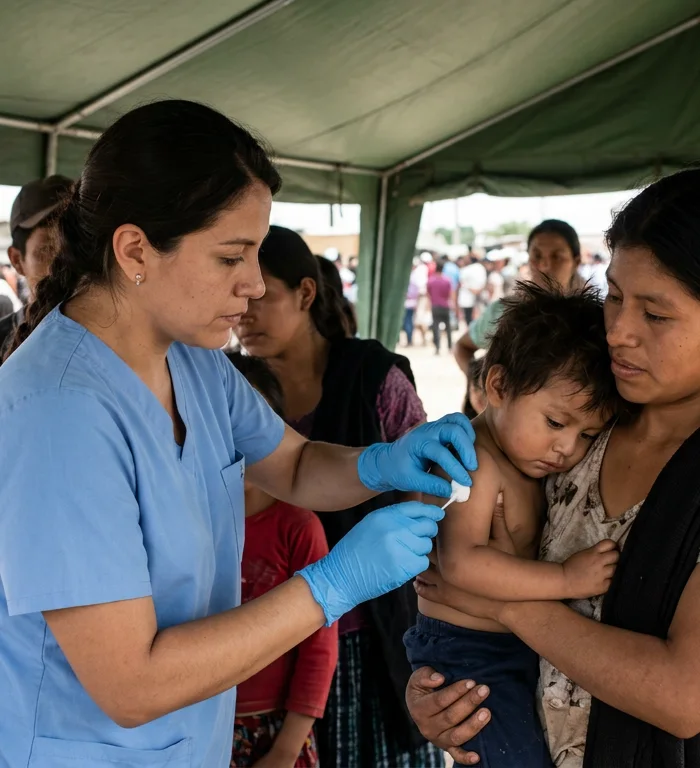
Regional health authorities have identified a significant risk of measles transmission associated with large-scale religious gatherings currently occurring across South America. Public health officials have categorized the risk level as "very high" due to a nearly five-fold increase in regional measles cases between January and October 2026 compared to the previous year. At least 81 fatalities have been recorded in the Americas during this period, with 57,666 confirmed cases across 17 countries.
Community immunity thresholds remain insufficient across much of the region, complicating containment efforts. While a 95% vaccination rate with two doses is required to prevent community spread, current data indicates that only Uruguay has achieved this target. Argentina and Peru report significantly lower coverage, with Argentina’s two-dose vaccination rate estimated at 55%. Experts note that the high mobility of attendees at mass events creates ideal conditions for the rapid spread of the virus.
Institutional response varies by jurisdiction, reflecting broader governance and fiscal challenges. Uruguay has implemented an intensified three-week surveillance period following the conclusion of local events. Conversely, in Argentina, recent reductions in healthcare spending have impacted the capacity of agencies responsible for immunization planning and disease tracking. These fiscal constraints have raised concerns among medical professionals regarding the adequacy of public health communication and the sustainability of vaccination campaigns.
Regional health organizations are currently supporting localized efforts in high-transmission areas, including the deployment of additional vaccine doses and the strengthening of cold-chain storage capacity. However, the combination of low baseline immunity and the logistical challenges of monitoring large, transient crowds remains a primary concern for regional stability. Policymakers should anticipate continued pressure on public health infrastructure as surveillance periods extend through late November.
More stories
- Dietitians advise small swaps for plant-based eating
- TikTok dementia videos mislead in 66.4% of sample, researchers say
- Aberdeen Royal Infirmary faces police inquiry call over 19 deaths
- Bariatric surgery group loses 28.2% after GLP-1 use
- TOFA boosts mouse energy use 18% while preserving muscle
- ICO probes NHS therapy notes accessible to up to 140,000 staff
- Europe faces 35,000 drug-resistance deaths a year
- U.S. faces loss of measles elimination status after 5,412 cases
Latest news
- David Parr House to honor Victorian art-workman with blue plaque
- Iran's attacks hit 25 tankers near Strait of Hormuz
- FCC approves prison cellphone jamming despite 2.5-mile warning
- Russia strikes Ukraine as Odesa faces electricity strain
- Bahrain reports two injuries after Iranian aerial attacks
- Congress tests Black Democrats' growing policy influence
- Baltic responders fight Sparta II fire after drone strike
- Europe faces attribution gap after 16 cyber, physical incidents