How to make healthier smoothies at home: balance, ratios and prep tips
A healthier smoothie comes down to structure: pair protein and fiber with fruit, watch liquid and sweeteners, and set a repeatable ratio for consistent…
Omar Farouk ·
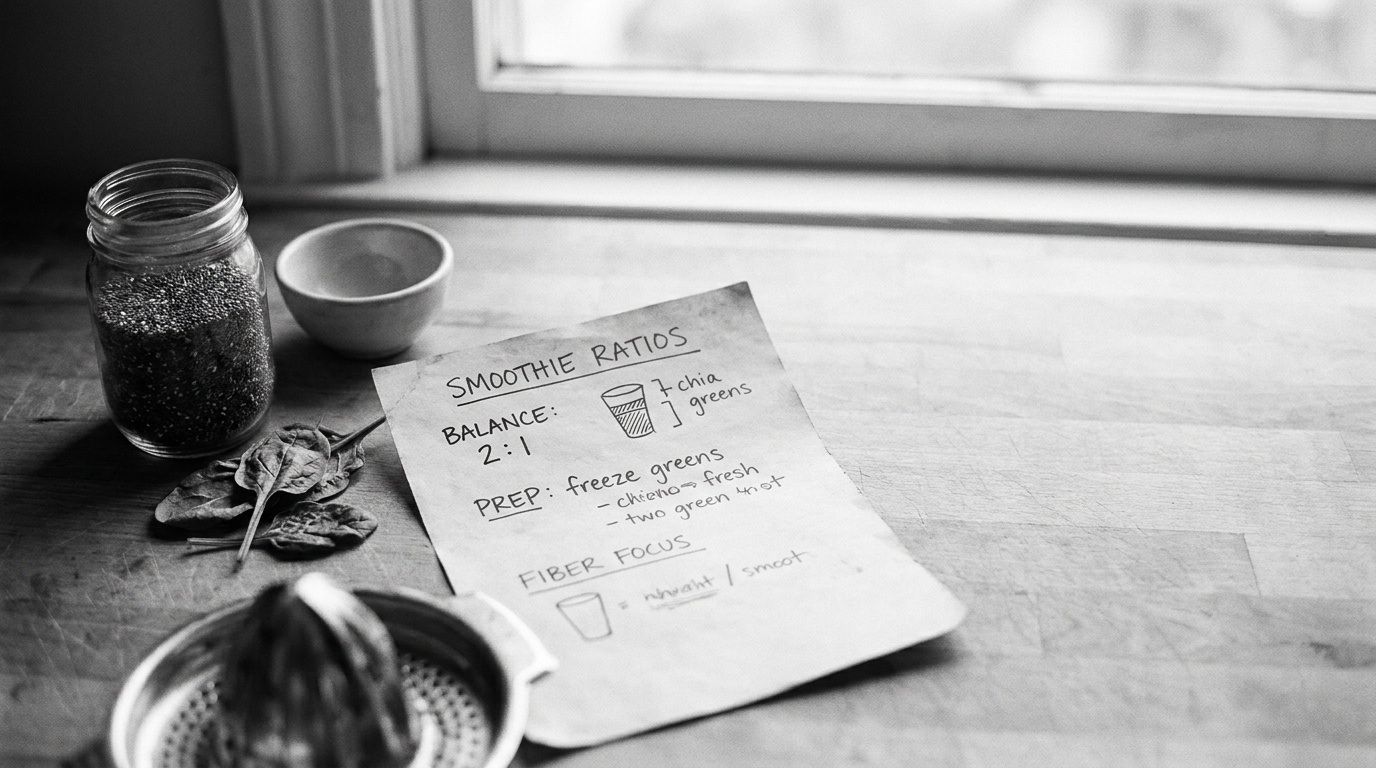
# How to make healthier smoothies at home: balance, ratios and prep tips
Building a healthier smoothie at home is less about “superfoods” and more about getting the basics right: protein, fiber, and portion control. With a simple ingredient ratio and a few prep habits, you can make smoothies that keep you full longer and avoid turning a drink into a sugar spike.
Smoothies have become a default “healthy” option because
Smoothies have become a default “healthy” option because they are fast, portable, and easy to customize. The catch is that blending can concentrate calories quickly, especially when multiple fruits, fruit juices, sweetened yogurts, or add-ins pile up in one glass.
A more balanced approach starts with understanding what you want a smoothie to do. If it is a breakfast replacement or post-workout meal, it needs protein and enough fiber or healthy fat to slow digestion; if it is a snack, it should be smaller and lighter on calorie-dense extras.
At the household level, the difference between a “healthy” smoothie and a dessert in a cup is usually hidden sugar and missing protein. Fruit is nutritious, but using several servings at once, or adding juice and syrups, can push sugar high while leaving the drink low in satiety. A structure-first smoothie is easier to repeat, easier to shop for, and less likely to derail a nutrition plan.
There is also a practical angle
There is also a practical angle: consistent recipes reduce waste. When you standardize a short list of ingredients and prep them in advance, you are more likely to use produce before it spoils, keep your kitchen routine quick, and avoid last-minute, high-sugar convenience choices.
By 2026-07-31, you should be able to verify whether your smoothie routine is working with two observable checks: (1) you can list a repeatable “base formula” you use most days, and (2) your grocery list for smoothies stays stable week to week without frequent impulse add-ons. If those are true, your smoothies are likely balanced and sustainable; if not, your recipes may be too improvisational, too fruit-heavy, or too dependent on sweetened liquids and extras.