Wheat prices rise as Azov grain routes face attacks
Wheat prices rose after Russian and Ukrainian attacks hit grain export routes around the Sea of Azov, raising new shipping risks.
Lauren Collins ·
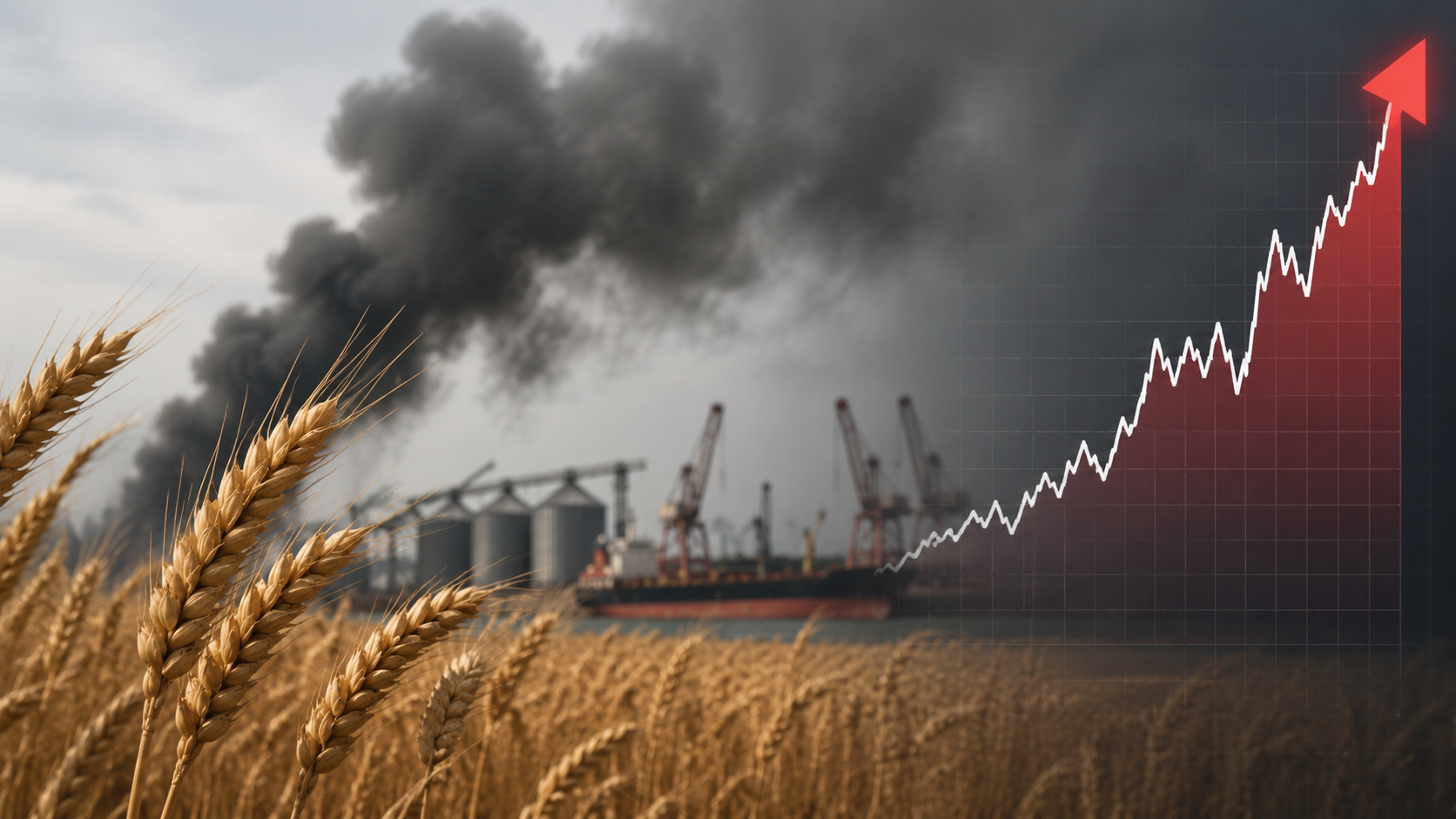
Wheat prices rose after overnight attacks hit Sea of Azov grain routes, adding fresh shipping risk to a corridor used by Russian exporters.
The available account described Russian and Ukrainian strikes on each other’s grain export gateways after shipping in the Sea of Azov was disrupted a day earlier. It gave detailed damage claims for the Russian side, while leaving the locations and scale of Russian strikes on Ukrainian export infrastructure less clear.
Azov corridor comes under pressure
Rostov regional governor Yuri Slyusar said in a Telegram post that drones hit four vessels in Taganrog Bay on Saturday. He said one of the vessels was a tanker carrying methanol, but reported no danger of a spill or leak.
Slyusar also said a sailor died aboard one of the vessels. In a separate update, he said emergency crews had fully put out fires in Taganrog and Azov by Saturday morning.
The attack followed a Friday strike in the same area that disrupted traffic through a key export route, according to the source account. The timing matters because even short interruptions near grain ports can alter freight schedules, insurance assessments and traders’ assumptions about available supply.
Channels link grain to markets
Industry sources cited in the report said Russia temporarily stopped shipping through the Don-Azov Channel, which links the Don River with the Sea of Azov. The Kerch Strait, the passage between the Sea of Azov and the Black Sea, was also closed from Friday evening, according to the same account.
Those waterways sit inside a broader export system that has become a pressure point in the war. Russia and Ukraine are major grain suppliers, and traders respond quickly when military activity threatens ports, channels or vessels that connect harvests to overseas buyers.
The immediate market reaction was visible in wheat futures, which rose as traders weighed whether the disruption would be brief or repeated. The source did not provide a specific percentage move, so the scale of the price increase cannot be independently sized from the available material.
Claims diverge on damage
Robert Brovdi, a Ukrainian drone unit commander known as Madyar, claimed on Telegram that Ukrainian forces hit 28 Russian fleet vessels overnight in the Sea of Azov. He said the total number of vessels struck since July 6 had reached 76, but that claim was not independently verified in the source material.
The difference between the regional governor’s account and Brovdi’s larger claim is central to the uncertainty around the incident. Officials described four vessels in Taganrog Bay, while the Ukrainian commander’s statement covered a wider set of tankers and dry cargo ships.
The vessels in the Sea of Azov are not commonly used to load Russian crude for export, according to the source account. Tankers there mostly carry petroleum products to Russian-occupied Crimea and nearby areas, where fuel shortages have been common this summer.
Shipping risk spreads beyond wheat
The direct pressure falls first on vessel operators, port authorities and exporters using Taganrog Bay, the Don-Azov Channel and the Kerch Strait. If crews, insurers or port managers treat the area as higher risk, even vessels not directly damaged can face slower clearance and higher operating costs.
For grain markets, the mechanism is straightforward: uncertainty about movement can raise the price buyers are willing to pay for prompt supply. A temporary closure may affect scheduling more than physical availability, but repeated closures can force cargoes onto alternative routes or delay deliveries.
The fuel angle adds another layer. If petroleum-product movements to Crimea and surrounding areas become harder, local shortages could worsen, while Russia may need to reroute more cargo through less efficient channels.
Two paths for grain trade
If the waterway closures prove short and fires remain contained, the global macro effect would likely come through risk premiums rather than a durable supply shock. Exporters using the Azov corridor would still face tighter inspections and possible delays, while the wider grain trade would watch insurance and freight rates for signs of normalization.
If attacks continue around Taganrog Bay and the Kerch Strait, the effect could broaden. Global wheat buyers would face a more uncertain Black Sea supply picture, Russian-linked exporters would have to manage route risk and the shipping sector would price more war risk into voyages near contested waterways.
The open questions are specific: how long the channel restrictions last, whether more vessels were damaged than regional officials confirmed, and whether Russia or Ukraine targets additional export infrastructure. Those answers will determine whether the wheat move remains a short market reaction or becomes a wider test of Black Sea grain logistics.