Mali Algeria airspace accord restores envoys after rift
Mali Algeria airspace will reopen to civilian and military flights as both governments restore ambassadors after a drone dispute.
Lauren Collins ·
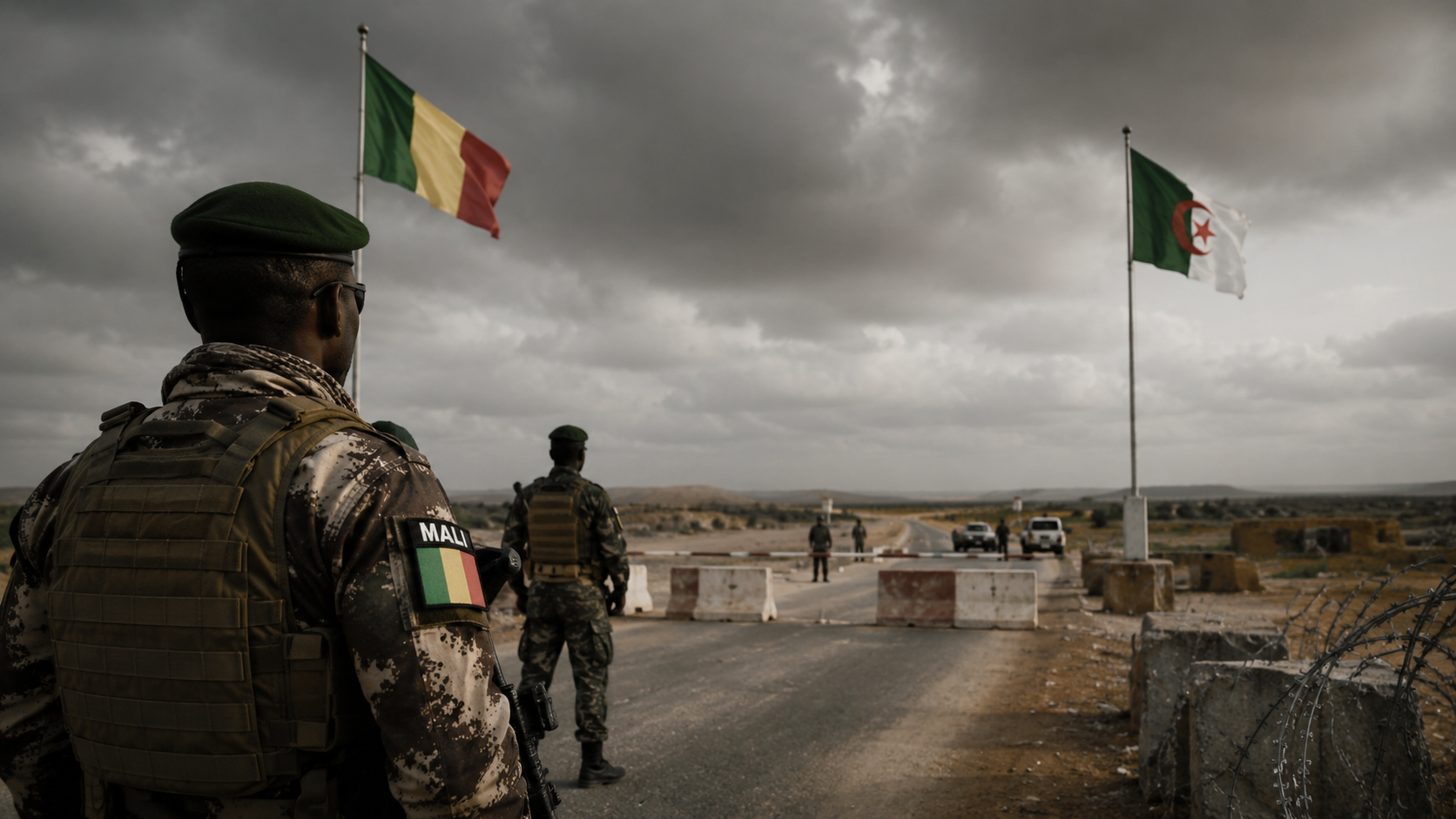
Mali Algeria airspace will reopen under an accord that also returns ambassadors, easing a drone dispute that strained ties for more than a year.
Air corridors reopen after drone row
Mali’s government said the agreement applies to civilian and military aircraft, reversing restrictions that followed the April 2025 drone incident. The return of ambassadors gives the deal a diplomatic marker as well as an operational one.
The accord followed talks between Malian junta leader Assimi Goita and Algerian President Abdelmadjid Tebboune, according to government spokesperson Issa Ousmane Coulibaly. In a Friday statement, Coulibaly said the two leaders pledged to “reinvigorate bilateral ties” and respect each other’s “sovereignty and territorial integrity.”
April 2025 dispute reshaped ties
The rupture began after Mali accused Algeria of shooting down one of its military drones. Algeria said the aircraft had violated its airspace, while Mali described the episode as an act of aggression.
That exchange moved the dispute beyond a single aerial incident. Both countries closed their airspace in April 2025, creating a visible break between two governments whose relationship matters for security coordination and regional diplomacy across North and West Africa.
The reopening does not resolve the competing accounts of the drone episode. It instead shows both governments are willing, at least for now, to separate practical access to airspace and ambassadorial representation from the unresolved question of responsibility.
Sovereignty pledge narrows the dispute
The language used in the statement matters because sovereignty was at the core of the clash. Algeria framed the drone as an intrusion; Mali framed Algeria’s response as hostile action against its military asset.
By restating respect for territorial integrity, the governments are creating a basis for de-escalation without requiring either side to publicly abandon its earlier position. That formula is common in diplomatic resets after security disputes: it lowers the temperature while leaving sensitive facts unlitigated.
For Mali’s military-led government, the deal may help reduce one channel of diplomatic friction while it manages security pressures at home. For Algeria, reopening airspace and restoring envoys offers a way to preserve border and air-domain concerns without prolonging a public standoff.
Regional aviation gets a signal
The immediate effect is clearest for aircraft operators and military planners that need predictable airspace permissions. Reopening access reduces uncertainty over routes, clearances and official communication between the two capitals.
The wider aviation effect depends on how quickly the governments translate the political accord into procedures. Civilian carriers, state aircraft and military commands will need clear notices, coordination channels and rules for handling future airspace claims.
The macroeconomic effect is likely to be indirect rather than measurable from the information provided. The main channel is political risk: fewer airspace restrictions can reduce operational friction, while renewed closures would add another constraint in a region already shaped by security concerns.
Three tests for the reset
If the accord holds, the global macro impact would be limited but positive through a modest reduction in regional diplomatic risk. Mali would gain more predictable air access and a restored channel in Algiers, while the aviation and security sectors would work with fewer cross-border uncertainties.
If another airspace incident occurs, the mechanism would run in the opposite direction. Global markets may see little direct impact, but Mali could face renewed diplomatic isolation with Algeria, and regional operators would again need contingency routes and tighter clearance procedures.
If the ambassadors return but technical rules remain vague, the reset could stay symbolic. The open questions are practical: when airspace notices are issued, how military flights are handled, and whether the two governments create a process for investigating future drone or aircraft disputes.