

UK Prime Minister Delays Strategic EU Policy Framework Amid Internal Cabinet Hesitation
Prime Minister Andy Burnham has delayed his long-term EU strategy until mid-December, prioritizing immediate economic deals and domestic growth over broader…
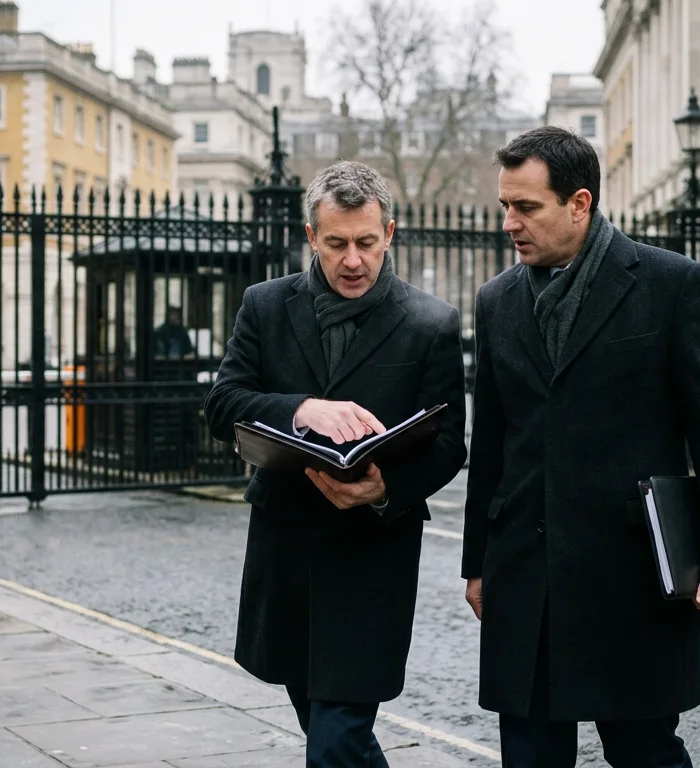
Prime Minister Andy Burnham has deferred the announcement of a long-term strategic framework regarding the United Kingdom’s relationship with the European Union. Originally slated for a September rollout, the policy discussion is now tentatively scheduled for mid-December, coinciding with the release of a broader 10-year domestic economic plan. This delay reflects internal friction within the Cabinet and a strategic pivot toward prioritizing immediate, tangible economic outcomes over ideological shifts in EU integration.
Government officials indicate that the administration is currently focused on securing near-term agreements during the upcoming EU-U.K. summit. Key objectives include finalizing frameworks for food standards, carbon emissions trading, and youth mobility, alongside protections against potential market exclusion under the EU’s "Made in Europe" scheme. The administration’s current posture emphasizes that any future integration with the European bloc must be explicitly linked to domestic priorities, specifically GDP growth, reindustrialization, and cost-of-living stabilization.
Prime Minister Andy Burnham
Internal debate persists regarding the extent of the government’s ambition. While some stakeholders advocate for an open-ended approach that could eventually include a path toward rejoining the EU, others within the Cabinet remain cautious, favoring a pragmatic, incremental strategy. The Prime Minister has maintained that no definitive path has been selected, and any future proposals will be contingent upon clear domestic political and economic advantages.
Market observers and political analysts note that the lack of a granular, long-term strategy creates uncertainty regarding the U.K.’s future regulatory alignment. The administration’s current focus on "pragmatic" growth suggests that any future EU policy will be framed through the lens of economic utility rather than political alignment. The government’s ability to maintain a coherent narrative will be tested following the conclusion of the current summit, as the administration attempts to reconcile its domestic 10-year plan with the complexities of the post-Brexit relationship.
More stories
- Germans oppose Ukraine aid as poll shows support slipping
- Kim Jong-un receives 10 envoys after constitutional shift
- Ukraine claims Libya strike sinks Russian naval corvette
- COP31 climate talks collapse over fossil fuels and funds
- Russian military faces 1,087 recorded suicides in Ukraine war
- US faces China, Russia in Africa minerals contest
- Russian man faces 15 years over alleged Palantir spying
- BN-PN takes 24 of 28 Melaka seats
- Eisenkot wins 67 endorsements for Israel mandate
- Guinea-Bissau halts hepatitis B trial involving 14,000 babies
Latest news
- Trump prepares tariffs on China and other major exporters
- New-car buyers pay record average $50,087 in October
- Banks face ECB reserve debate over liquidity and profits
- Investors see Anthropic debut gains fade below $83 a share
- Iraq orders federal control over Kurdish-area oilfields
- Nvidia shares retreat as AI rally cools before PCE data
- Macy’s parade faces balloon limits as storm winds approach