

Houthis claim missile strike on Saudi refinery
The Houthi movement says a precise strike hit a Saudi oil facility, threatening a period of relative calm along the border.
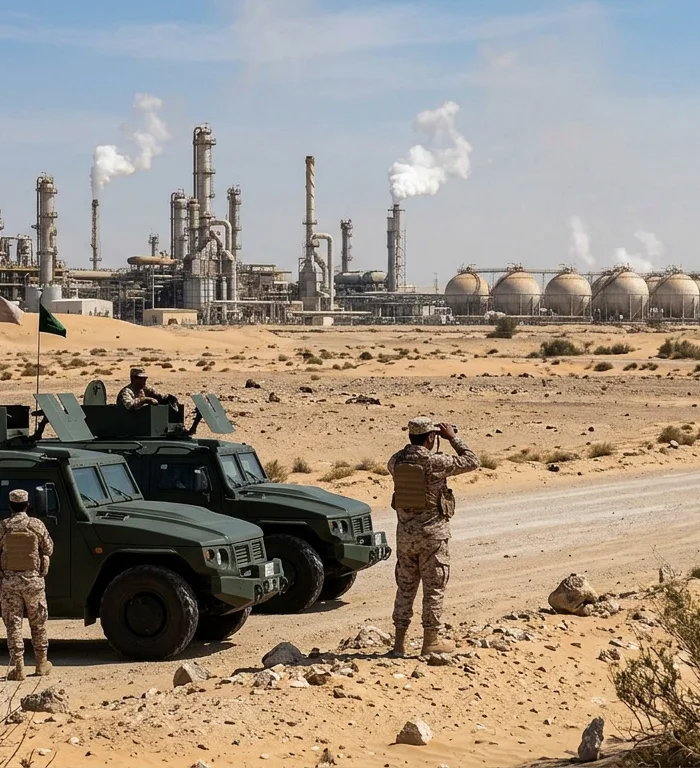
Escalation in eastern Saudi Arabia
The Houthi movement claimed responsibility for a ballistic missile strike targeting an oil refinery in eastern Saudi Arabia. Houthi military spokesperson Yahya Saria stated the attack was precise and resulted in major fires at the facility, according to a report from the movement's communication channels.
Saudi authorities have not yet provided a confirmation or an assessment of damage to the infrastructure. The claim follows a prolonged period of de facto ceasefire between the Saudi-led coalition and the Houthi forces, a stability largely maintained through ongoing diplomatic efforts facilitated by Oman.
Peace process fragility
The border between Saudi Arabia and Yemen has remained relatively quiet since the initiation of direct talks between Riyadh and the Houthis. Omani mediators have acted as the primary conduit for these negotiations, which aimed to secure a lasting political settlement to the multi-year conflict and stabilize the southern frontier of the Kingdom.
Previous instances of Houthi strikes on Saudi energy infrastructure, most notably the 2019 attack on Abqaiq and Khurais, caused temporary global supply disruptions. Those incidents triggered significant volatility in international oil prices and forced a reassessment of security protocols surrounding critical energy assets owned by Saudi Aramco.
Regional instability risks
A confirmed strike on a major refinery could jeopardize the economic diversification goals outlined in Riyadh’s Vision 2030 strategy. Security in the Red Sea and the surrounding energy shipping corridors remains a priority for the Kingdom as it seeks to maintain its status as a reliable global energy supplier while insulating its domestic economy from regional military flare-ups.
The Houthis, as part of the broader Axis of Resistance, have increasingly aligned their military actions with broader regional shifts, particularly as tensions remain elevated due to the conflict in Gaza. A breakdown in the Saudi-Houthi de-escalation framework would likely increase the risk profile for maritime transit through the Bab al-Mandab Strait and complicate the security architecture of the Gulf Cooperation Council states.
Verification of damage
The current status of the refinery and any potential impact on production capacity remain the primary open questions. Observers are awaiting official statements from Saudi Aramco or independent verification through satellite imagery to determine the scale of the incident. Should Riyadh confirm a significant disruption, the prospect of an immediate end to the de-escalation efforts will dominate the regional security agenda.
More stories
- Germans oppose Ukraine aid as poll shows support slipping
- Kim Jong-un receives 10 envoys after constitutional shift
- Ukraine claims Libya strike sinks Russian naval corvette
- COP31 climate talks collapse over fossil fuels and funds
- Russian military faces 1,087 recorded suicides in Ukraine war
- US faces China, Russia in Africa minerals contest
- Trump questions Brazil election as Liberal Party accepts
- Israel votes as Netanyahu faces first post-attack election
- Xizang earthquake blocks highway as crews build shelters
- Typhoon Champi weakens but keeps Taiwan largely shut down
Latest news
- Trump prepares tariffs on China and other major exporters
- New-car buyers pay record average $50,087 in October
- Banks face ECB reserve debate over liquidity and profits
- Investors see Anthropic debut gains fade below $83 a share
- Iraq orders federal control over Kurdish-area oilfields
- Nvidia shares retreat as AI rally cools before PCE data
- Macy’s parade faces balloon limits as storm winds approach