

Gaza strikes kill 10, testing US aid-protection policy
Five of the reported dead were Hamas-run Interior Ministry police or staff, a category central to aid-security debates in Washington.
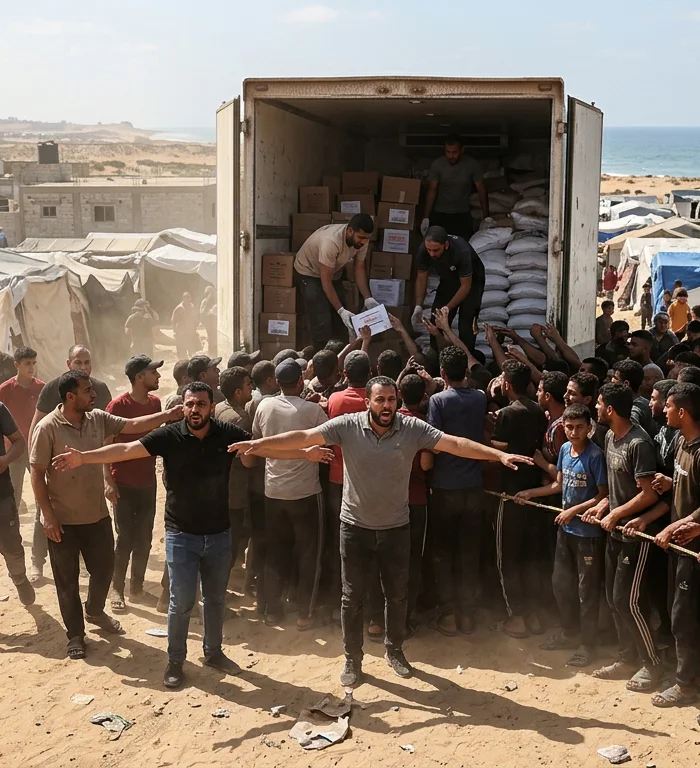
Israeli attacks killed at least 10 Palestinians in Gaza in the past 48 hours, including a minor, according to a media report citing Palestinian authorities.
A drone strike in al-Mawasi west of Khan Yunis accounted for five of the reported deaths, matching half the total and putting Gaza’s local security forces back inside Washington’s aid-distribution debate.
Khan Yunis
The Hamas-controlled Interior Ministry said the five people killed in al-Mawasi were police officers and staff members carrying out regular duties. The report also said several people were injured in the strike but did not give a toll.
The report cited the Palestinian news agency Wafa for the al-Mawasi death count. It did not provide Israel’s account of the strike, the intended target or details on the other reported deaths.
For US officials, the policy issue is narrower than the battlefield label attached to Hamas-run institutions. Civil police can affect whether aid convoys move through Gaza or face theft, diversion and armed disorder; Israel treats Hamas-linked administrative personnel as part of the group’s governing network.
That tension matters for the State Department
That tension matters for the State Department, the White House and Congress because US humanitarian policy depends on aid reaching civilians while Washington continues to back Israel’s campaign against Hamas. If strikes on civil police reduce convoy security, lawmakers can press the administration on whether Israeli operations are impeding US-backed relief efforts.
If Washington treats the deaths as a standard counter-Hamas operation, the near-term effect is likely limited to diplomatic friction and further pressure on aid groups operating in Gaza.
If the State Department or White House frames civil-police targeting as an obstacle to humanitarian logistics, the issue could move into public briefings, congressional oversight and weapons-transfer guidance tied to operations in humanitarian areas.
The next observable test is whether US officials publicly address civil-police targeting as an aid-distribution problem by April 15, 2025, or keep the episode within routine counter-Hamas framing.
More stories
- Eisenkot secures first coalition deal but lacks majority
- Germans oppose Ukraine aid as poll shows support slipping
- Kim Jong-un receives 10 envoys after constitutional shift
- Ukraine claims Libya strike sinks Russian naval corvette
- COP31 climate talks collapse over fossil fuels and funds
- Russian military faces 1,087 recorded suicides in Ukraine war
- Türkiye seeks 30% OIC trade share after $108bn nine-month flow
- Turkey's OIC trade reaches $108bn in first nine months
- Israeli settlers attack West Bank olive harvest, hurt two
- Zelenskyy says Starshield limits weaken Ukraine defenses
Latest news
- Trump prepares tariffs on China and other major exporters
- New-car buyers pay record average $50,087 in October
- Banks face ECB reserve debate over liquidity and profits
- Investors see Anthropic debut gains fade below $83 a share
- Iraq orders federal control over Kurdish-area oilfields
- Nvidia shares retreat as AI rally cools before PCE data