Fauci Fifth Amendment move stalls Senate Covid probe fight
The Fauci Fifth Amendment move at a Senate Covid hearing escalated a fight over pandemic origins and federal research oversight.
Lauren Collins ·
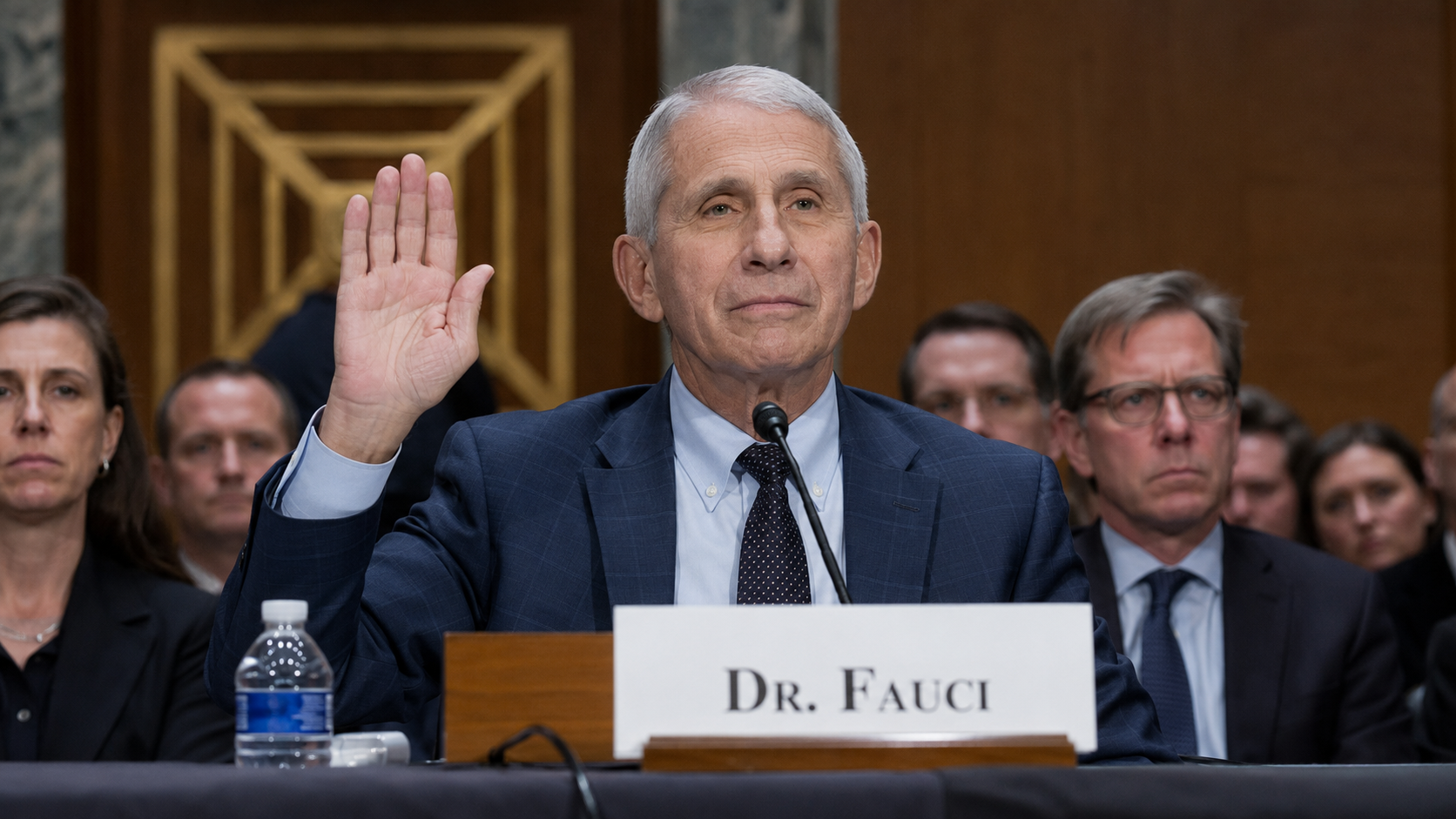
Fauci Fifth Amendment testimony fight put the retired health official at the center of a Senate Covid inquiry over pandemic decisions.
Anthony Fauci declined to answer questions at a Senate Homeland Security and Governmental Affairs Committee hearing in Washington on July 29. The refusal shifted the session from pandemic policy into a legal and political confrontation over whether senators were seeking facts, admissions or criminal exposure.
Fauci, the retired physician who led the National Institute of Allergy & Infectious Diseases, was an early public face of the US Covid-19 response. His appearance came after years of conflict with Kentucky Republican Senator Rand Paul, who chairs the committee and has made Fauci’s conduct a central issue in his pandemic oversight campaign.
Rand Paul sets confrontation
Fauci framed the hearing as a trap before declining to testify. He said of Paul: “The only conclusion I can reach, is that the sole reason he is calling me before this committee, is to get me to say something — anything — that would allow him to meet his repeated pledges to get me behind bars.”
Paul used his opening remarks to press allegations that Fauci hid or blurred evidence pointing to a laboratory origin for Covid-19 in Wuhan, China. He also said Fauci should admit “it was a mistake to fund dangerous research in China,” language that cast the hearing as a judgment on research oversight as much as on pandemic management.
The chairman’s argument rested on claims about federal support for risky research abroad and the handling of early evidence on the virus’s origin. Those claims were not resolved by Fauci’s appearance because the Fifth Amendment assertion prevented the committee from drawing direct answers from him under questioning.
Diaries deepen origins dispute
The hearing followed Paul’s release last week of excerpts from Fauci’s personal diaries, according to the hearing account. Those materials included Fauci’s reflections on the pandemic response and on the public attention that came with his role during the crisis.
The diary release raised the political temperature before senators entered the hearing room. For Republicans, the documents offered another opening to question how Fauci understood the early pandemic and his own public standing; for Fauci’s defenders, the release fed a campaign focused on one official rather than the broader public health system.
Democratic senators argued that the proceeding diverted attention from healthcare costs and the public health policies of President Trump’s administration. New Hampshire Senator Maggie Hassan told Fauci: “It is unfortunate that you have been put in the position that you are in today.”
Hassan also said the hearing was “designed to entrap you,” and criticized what she described as mischaracterizations of legal questions affecting Fauci’s decision at the witness table. Her comments showed how the hearing split along two tracks: Republican efforts to assign responsibility and Democratic objections to the forum itself.
Records now carry the case
Because Fauci repeatedly refused to answer, Republican senators used their allotted time to state accusations rather than extract testimony. Senator Ron Johnson pointed to Fauci’s preemptive pardon from Joe Biden before Biden left office in 2025 and said he understood why Fauci was acting on legal advice.
The immediate effect is practical: if the committee wants to advance its inquiry, it will have to lean more heavily on documents, prior testimony and records from agencies or research institutions. A refusal to testify can protect a witness from self-incrimination, but it also leaves unresolved questions that lawmakers can keep alive through subpoenas and follow-up hearings.
For public health agencies, the episode keeps the Covid-19 origin debate tied to trust in scientific decision-making. Research institutions that depend on federal support may face sharper scrutiny if senators focus on grants, overseas collaborations and risk controls, especially where national security concerns intersect with infectious disease work.
The global angle is narrower but real. If the committee builds a document-based case for stricter research limits, international science partnerships could slow as agencies add review layers and compliance checks; if the inquiry produces no new substantiated record, the macro effect is more likely to be political drag than a change in global health cooperation.
For Fauci, the central issue is now less his public explanation than the documentary record around him. For the sector, the open question is whether congressional pressure becomes a durable research-governance overhaul or remains a recurring fight over one official’s role in the pandemic response.