Faraday Future pitches robotics education at ISTE, seeking partners beyond EVs
Faraday Future used the ISTE Live 2026 edtech conference in Orlando to promote an “Embodied AI” robotics education ecosystem, signaling a push to build…
Mei Lin ·
# Faraday Future pitches robotics education at ISTE, seeking partners beyond EVs
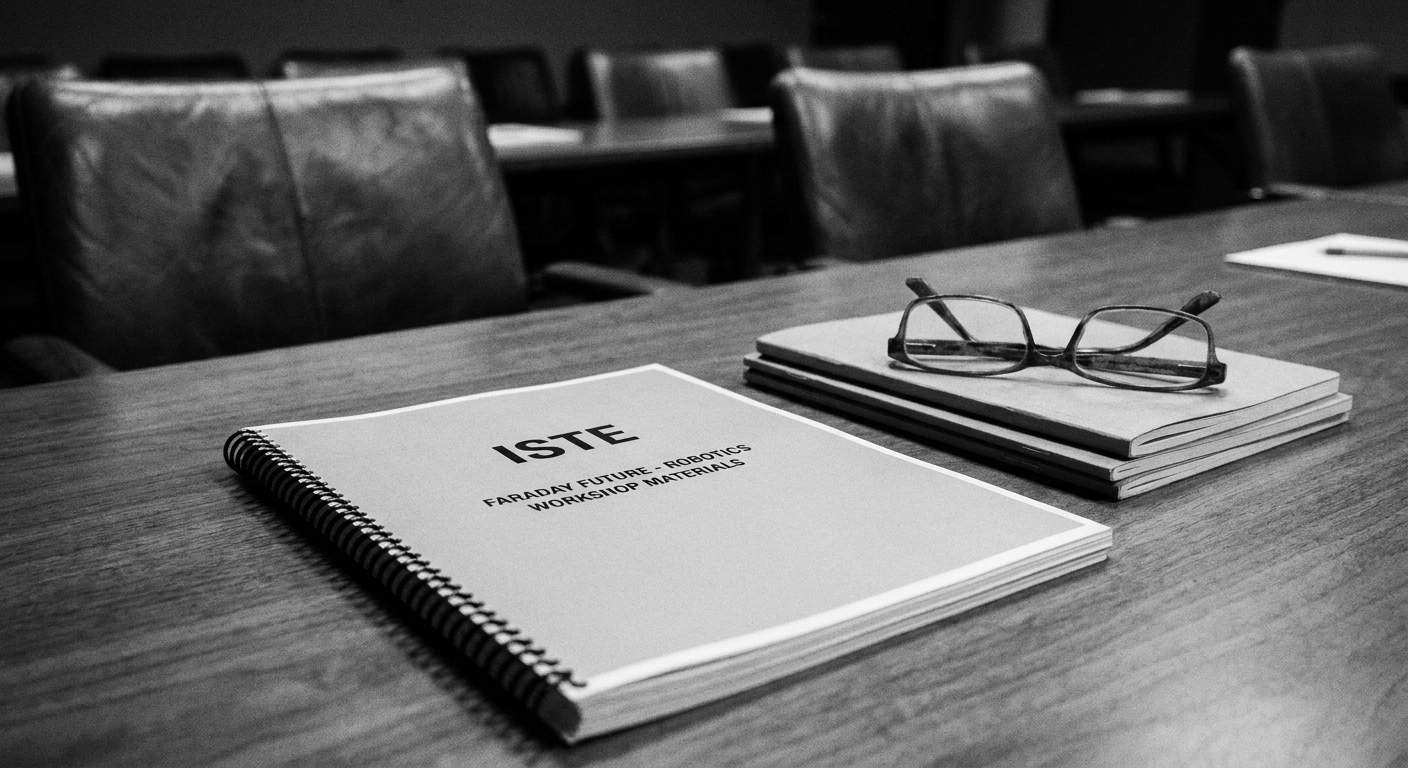
Faraday Future Intelligent Electric Inc. (NASDAQ: FFAI) said on July 1 it used ISTE Live 2026 in Orlando to showcase an “Embodied AI” (EAI) robotics education ecosystem and to deepen collaboration with K–12 schools, developers, and partners. The company said it drew interest from major North American education distributors and procurement leaders at the conference, a bid to position itself in education technology alongside its better-known electric vehicle ambitions.
Faraday Future
The update, released as a company recap, frames the Orlando event as a partner-building exercise: Faraday Future said it demonstrated its newest robotics offerings and promoted work with schools and ecosystem partners.
ISTE Live is a major annual gathering for education technology vendors, school administrators, and procurement teams in North America. For suppliers, it is a high-volume venue for product demos, pilot program discussions, and distribution relationships, particularly with K–12 districts that typically buy through approved distributors and integrators.
Faraday Future is best known as a California-based EV company, but it increasingly describes itself as an “Embodied AI ecosystem” builder. In the company’s framing, “Embodied AI” refers to AI systems deployed in physical devices such as robots, where perception and action are part of the product experience rather than purely software.
For Asia-Pacific markets
For Asia-Pacific markets, the signal is less about a Florida conference and more about where robotics education demand is headed. If large North American distributors begin standardizing classroom robotics platforms, that can influence component sourcing and manufacturing roadmaps across Asian supply chains, where much of the world’s education electronics and robotics hardware is produced.
The procurement angle also matters for platform lock-in. K–12 purchases often favor ecosystems that can be supported at scale, from curriculum and teacher training to software updates and device management. If Faraday Future can translate conference interest into pilots, it could put competitive pressure on established classroom robotics vendors and shift buying patterns that ripple into regional hardware suppliers and software developers.
Watch for Faraday Future to name specific distribution partners or disclose a formal procurement or pilot agreement stemming from ISTE Live, because that is the clearest way to validate whether “strong interest” converts into repeatable sales. By 2026-09-30, look for the company to identify at least one named education distributor, school district, or institutional partner tied to its EAI robotics education ecosystem; if it does, the strategy is gaining commercial traction, and if it does not, the Orlando announcement is likely to remain a branding-led update rather than a measurable go-to-market milestone.