

Escalating Border Conflict in Ethiopia Disrupts Regional Stability and Trade
Persistent territorial clashes between Oromia and Somali regional forces have displaced thousands and disrupted trade, highlighting systemic failures in…
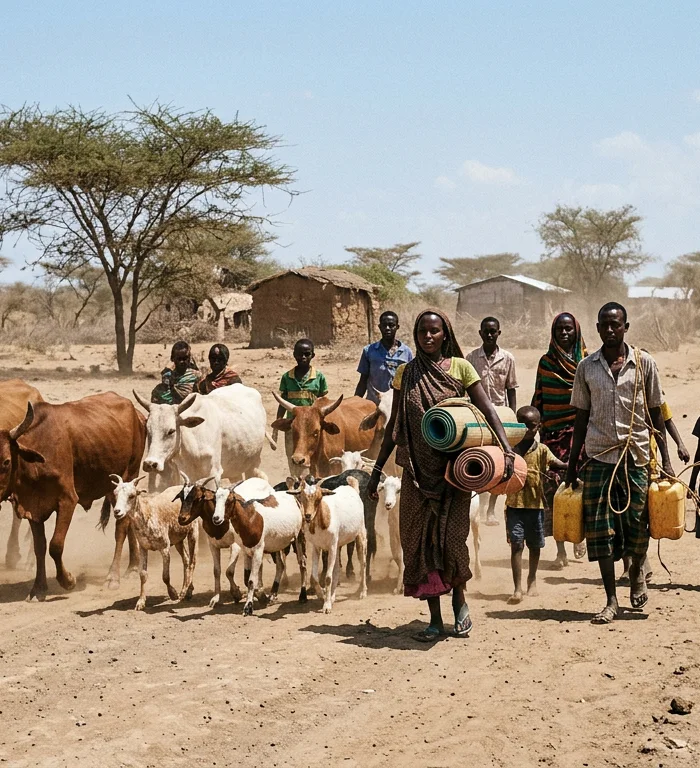
Renewed violence between Oromia and Somali regional forces in Ethiopia’s Borana Zone has resulted in significant civilian displacement and the disruption of critical livestock trade routes. The conflict, centered in the border town of Moyale and extending into the Arero and Wachile districts, stems from unresolved territorial disputes, administrative boundary disagreements, and competition for natural resources.
Hostilities intensified in October following the establishment of a Somali regional administrative office in a contested area, triggering clashes between regional police units and local militias. Despite initial intervention by the Ethiopian National Defence Force, subsequent skirmishes have persisted, indicating a breakdown in local mediation efforts between regional administrations.
Borana Zone
The instability has prompted a humanitarian outflow, with approximately 40,000 individuals reportedly seeking refuge in neighboring Kenya. This cross-border movement has drawn the attention of Kenyan officials, who have formally requested that the Ethiopian federal government restore stability to facilitate the return of displaced populations.
Analysts suggest that the federal government’s ability to Analysts suggest that the federal government’s ability to contain the violence is constrained by competing security priorities across the country. Furthermore, the conflict is exacerbated by perceptions of ethnic bias within the federal administration, which complicates efforts to reach a sustainable political settlement.
Governance risks remain elevated as the federal system struggles to manage regional autonomy versus central authority. The failure to implement long-term solutions for the 2004 border demarcation remains a primary driver of recurring instability. Future developments will depend on the federal government’s willingness to move beyond temporary military interventions toward a comprehensive, binding resolution of regional administrative boundaries.
More stories
- Germans oppose Ukraine aid as poll shows support slipping
- Kim Jong-un receives 10 envoys after constitutional shift
- Ukraine claims Libya strike sinks Russian naval corvette
- COP31 climate talks collapse over fossil fuels and funds
- Russian military faces 1,087 recorded suicides in Ukraine war
- US faces China, Russia in Africa minerals contest
- Portugal targets more than 20,000 electric cars with subsidies
- Kallas faces EU role doubts after seven-member Ukraine talks snub
- Tinubu seeks $7.7bn external loan for Nigeria deficit
- Oil companies face EU tax calls over Iran-linked margins
Latest news
- Trump prepares tariffs on China and other major exporters
- New-car buyers pay record average $50,087 in October
- Banks face ECB reserve debate over liquidity and profits
- Investors see Anthropic debut gains fade below $83 a share
- Iraq orders federal control over Kurdish-area oilfields
- Nvidia shares retreat as AI rally cools before PCE data
- Macy’s parade faces balloon limits as storm winds approach