

Khor Mor Gas Field Attack Disrupts Kurdistan Energy Supply
A major drone attack on the Khor Mor gas field has crippled Kurdistan’s power grid, exposing deep political divisions and critical security vulnerabilities…
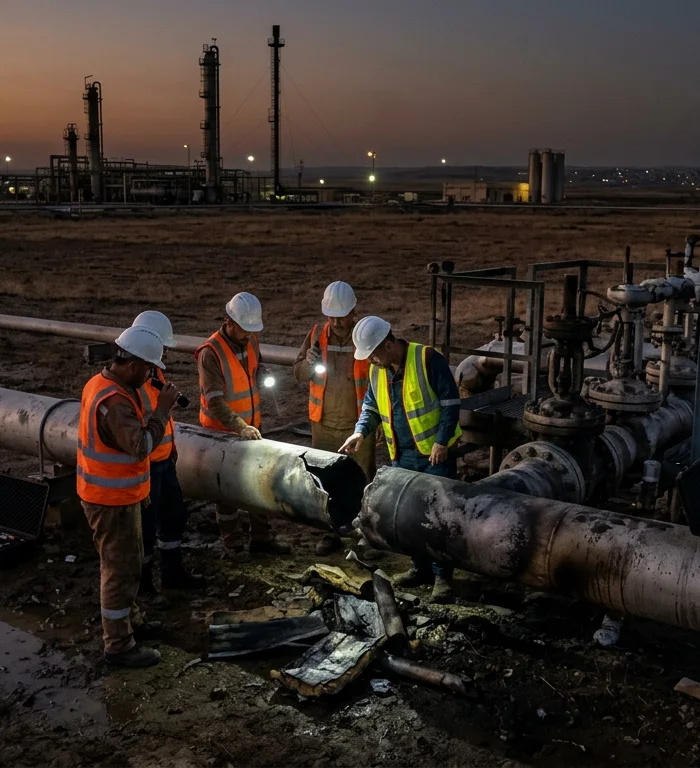
A drone strike on the Khor Mor gas field in the Kurdistan Region of Iraq has caused significant infrastructure damage, resulting in a total cessation of gas production at the facility. The disruption has triggered a sharp decline in regional electricity generation, which plummeted from 3,700 megawatts to 1,000 megawatts. As the primary gas producer for the semi-autonomous territory, the facility’s outage leaves the region with minimal alternative power sources.
Analysts attribute the attack to internal political instability rather than broader regional conflict. The Kurdistan Region is currently experiencing a deepening divide between the Kurdistan Democratic Party (KDP) and the Patriotic Union of Kurdistan (PUK). The PUK, which controls the territory surrounding the gas field, has threatened to establish a separate administration, citing concerns over the equitable distribution of oil and gas revenues. This domestic friction has effectively paralyzed regional governance and hindered a unified security response.
Security vulnerabilities remain acute following the withdrawal of Security vulnerabilities remain acute following the withdrawal of U.S. air defense systems from the region in September. While the federal government in Baghdad has faced pressure to address the attacks, it has struggled to exert authority over the militias suspected of orchestrating the strikes. The central government’s inability to secure critical energy infrastructure highlights a broader failure to integrate regional security protocols with federal oversight.
Long-term energy security is further complicated by the geographic concentration of resources. While oil assets are primarily located in KDP-controlled zones, significant gas reserves are situated in PUK-controlled areas, creating a structural incentive for political obstruction. Development of alternative fields, such as the Chemchemal and Miran projects, faces significant technical and commercial delays. Consequently, the federal government has begun leveraging the region’s instability to attract foreign investment directly, further undermining the Kurdistan Regional Government’s strategic leverage and economic autonomy.
More stories
- Germans oppose Ukraine aid as poll shows support slipping
- Kim Jong-un receives 10 envoys after constitutional shift
- Ukraine claims Libya strike sinks Russian naval corvette
- COP31 climate talks collapse over fossil fuels and funds
- Russian military faces 1,087 recorded suicides in Ukraine war
- US faces China, Russia in Africa minerals contest
- Portugal targets more than 20,000 electric cars with subsidies
- Kallas faces EU role doubts after seven-member Ukraine talks snub
- Germany faces integration gaps with 30% migration-background share
- Vance's Iran role shifts as Trump favors blockade pressure
Latest news
- Trump prepares tariffs on China and other major exporters
- New-car buyers pay record average $50,087 in October
- Banks face ECB reserve debate over liquidity and profits
- Investors see Anthropic debut gains fade below $83 a share
- Iraq orders federal control over Kurdish-area oilfields
- Nvidia shares retreat as AI rally cools before PCE data
- Macy’s parade faces balloon limits as storm winds approach